0
0€
Your cart is empty
You have no items in your cart


The bookbinder transforms a stack of booklets into a book that opens well and lasts for centuries. Their work follows an almost immutable order: they dismantle the volume, sew the booklets onto cords, round the spine, and cover the boards with leather, before the gilder applies the title and decoration in gold leaf. Here are these steps as they are still practiced by hand, the related trades of the gilder and marbler, and the ways to learn the craft today.
Medieval Latin spoke of ligator, the binder; the word "relieur" (bookbinder) only appears in French in the 14th century. The craft grew with the printing press: the Bibliothèque nationale de France records around 140 bookbinders in Paris between 1490 and 1535, then 200 between 1550 and 1585. The position of Royal Bookbinder was created in 1539.
In Paris, bookbinders, booksellers, and printers initially formed a single guild. An edict registered by the Parlement on 7 September 1686 granted bookbinders and gilders their own guild while requiring them to remain in the University district. Workshop signatures, rare before the 18th century, became common in the 19th: our article on great bookbinders presents the names to know.
A traditional binding takes weeks, less because of the hand movements than the drying and pressing times. Here are the stages of a leather binding sewn on cords, the most refined type; for the names of the book’s parts, see our anatomy of an antiquarian book.
The bookbinder first removes the cover or old binding, separates the booklets, and scrapes off residual glue from the spine with a knife. They then verify that nothing is missing and everything is in order: booklets, leaves, plates. Tears are repaired with Japanese paper and paste, and the work, now with its endpapers, is placed under press. This preparation, the pressing, can take several days.
The booklets are sewn one by one on the sewing frame, a small wooden tool in use since the 11th century, where the cords—hemp strings or leather thongs—are stretched taut. The needle enters the fold of each booklet and wraps around each cord, then a kettle stitch at head and tail binds one booklet to the next. The linen thread must maintain even tension, as too tight it can cut the paper. The endbands, those small raised bands that reinforce the top and bottom of the spine, are then embroidered.
To save time, the spine can be grooved, i.e., sawn to house the cords, or sewn on tapes. The difference between true and false cords is the subject of a separate article: endbands, cords, and sewing.
The spine is glued, then the book is clamped in a vice and the bookbinder rounds it with a backing hammer, flattening the gatherings on either side. This forms the joints, the hinges on which the boards will pivot. The boards are then cut to size and pierced: the cords pass through them and are flattened into a fan shape in a groove cut to their measure, so that no ridges remain under the leather.
Next comes trimming, which levels the edges with a knife. For a collectible book, this is a point of discussion: each pass removes margin, and collectors seek copies with wide margins, or even untrimmed.
The leather is first pared: on a stone, with a paring knife, the bookbinder thins the skin where it will be turned in, so that the edges do not create bulk. Glued with paste, it is stretched over the boards and spine, turned in at the edges, then shaped with a bone folder to form the headbands. A full binding is one where the leather covers the entire book, a half-binding where it covers only the spine, sometimes with the corners. The choice of leather has its own guide: morocco, shagreen, calf, and vellum.
The decoration is then the gilder’s work. He prepares the leather with egg white, applies the gold leaf, and then presses it with heated tools in a swinging motion: floral motifs, fillets, palettes, roulettes, and the composing stick where the title letters are assembled. The gold adheres only where the tool has pressed, and the excess is wiped away. With warm tools without gold, a blind tooling effect is achieved, recessed into the leather.
These hand-engraved tools are costly. A bookbinding and gilding workshop in Périgueux, described in a file from the French Ministry of Culture on intangible heritage, quotes a simple floral motif at at least €150 excluding tax; it works with tools passed down from father to son for one hundred and fifty years.
The same file shows the time involved, with the restoration of a 1619 Seneca in-folio: eleven hours to disassemble the work and clean its leaves, seven to repair them, eight to resew its 132 gatherings, before even covering and gilding.
Bookbinder and gilder are two distinct trades, which the 1686 edict united under a single guild. The official list of artistic trades, established by a decree of 24 December 2015, still distinguishes them: it includes the bookbinder, the leather gilder, the edge gilder, and the paper marbler. In the large workshops of the 19th century, the bookbinder handled the structure and covering, while the gilder did the decoration; Trautz himself began as a gilder at Bauzonnet.
The gilder applies gold leaf to the edges of the volume, which can then be tooled with a hot iron; a gilt head also protects the book from dust (see our guide to gilt, painted and tooled edges). The marbler creates the endpapers and pastedowns, and also marbles the edges: colours float on the surface of a thickened bath, and the sheet is lifted in one motion. The history of these papers is told in our article on marbled paper.
The traditional route begins with the CAP Arts of Bookbinding, a two-year course. The Brevet des Métiers d’Art (BMA) in Bookbinding and Gilding, also two years, deepens covering and leaf gilding; it is taught notably at the lycée Corvisart-Tolbiac in Paris and the lycée Paul-Cornu in Lisieux. A one-year Certificate of Specialisation in Hot Gilding, followed by the DN MADe in Book Design from the École Estienne, founded in Paris in 1889, completes the pathway.
Conservation of antiquarian books follows a separate track: the Institut national du patrimoine trains conservators in a five-year programme specialising in graphic arts and books, through a highly selective annual intake. The Un des Meilleurs Ouvriers de France competition includes a bookbinding class, and the title Maître d’Art, created in 1994 by the Ministry of Culture, has already honoured binders who undertake to train an apprentice for three years.
The Périgueux workshop mentioned earlier produces 400 to 450 bindings a year, including conservation work, notarial and civil registers, and new bindings. The BnF notes that many binders have turned to conservation due to insufficient bibliophile clientele, while hand bookbinding has become a leisure pursuit for many amateurs.
Before commissioning a binding for a collection copy, consider whether it is necessary. A first edition in original wrappers, in good condition and retaining its original covers, often holds greater value as is; a slipcase and chemise can protect it without altering its form.
If you do commission a binding, request that the original covers and spine be preserved and bound in internally, that margins remain untrimmed and that only the head is gilt. Good workshops also refrain from over-sawing the spine folds or bleaching paper with chemicals. For an antiquarian book whose original binding is damaged, conservation is almost always preferable to a new binding.
As for cost, a carefully executed half-binding runs to hundreds of euros, while a bespoke binding in full decorated morocco can reach several thousand. Only a quotation based on inspection of the book is valid.
Bound books, often by a named binder, and works on the history of bookbinding: this selection from our stock is updated with every new addition.
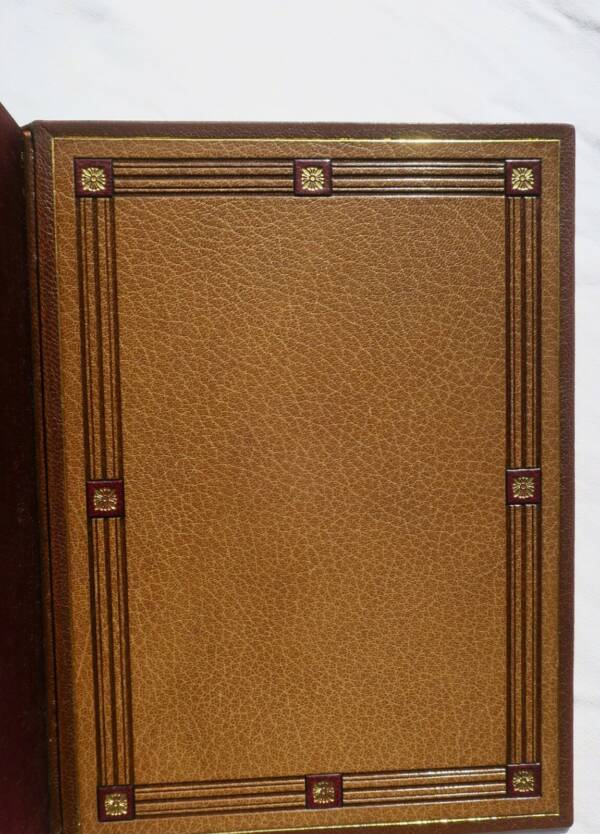 reliure SAMAIN Le Chariot d'or illustrated by Charles Chessa Nolhac binding776€ View details ›
 Boccaccio The Decameron morocco binding Smeers Flameng664€ View details ›
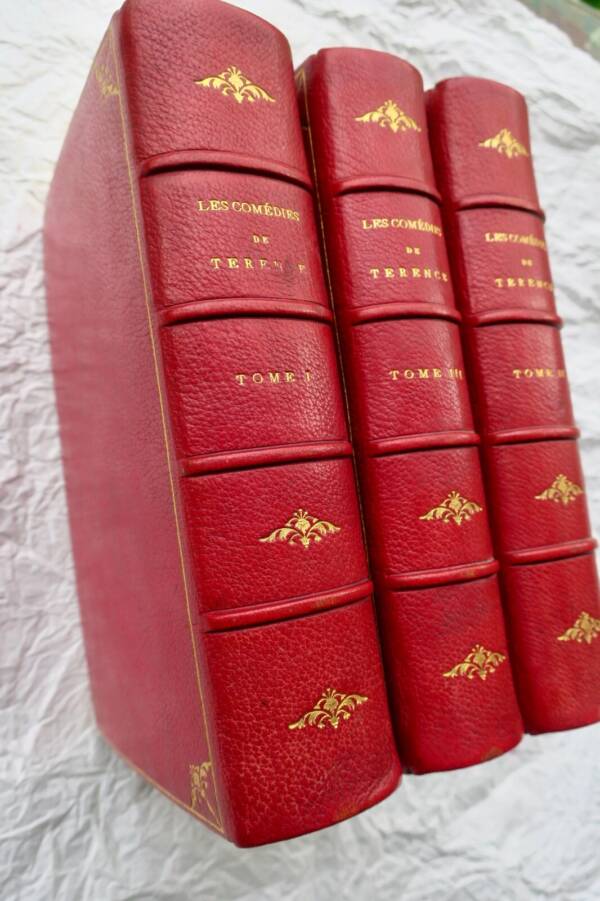 Comedies by Terence Les Comédies de Térence 1771 full-leather binding608€ View details ›
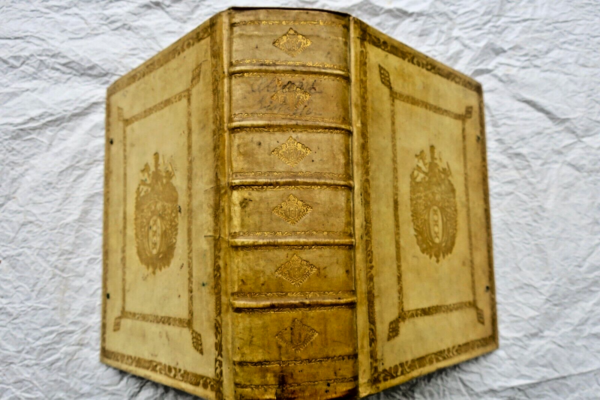 Reliure in full morocco with the arms of the Queen of Holland, 1731480€ View details ›
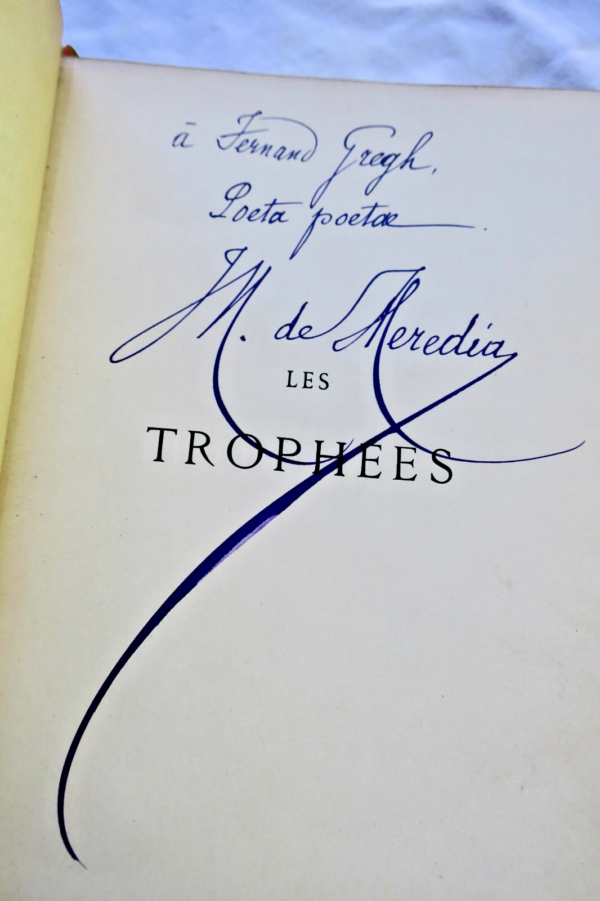 Heredia Les Trophées + dedication + binding480€ View details ›
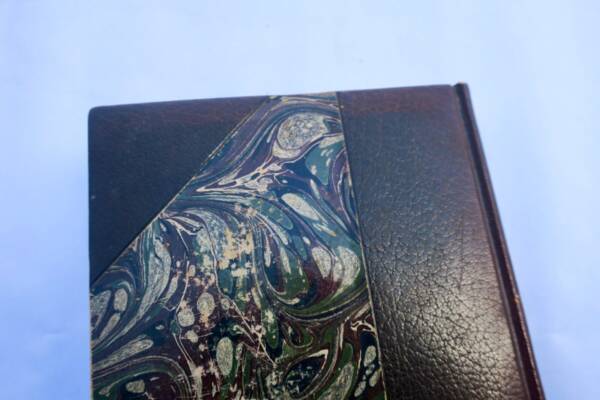 Albert Samain’s Symbolist Masterpiece212€ View details ›
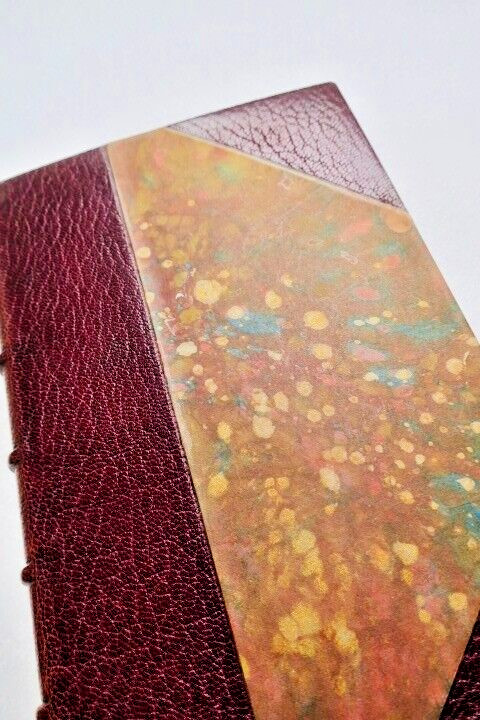 Letters on morality and religion197€ View details ›
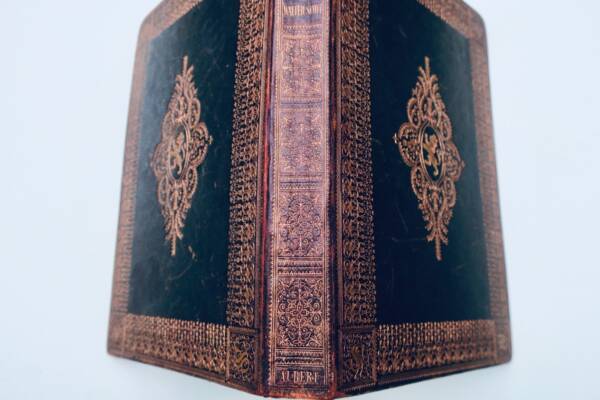 Walter Scott Beauties of Walter Scott. Portraits of the main heroines180€ View details ›
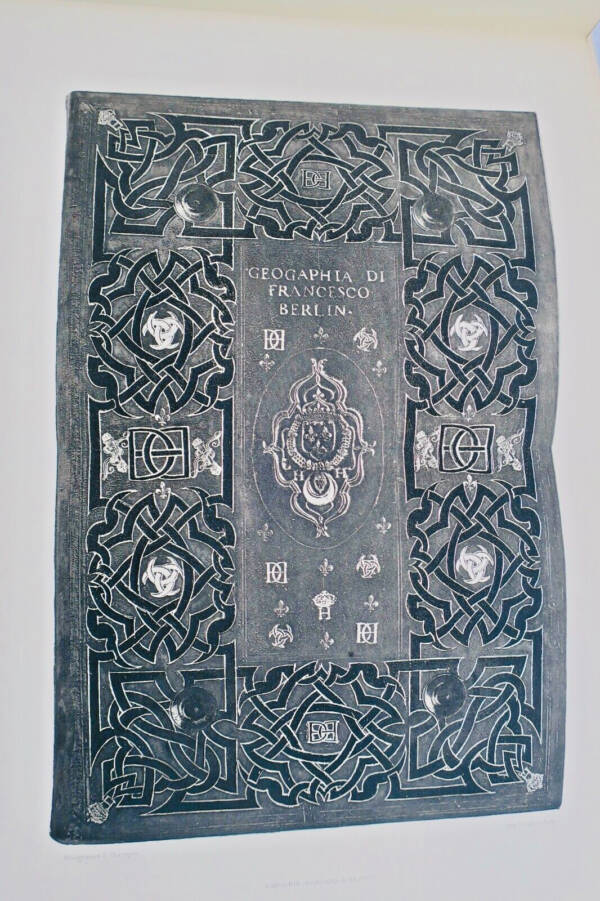 Binding MARIUS-MICHEL. French Bookbinding since the Invention of Printing180€ View details ›
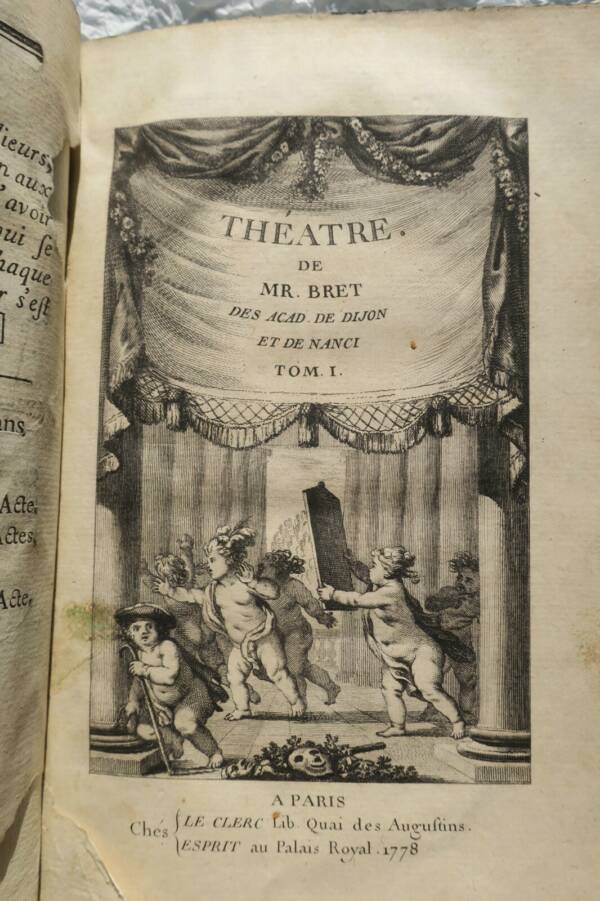 Theatre of Mr. Bret 1778172€ View details ›
 Satires and Works with Critical Notes168€ View details ›
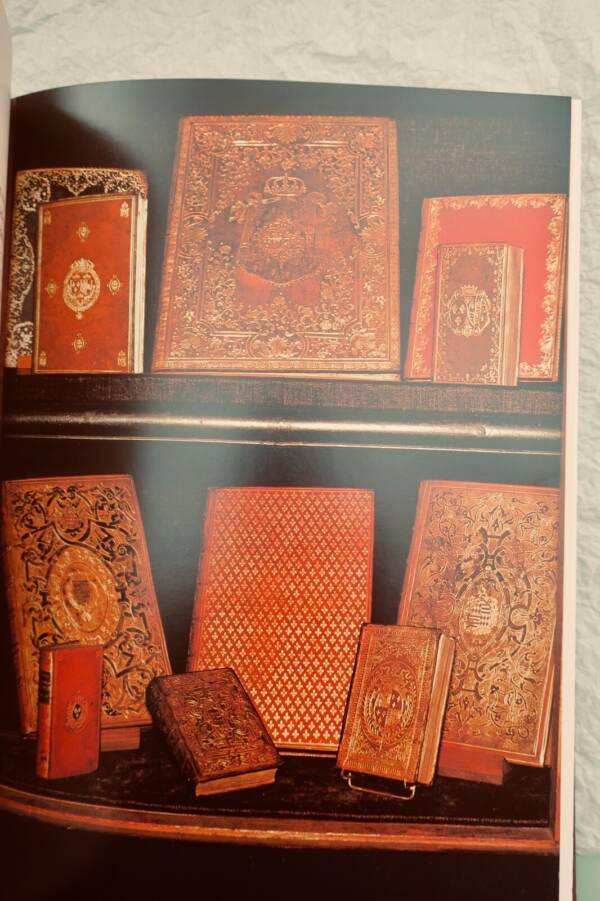 A century-spanning bookbinding history152€ View details ›
See all available books for “reliure” ›
Count several weeks, as each step requires drying under press. For a large ancient in-folio, just the sewing can take a full day.
Not necessarily: if in good condition, it often sells better as is. If rebound, insist on preserving the original covers and spine, without trimming; a slipcase and a clamshell box remain the safest option.
The bookbinder creates a new binding; the conservator strengthens the existing one, using reversible materials. For an antiquarian book in its original binding, conservation is almost always the preferred choice.
The usual path combines a CAP in bookbinding arts and a BMA in bookbinding and gilding, each lasting two years, followed optionally by a certificate in hot gilding or a DN MADe specialising in books.
Generally yes, if the workshop is renowned and the binding is in good condition. The signature is most often found at the foot of the spine, on the inside board or on a flyleaf.
Tell us what is not working, we fix things quickly. The page you are on is attached automatically.