0
0€
Your cart is empty
You have no items in your cart


For a French collector, Shakespeare (1564-1616) is first encountered through his translators. From La Place in 1745 to François-Victor Hugo, more than a century later, each generation has produced its own Shakespeare, and these editions are collected in their own right, alongside the illustrated books that accompany them, from Delacroix’s lithographs to Arthur Rackham’s colour plates.
French translations, illustrated English editions, miniature books and studies: the list includes titles in stock, including under the old spelling “Shakspeare”.
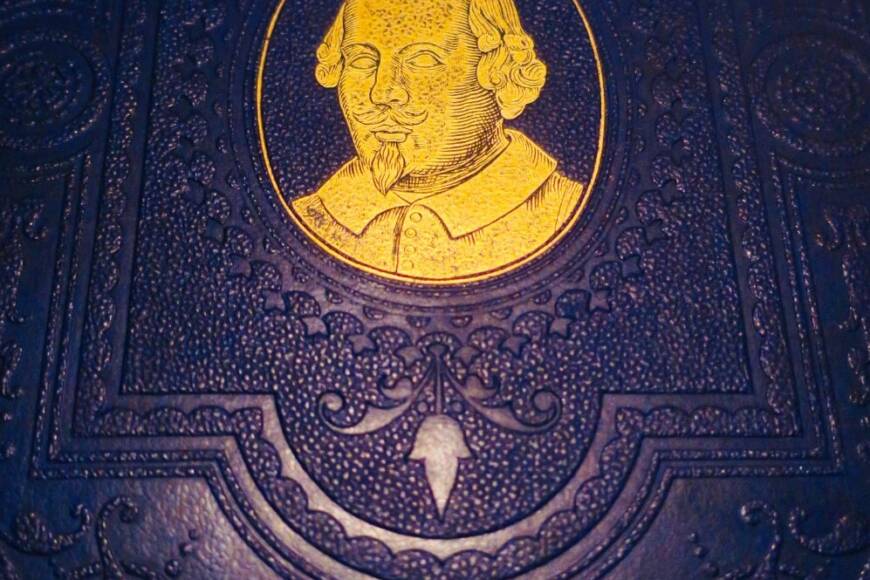
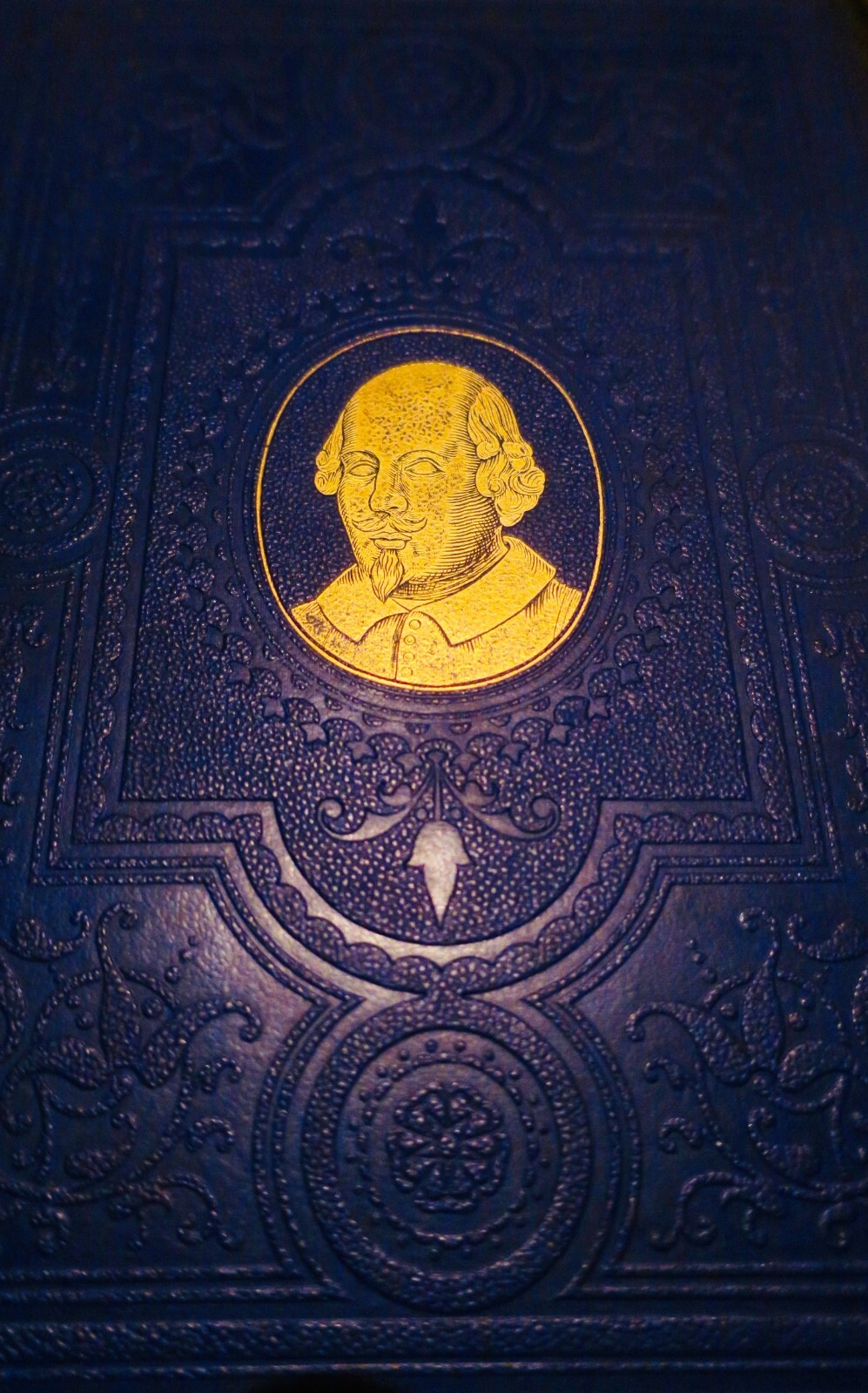
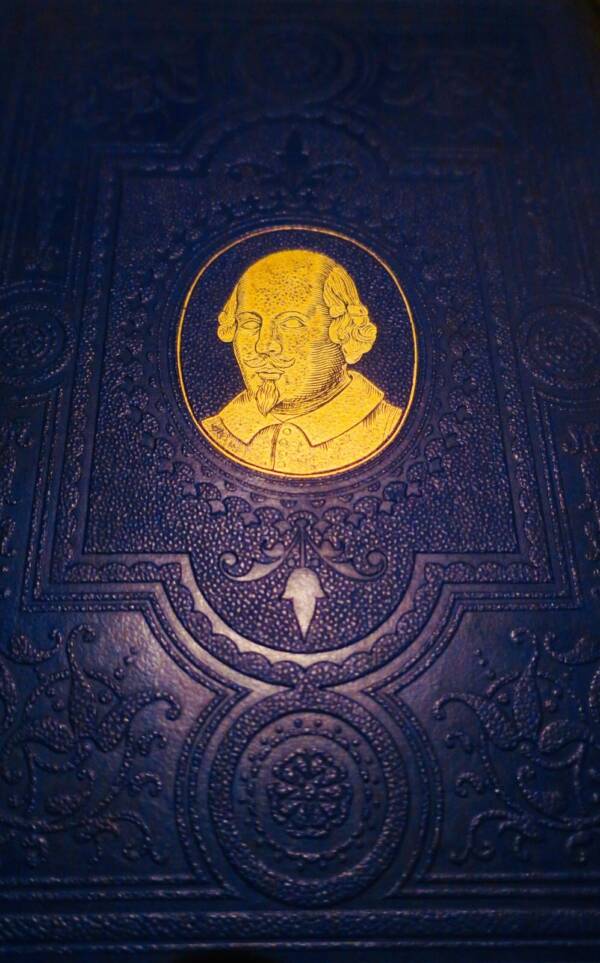 Shakespeare — The Plays of Shakespeare illustrated by Selous480€ View details ›
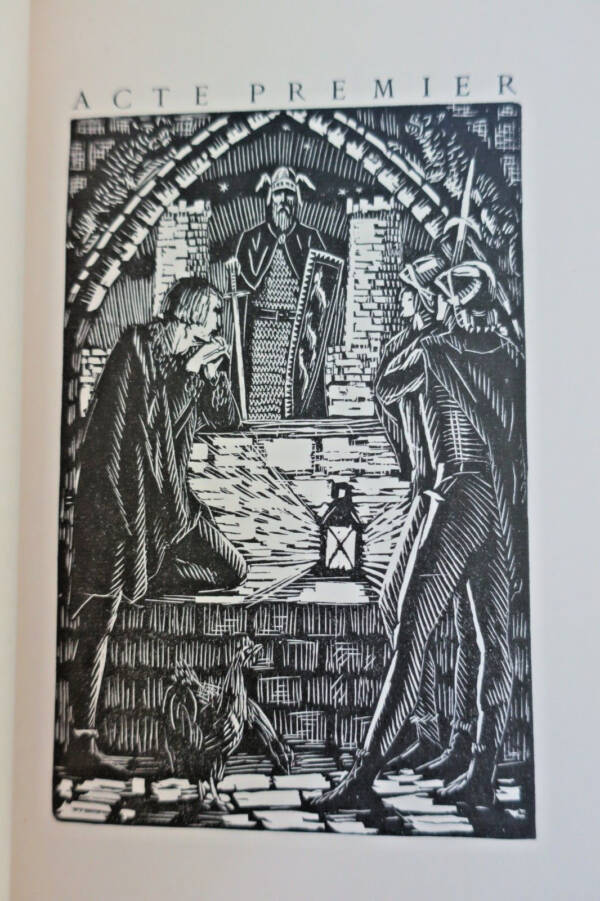 The Tragic Tale of Hamlet - Illustrated Edition200€ View details ›
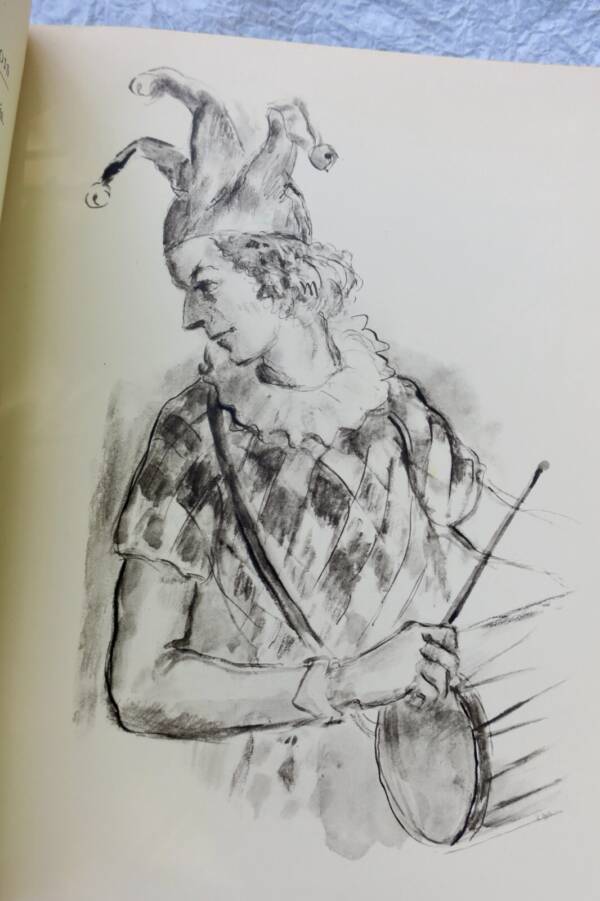 Shakespeare’s comedies in a rare 6-volume set140€ View details ›
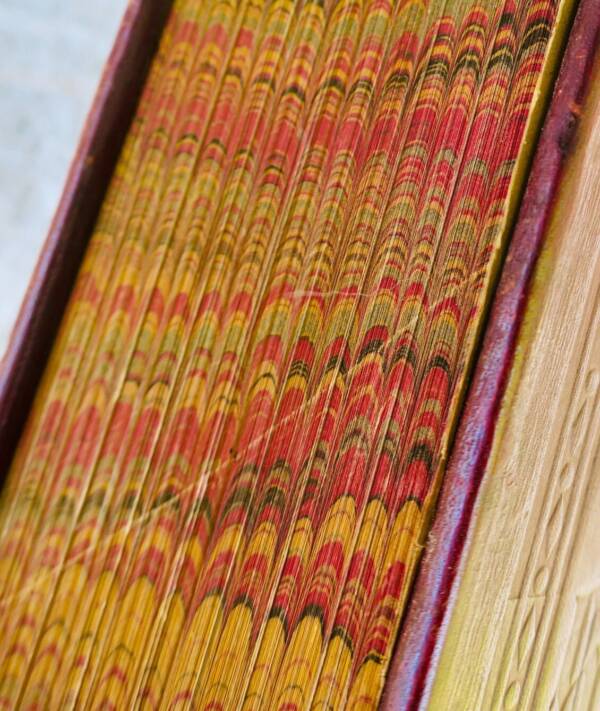 Comprehensive collection of plays and poems130€ View details ›
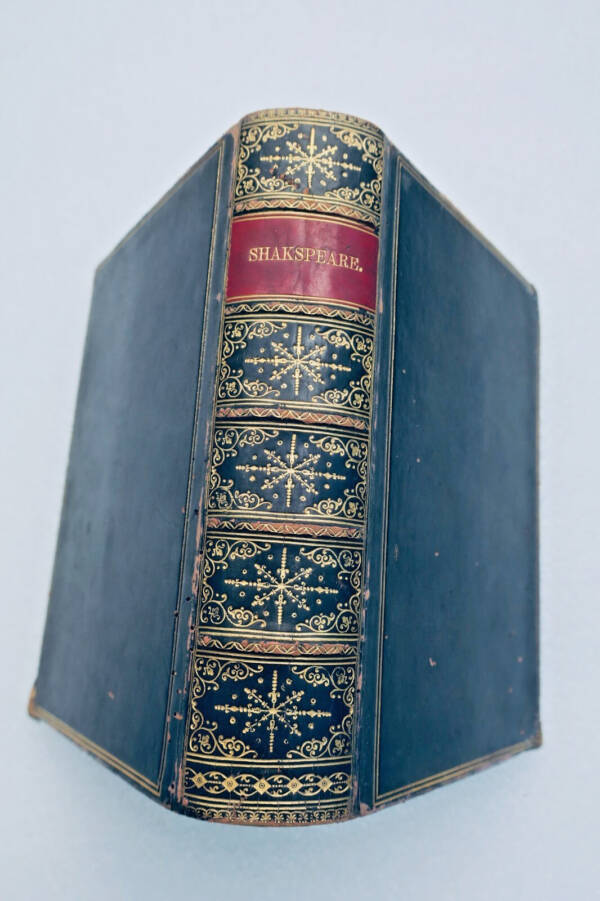 William Shakespeare The Works of William Shakespeare London: Frederick Warne...94€ View details ›
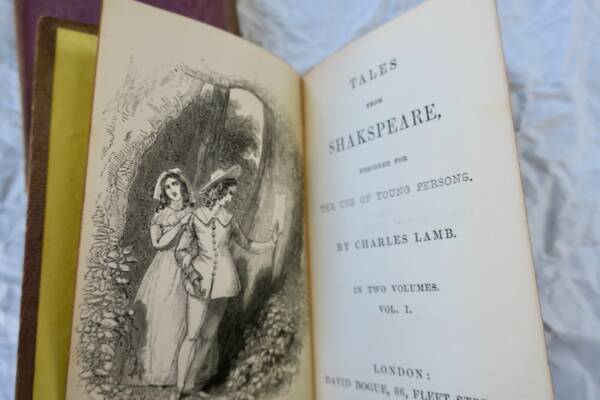 Shakespearean miniatures from 184861€ View details ›
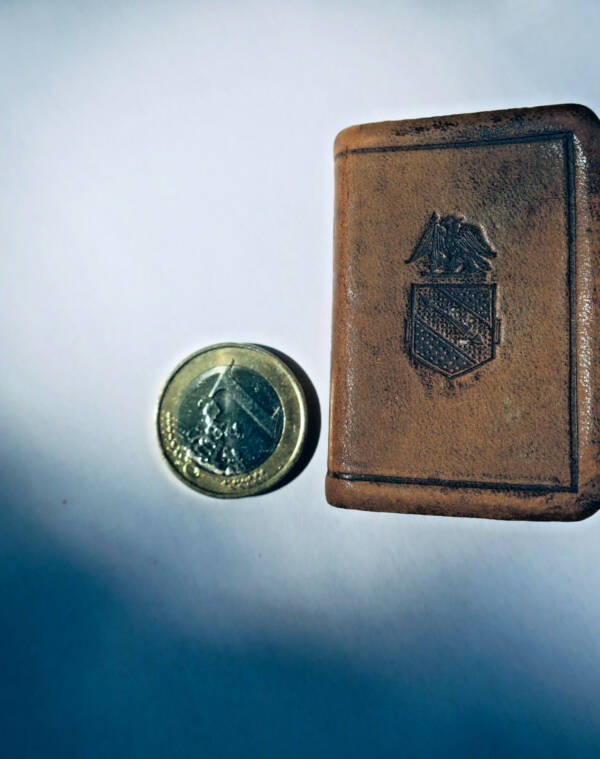 miniature book King Henry VIII Shakespeare 35 x 55 mm45€ View details ›
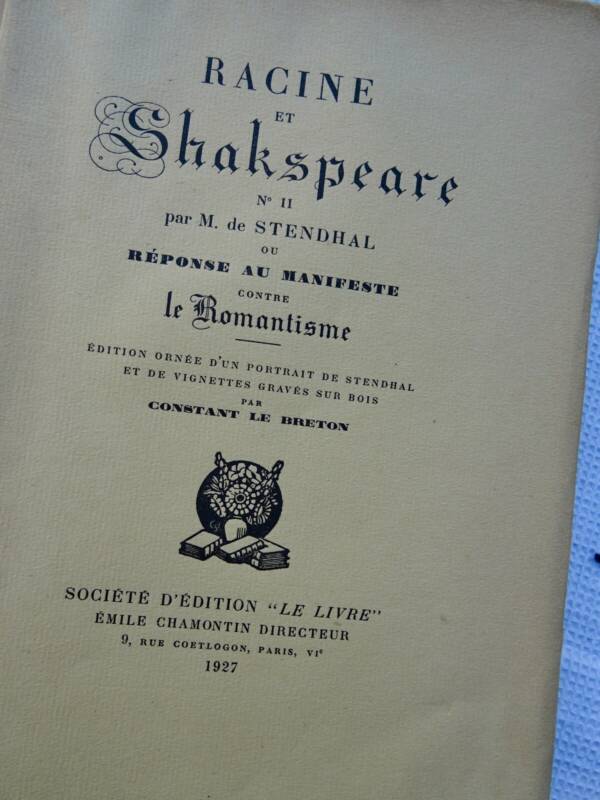 Racine and Shakespeare: Defense of Romanticism36€ View details ›
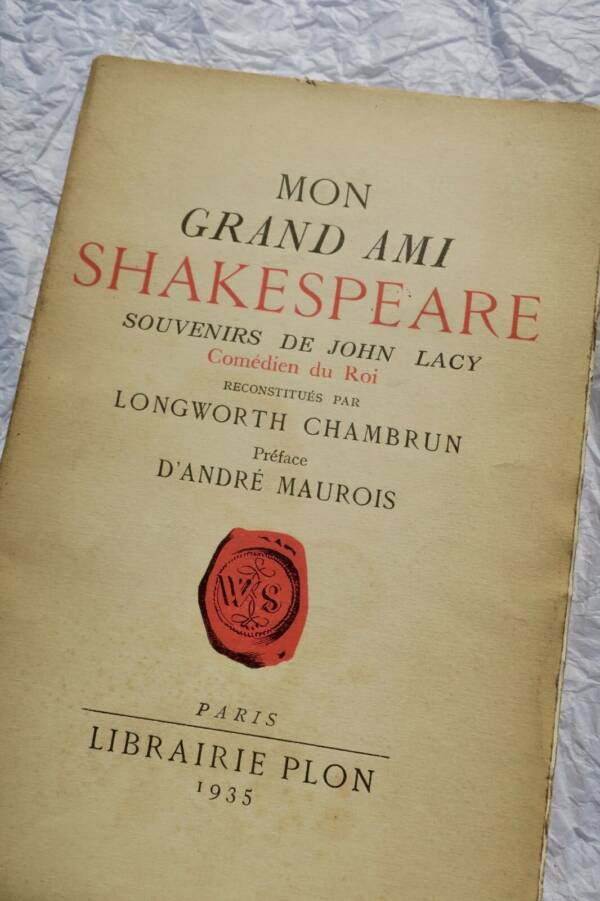 Shakespeare’s actor friend recalled29€ View details ›
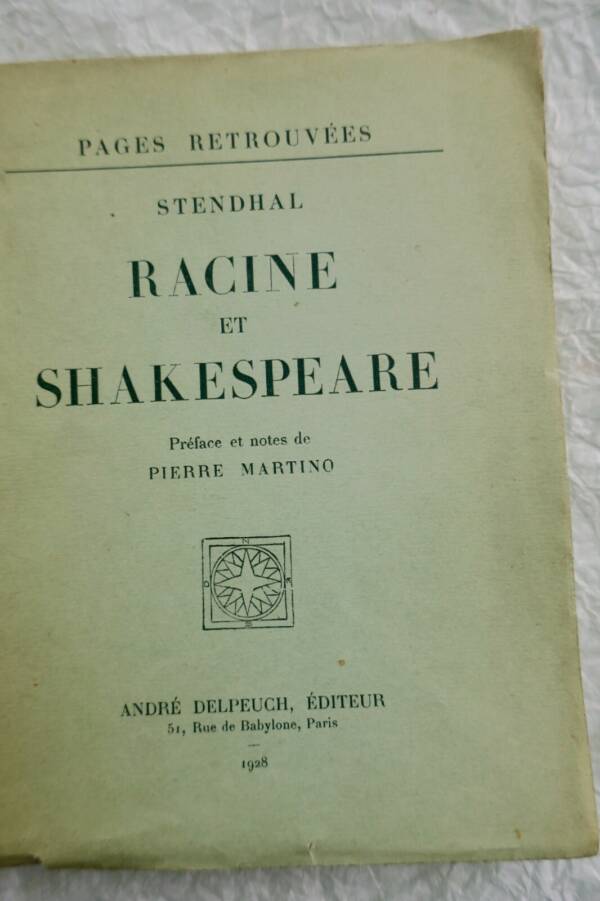 Analysis of Racine and Shakespeare29€ View details ›
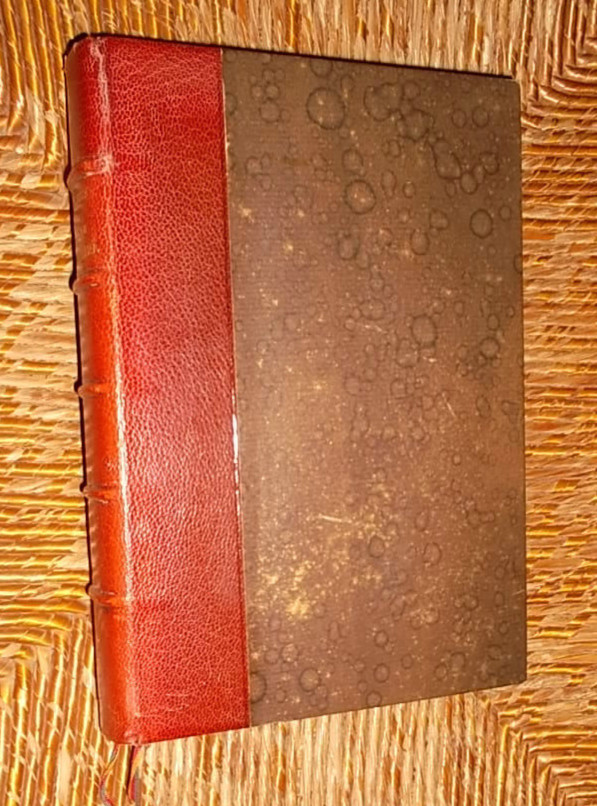 Shakespeare's Master through English Eyes25€ View details ›
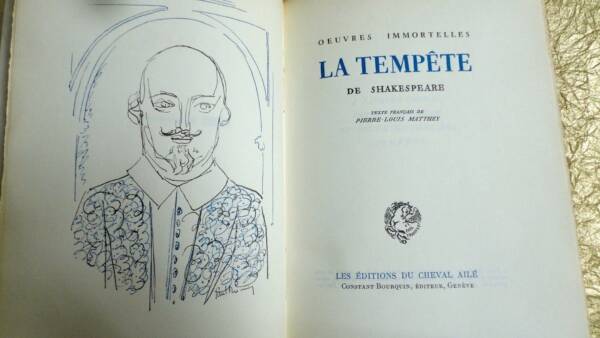 William Shakespeare: The Tempest * At the Sign of the Horse24€ View details ›
See all available books for “Shakespeare” ›
Free delivery in mainland FranceSecure payment: card, PayPal, bank transfer, cheque14-day returns
Voltaire introduced Shakespeare to French readers in his Lettres philosophiques (1734). Pierre-Antoine de La Place then published Le Théâtre anglois (1745–1749, eight volumes), a mix of translation, adaptation and summary. Jean-François Ducis, who could not read English, used it for his verse adaptations performed at the Comédie-Française, beginning with Hamlet in 1769.
The first continuous translation was by Pierre Le Tourneur (or Letourneur), with the comte de Catuelan and Jean Fontaine-Malherbe: Shakespeare traduit de l'anglois, dédié au Roi, in twenty volumes from 1776. The project irritated Voltaire, who protested in a Lettre à l'Académie française read in August 1776. The twenty volumes are often found incomplete: a complete set in contemporary binding is worth waiting for.
Guizot and Amédée Pichot revised Le Tourneur for the Œuvres complètes de Shakspeare (Ladvocat, 1821, thirteen volumes). Stendhal then opened the debate with Racine et Shakspeare (1823–1825), and the English season at the Odéon in September 1827 inflamed the Romantics: Berlioz discovered Harriet Smithson as Ophelia there. In 1829, Vigny had Le More de Venise performed at the Comédie-Française.
The standard translation remained that of François-Victor Hugo, prepared during the family’s exile: Œuvres complètes de W. Shakespeare (Pagnerre, 1859–1866, eighteen volumes), contemporary with the fully revised version Guizot issued with Didier (1860–1862, eight volumes). His father contributed a preface and published in 1864 his essay William Shakespeare (Librairie internationale, A. Lacroix, Verboeckhoven et Cie). François-Victor’s text still served as the basis for the Théâtre complet included in the Pléiade in 1938, with a preface by André Gide.
Delacroix devoted a series of lithographs to Hamlet: thirteen plates published by Gihaut in 1843, sixteen in the 1864 edition. Chassériau etched his etchings for Othello in 1844. These suites belong as much to printmaking as to the book.
In Victorian England, wood-engraved editions proliferated, such as the Plays of Shakespeare illustrated by H. C. Selous for Cassell, issued in parts from 1863. In 1909, Hachette published A Midsummer Night’s Dream illustrated by Arthur Rackham, with forty colour plates mounted on guards and a numbered deluxe impression. In the 20th century, French bibliophiles had their own illustrated Shakespeares: Hamlet translated by Guy de Pourtalès, with wood-engravings by Raphaël Drouart (Société littéraire de France, 1923), or the Comedies translated by Suzanne Bing and Jacques Copeau, illustrated by Berthold Mahn.
For translations, completeness is paramount: a stray Le Tourneur or François-Victor Hugo translation is worth only a fraction of the complete set. With illustrated books, assess the crispness of the plates and the impression: a numbered copy on large paper is worth markedly more than a standard edition. Prices range from a few tens of euros for an isolated 19th-century piece to several hundred for a fine, complete series or a deluxe illustrated volume.
Le Tourneur for an 18th-century perspective on taste, François-Victor Hugo for reading: his more faithful text was reprinted into the 20th century. Guizot’s editions occupy an intermediate position.
This was a common French spelling in the 19th century, used notably by Stendhal and in Guizot’s 1821 edition. It neither indicates an error nor a counterfeit, but it matters when searching catalogues.
Yes, especially when complete and fresh. Major Victorian wood-engraved editions and books illustrated by Rackham or Dulac have their collectors, and a well-preserved publisher’s binding makes a clear difference in price.
Yes. The bookseller provides free estimates from photographs of old translations, complete series and illustrated books; entire libraries are also purchased.
Looking for a specific title?
Tell us what you are looking for: new books arrive every week and we will let you know as soon as a copy comes in.
Write to usDo you own books by William Shakespeare?
The bookseller appraises them free of charge and may offer to buy them.
Get an appraisalAlert me about new William Shakespeare arrivals
New books arrive every day. Leave your email address: you will receive a message as soon as a matching book enters the shop, never more than one a day.
Tell us what is not working, we fix things quickly. The page you are on is attached automatically.