0
0€
Your cart is empty
You have no items in your cart


Books from the Second World War are collected differently from other antiquarian books: binding is of little importance, while the date and place of printing are crucial. Collectors seek underground Resistance editions, clandestine press, Free French publications issued in London or Algiers, books and documents from the Occupation, followed by post-1945 testimonies. Below are the bookseller’s guidelines and the current selection of works from this period.
Books and documents on the Occupation, the Resistance, the Free French and the Liberation, from the rarest to the most accessible; the selection renews itself continuously.
 Editions de Minuit, printed on vellum, published clandestinely.. literate patriots 1944266€ View details ›
 Historical collaboration on Bastille stones216€ View details ›
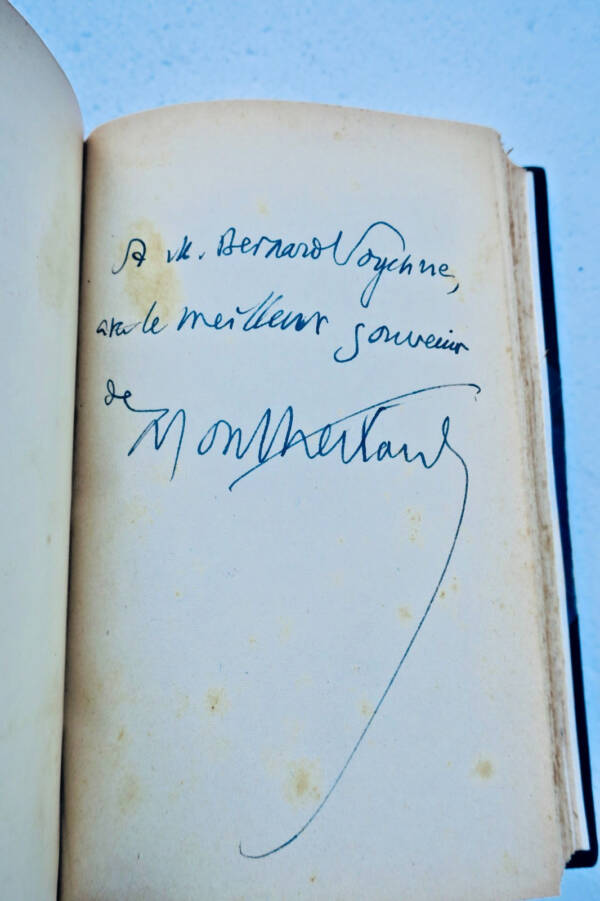 MONTHERLANT (Henry de). Textes sous une occupation. 1940-1944 + dedication188€ View details ›
 Charles de Gaulle vintage silver print75€ View details ›
 Resistance and Liberation in Gascogne73€ View details ›
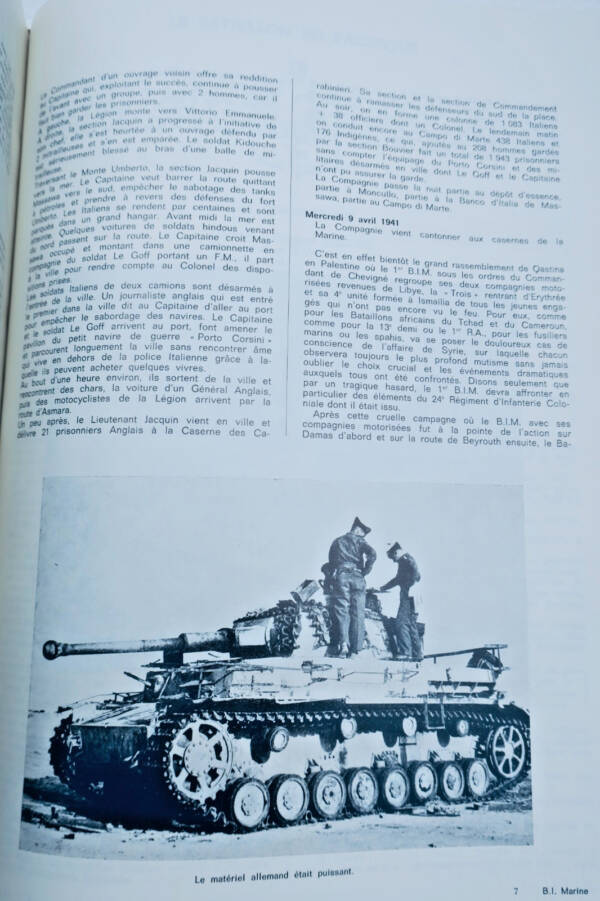 Resistance Annuaire of the 1st Free French Division68€ View details ›
 BAUDELAIRE Charles Works in Collaboration 193265€ View details ›
 Meilhan CHEVIGNÉ La Tragédie de Meilhan 1947 Resistance GERS 3255€ View details ›
 Literary Life During the German Occupation of France50€ View details ›
 De Gaulle Silver Photograph with Negatives50€ View details ›
 Le Havre 1940-1945: Occupation in photographs48€ View details ›
 Hymans French Tributes to Paul Hymans Writings Under the Occupation40€ View details ›
See all available books for “Résistance” ›
Free delivery in mainland FranceSecure payment: card, PayPal, bank transfer, cheque14-day returns
The Éditions de Minuit were founded in Paris in 1941 by Pierre de Lescure and Jean Bruller, who wrote under the pseudonym Vercors. Their first title, The Silence of the Sea, was completed on 20 February 1942; the printer, Claude Oudeville, took two months to produce a few hundred copies by hand. Twenty-five works followed until the Liberation, featuring texts by Mauriac, Aragon, Éluard, Elsa Triolet, Jean Guéhenno and Jean Cassou, most often under pseudonyms.
These volumes are distinguished by their simplicity: small format, plain printed wrappers, no publisher’s address. Their colophons bear famous phrases such as ‘aux dépens de quelques lettrés patriotes’ or ‘sous l’oppression’. L’Honneur des poètes, edited by Pierre Seghers, Paul Éluard and Jean Lescure, appeared on 14 July 1943, its twenty-two poets concealed behind borrowed names.
Other texts were published outside occupied France. Joseph Kessel’s The Army of Shadows came out in late 1943 in Algiers, published by Edmond Charlot. Paul Éluard’s poem ‘Liberté’, first printed in the clandestine collection Poésie et vérité 1942, was reprinted in the magazine Fontaine in Algiers and in La France libre in London, then dropped by the Royal Air Force over France.
The Resistance press was printed with whatever means were available. Combat, launched in the southern zone under the impetus of Henri Frenay and Berty Albrecht, published its first issue in December 1941 and reached a print run of 50,000 copies by November 1943. Les Lettres françaises, founded by Jacques Decour and Jean Paulhan, issued its first number in September 1942. Read, passed from hand to hand and often destroyed, these sheets are rare in original copies.
In London, the monthly review La France libre, founded by André Labarthe with Raymond Aron as managing editor, appeared from 15 November 1940 to December 1946. The words of the Chant des partisans, written in England by Kessel and Maurice Druon on 30 May 1943, first appeared in the clandestine review Les Cahiers de Libération in September 1943.
Licensed publishing during these years is also a subject of study. On 28 September 1940, the Otto List removed 1,060 titles from sale, deemed hostile to Germany or by Jewish, communist or anti-Nazi authors. L'Illustration continued to appear until summer 1944, when it was banned at Liberation: its issues from 1939 and 1940 remain a source on the Phoney War and the exodus.
Everyday documents—ration cards, travel permits, posters and flyers—are valued for what they reveal. Histories of maquis and units, published after 1945 by associations of veterans or regional publishers, provide names, maps and photographs rarely found elsewhere.
After 1945 came the accounts of those involved: memoirs of Resistance fighters and Free French agents, testimonies of deportees, and General de Gaulle’s Mémoires de guerre published by Plon (L'Appel in 1954, L'Unité in 1956, Le Salut in 1959). Collectors seek first printings, large-paper issues when available, or copies with author inscriptions.
Prices range from a few tens of euros for a common book of the period to several hundred for a clandestine edition, depending on title and condition; the very first titles from Éditions de Minuit, beginning with Le Silence de la mer, command substantially higher prices. Propaganda prints and documents of all persuasions are presented here for what they are: historical sources.
Based on the format: small size, cover without illustration, publisher’s name without address, and dated colophon. Post-war reprints and London or Algiers editions are not the original clandestine ones: a bibliography will clarify the distinction.
August 1944 issues, printed in large numbers and often reproduced as facsimiles, remain modestly priced. Clandestine sheets, first issues of a title, and well-preserved copies are more sought-after. A facsimile is often betrayed by paper that is too white and printing that is too uniform.
Clandestine editions from Éditions de Minuit, resistance press, Free French publications, local Resistance histories, and first editions of major memoirs, especially with inscriptions.
Yes. Letters, notebooks, photographs, inscribed books, or archives belonging to a resistance fighter interest the bookseller, particularly when kept together. A few photographs sent from the valuation page are sufficient for an initial free assessment.
Looking for a specific title?
Tell us what you are looking for: new books arrive every week and we will let you know as soon as a copy comes in.
Write to usDo you own antiquarian books?
The bookseller appraises them free of charge and may offer to buy them.
Get an appraisalAlert me about new Second World War arrivals
New books arrive every day. Leave your email address: you will receive a message as soon as a matching book enters the shop, never more than one a day.
All our authors ›Our themed collections ›Our sections ›Full catalogue ›
Tell us what is not working, we fix things quickly. The page you are on is attached automatically.