0
0€
Your cart is empty
You have no items in your cart

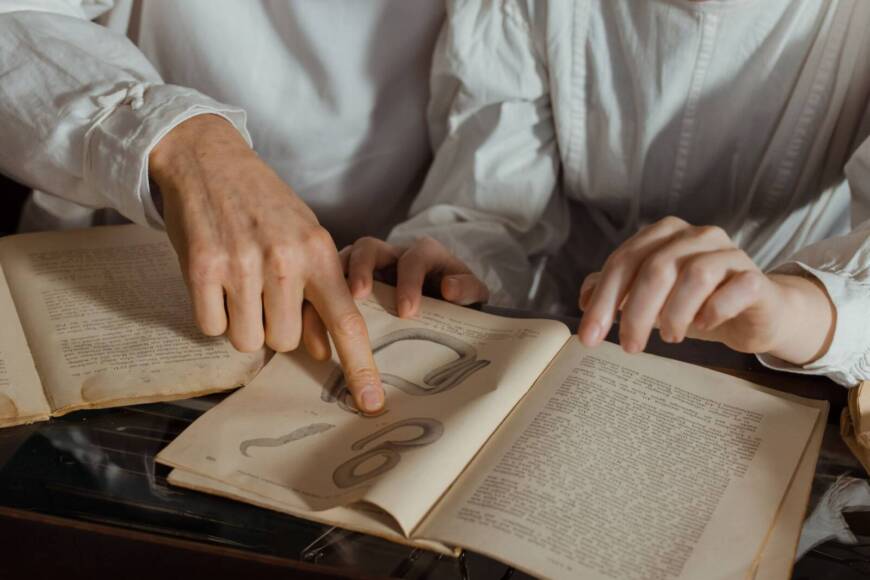
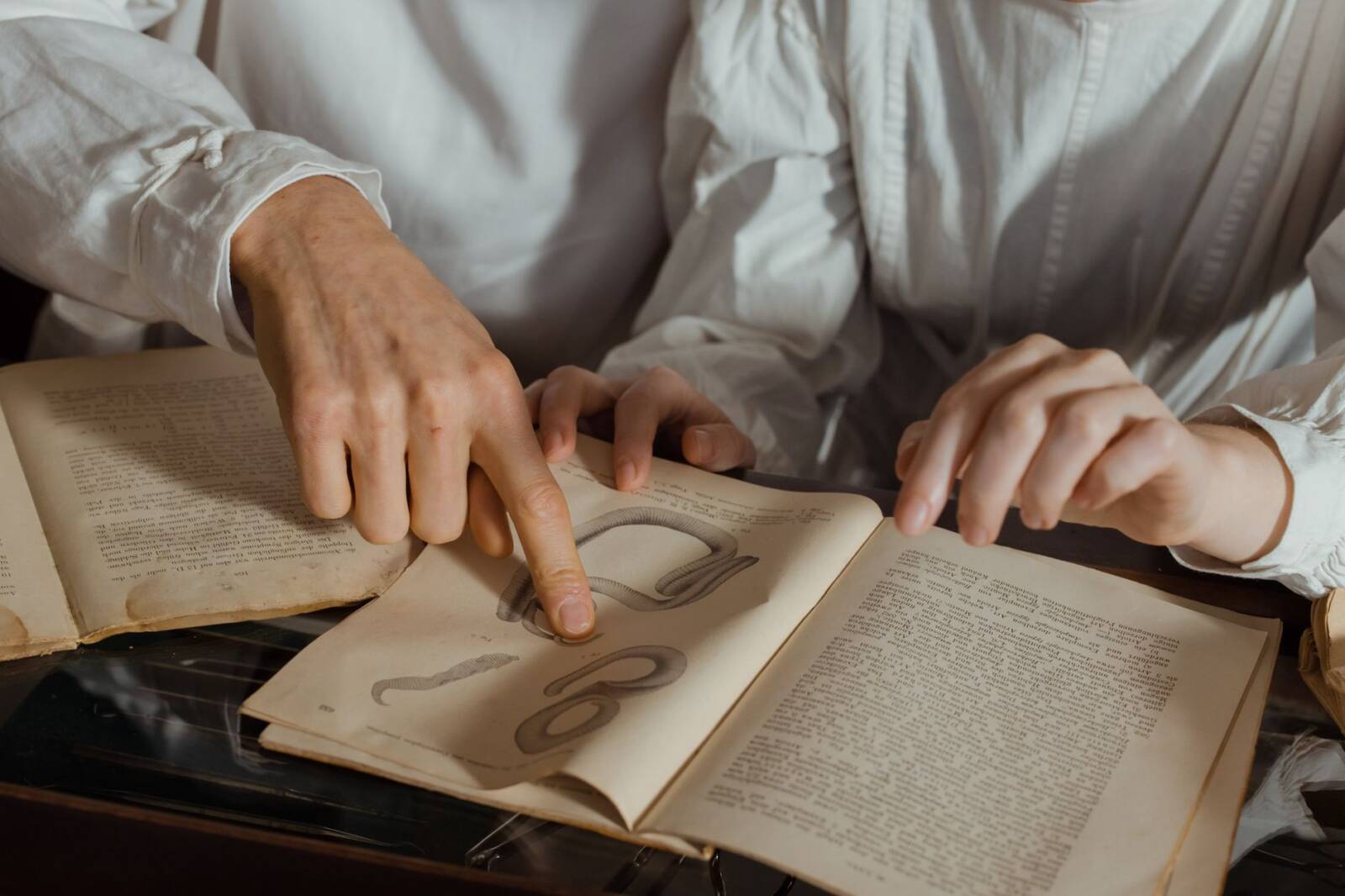
Identifying a facsimile or a counterfeit of an old book requires two different approaches. The modern facsimile is presented as a reproduction and bears its own evidence: ISBN, colophon, print run details. The counterfeit, however, disguises itself as an original and relies on a hurried eye to slip through. Here is the method we use in our shop, with the book in hand, a grazing light from the ceiling, and a x10 magnifying glass under the palm.
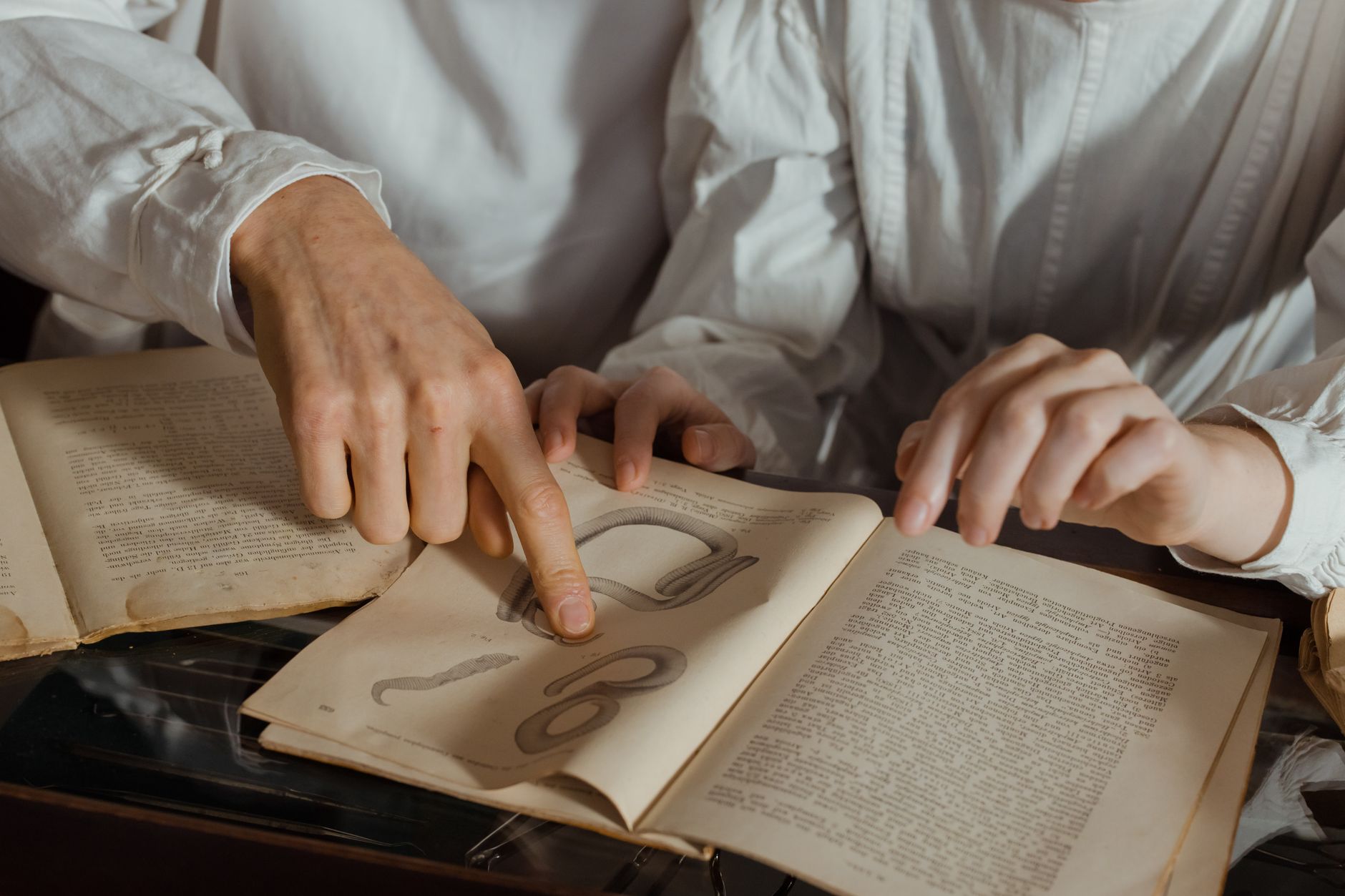
A facsimile is a reproduction that openly declares itself as such. Faksimile-Verlag Lucerne for illuminated manuscripts, Quaternio, Müller & Schindler, Phaidon for art books: these publishers sign their reproductions, date them, and number them. The goal is documentary, not deceptive. Manfred Kramer, long-time director of Faksimile-Verlag, summed up the requirement: to restore all visible characteristics of the original, including signs of age.
A counterfeit is the opposite. Under the Ancien Régime, workshops in Amsterdam, Bouillon, Neuchâtel, or Avignon would quickly replicate Parisian successes with false imprints (“Pierre Marteau” in Cologne, the archetype). Today, “accidental counterfeits” are added to the mix: rebound volumes with an original title page and a body from another print run, or Hetzel bindings reassembled from mismatched parts. The difference from an honest facsimile boils down to one word: the intent to deceive.
The paper is the primary witness. Until the end of the 18th century in Europe, laid paper was made using a mould. Backlit, you can see the chain lines (vertical lines spaced about 20 to 30 mm apart) and the laid lines (tightly spaced horizontal lines). A watermark often appears in the centre of the sheet: a bunch of grapes, a pot, a shield, or the papermaker’s initials. This technique is attested in Italy as early as the late 13th century.
For a book supposedly dating from the 16th–18th centuries, the complete absence of laid lines and watermarks is a deal-breaker. Wove paper (without visible chain lines) emerged in England around the mid-18th century, thanks to Baskerville, and spread in France from the 1780s. If in doubt, hold the sheet up to a window lit by daylight: everything becomes clear. For further reading, see our article on watermarks and dating old paper and the comparison laid paper vs. wove paper.
A book advertised as pre-1780 but printed on paper without laid lines or watermark is, unless there is very well-documented evidence to the contrary, either a facsimile, a late reprint, or a counterfeit.
Old typographic ink is greasy and deposited by the pressure of lead type. In raking light, the character slightly sinks into the sheet—this is the press mark. On the reverse, the imprint of the letters in reverse relief can sometimes be seen. Offset printing, which has dominated publishing since the 1960s and produces the vast majority of modern facsimiles and counterfeits, deposits a flat layer of ink without relief.
A 9W UV lamp (15 to 40 € in a photography shop) provides a useful additional check. Paper made after the mid-20th century generally contains optical brighteners that react with a bright blue-violet fluorescence under UV. Old rag paper remains matte or, at worst, emits a very faint cream fluorescence. A page that "flashes" under UV is recent—it’s almost conclusive.
The antiquarian bookseller also reads the composition. In a book from the 17th–18th centuries, one expects to find quire signatures (A, A2, A3… at the foot of the page to guide the bookbinder), a colophon or imprint date, sometimes an errata slip, and typographic fleuron printed from the same forme as the text, thus sharing the same press marks.
The specialist blog BiblioMab noted in 2012 a rule that still holds: there is no single sign of a counterfeit; only careful examination of copies, particularly of typographic ornaments, can settle the matter. A perfectly crisp vignette without the slightest indentation in the sheet is suspect. Text aligned to the millimetre, whereas 17th-century originals always show small misalignments in gatherings due to the hand press, is equally suspicious.
| Index | Original old (pre-1850) | Modern facsimile | Deceptive counterfeit |
|---|---|---|---|
| Paper | Wove, watermark, rag | Imitation wove or modern vellum | Offset uncoated vellum, sometimes artificially yellowed |
| Ink | Show-through, verso marked | Flat offset, sometimes four-colour | Flat offset, monochrome |
| UV 9W | Matte, cream fluorescence extinguished | Variable depending on paper | Bright blue-violet (optical brighteners) |
| Justification | Colophon, imprint date | Imprint page, ISBN, copyright | Absent or clumsily imitated |
| Binding | Hand-sewn on cords, embroidered headbands | Sewn or publisher’s cardboard binding | Recent glued binding, spine with false cords |
| Edges | Trimmed with period guillotine, sometimes gilt | Often neatly trimmed | Overly regular, white too stark |
A 17th–18th-century binding is hand-sewn on cords (threads or leather strips) or tapes, with needlework headbands. The leather—calf, sheepskin, morocco—always shows a unique grain, wear, and sometimes old repairs. A “period binding” with overly supple leather, rounded cords, or a visibly glued spine is almost always modern. Our detailed terminology is available in the anatomy of the old book and the overview of leather types in binding.
For Romantic period publishers’ bindings (Curmer, Hetzel, Mame), deception often lies in the percaline. Original Hetzel bindings were produced by Magnier, Lenègre, or Engel workshops in the late 19th and early 20th centuries. Reference typologies list types such as “with an elephant,” “with a lighthouse,” “with a steamer,” and their variants. A binding that does not match any known type exactly, or whose title is gilt using a hot stamp when the type does not call for it, warrants scrutiny. See our article on Hetzel bindings for Jules Verne.
A common fraud in intermediate markets involves pairing an original title page (purchased separately, sometimes cut from an incomplete volume) with the text block of a later printing. The book is touted as a “first edition” based solely on its first page, while the text itself comes from elsewhere. Three checks often suffice to expose the ruse:
For further reading on dating, see our guide on how to identify a first edition and the use of Vicaire and Carteret bibliographic price guides.
Not all facsimiles are traps—far from it. Some are invaluable study tools. A few names to remember: Faksimile-Verlag Luzern and Quaternio for illuminated manuscripts (editions often limited to a few hundred copies), Phaidon for art reproductions, Slatkine or CTHS editions for scholarly reprints. All feature a modern colophon, an ISBN, a print run justification, and a new retail price ranging from a few hundred euros to several thousand for high-end illuminated manuscripts.
The classic trap closes a generation later: a facsimile purchased twenty years ago, its box lost, its critical commentary misplaced, ending up in a flea market. The volume alone, with imitation laid paper and full-leather binding, can easily be mistaken for a 15th-century manuscript. Our shop rule of thumb: any book claimed to predate 1700 and sold without expert assessment for a few hundred euros is, statistically, more likely a facsimile or reprint than an original.
A quick examination takes five minutes. Certified appraisal takes longer. If the volume costs more than you’re willing to lose, or if you’ve inherited it and are considering selling, have it appraised. The Syndicat de la Librairie Ancienne et Moderne (SLAM) brings together over two hundred booksellers bound by a strict code of ethics, who provide descriptive reports under their professional responsibility. The Compagnie Nationale des Experts (CNE) unites court-approved experts for judicial appraisals. For precise dating and bibliographic references, the resources of the Bibliothèque nationale de France remain a solid support.
At La Librairie Antique, we examine volumes sent as photos (front and back of the binding, title page, two inner pages backlit) free of charge and provide estimates within a few days. To complete the process, see our free appraisal service or the page on selling and having books appraised.
Yes. Scholarly facsimiles printed in small runs by Faksimile-Verlag or Quaternio can fetch anywhere from a few hundred to several thousand euros on the secondary market, especially when accompanied by their critical commentary. These are bibliophile objects in their own right, but they are not originals and should be sold as such.
Careful examination of typographic ornaments — fleuron, headpieces, tailpieces — remains the primary method. A false imprint such as “Amsterdam, chez Pierre Marteau” on a French book is a classic example of 17th-century Dutch counterfeiting. Interestingly, these counterfeits are now studied in their own right and their value can approach that of the original.
No. It helps rule out recent production (paper that fluoresces blue = optical brighteners post-1950), but it reveals nothing about a facsimile printed on paper without brighteners or an old counterfeit. UV is a filter, not a verdict. Always cross-check paper, ink, typography and binding.
Keep the invoice and any correspondence with the seller. Have a contradictory descriptive report drawn up by a SLAM bookseller or a CNE expert. If the seller is a professional, you have legal recourse in French law for hidden defect or non-conformity; if the seller is a private individual, action is more difficult but possible in cases of misleading description.
Uncertain about a volume? Send us your photos via our free appraisal page. We review each case ourselves, without algorithms, and respond within a few days.
Tell us what is not working, we fix things quickly. The page you are on is attached automatically.