Enter your keyword

Deciphering a bookseller's catalogue: abbreviations and formulas
Article

Deciphering a bookseller's catalogue: abbreviations and formulas

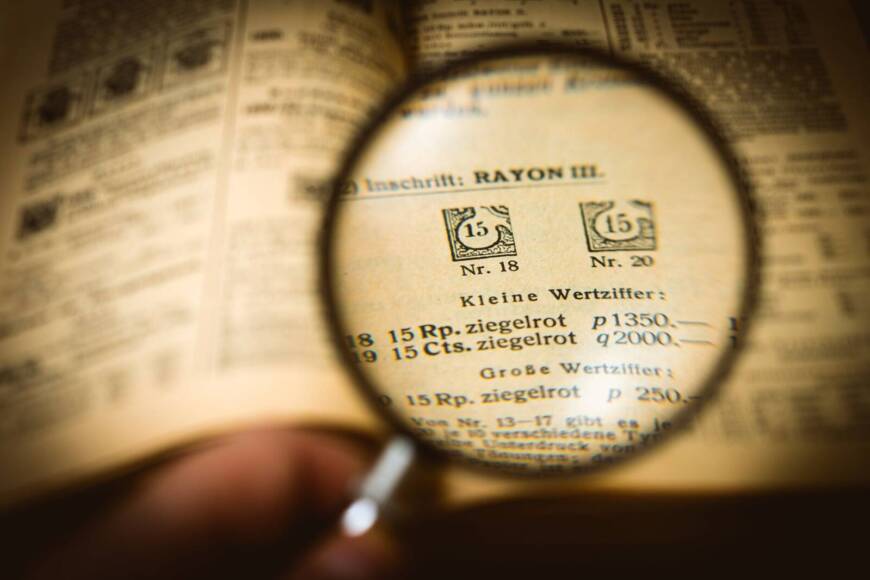
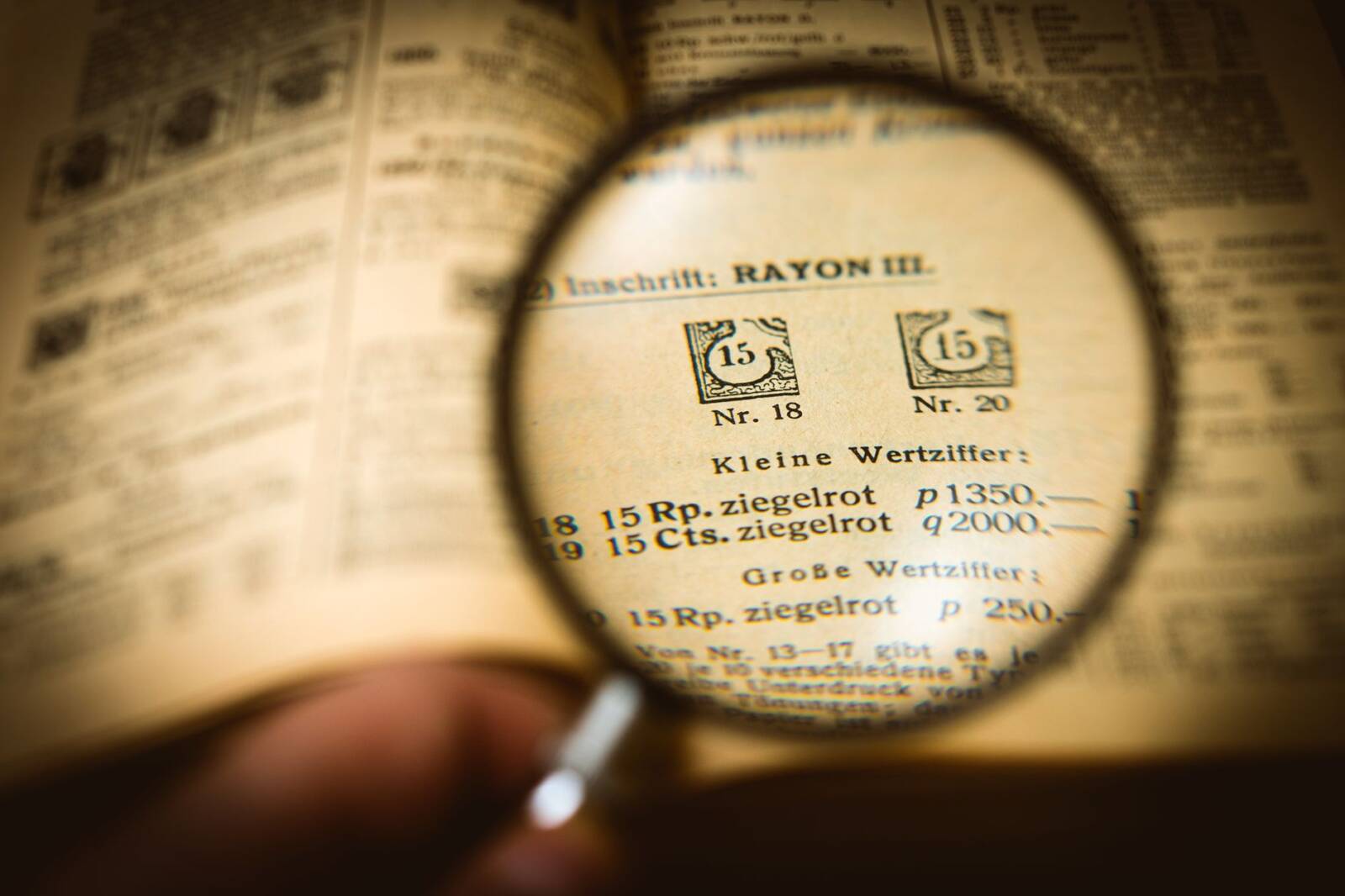
You open an antiquarian bookseller’s catalogue and come across this entry: E.O., gr. in-8°, half-red morocco, hinges cracked, some browning, untrimmed edges, inscribed by André Gide. To the trained eye, this notice tells a complete story. To the novice, it’s gibberish. This guide deciphers the most common bookseller abbreviations, using real notices rather than a flat list.![Antiquarian bookseller’s catalogue open with a magnifying glass on a bibliographic entry](https://images.pexels.com/photos/247781/pexels-photo-247781.jpeg?auto=compress&cs=tinysrgb&dpr=2&h=650&w=940) A catalogue entry may contain just fifteen words. But you need to understand them.### Why booksellers abbreviate (and why you must understand them)The use of abbreviations dates back to the first printed catalogues of the 19th century, when every line cost lead and ink. The [SLAM](https://slamlivrerare.org/historique), founded in 1914, now brings together around 230 booksellers in France and has helped standardise these codes. The trade has kept them alive: an auction catalogue from Drouot, an eBay listing, or a description on a specialist website all speak the same telegraphic language.Knowing how to read it changes everything. A fifteen-word notice can mean the difference between a library book sold for €80 and a first edition sent by the author for €4,500. The vocabulary also prevents you from paying the price of a rarity for a common book poorly described, or missing out on a gem discreetly signalled.### Abbreviations of identification: edition, place, dateThe first block of a notice describes the bibliographic object itself. These codes tell you what book you are looking at.- E.O. or ed. or.: first edition. The first printing of a text, which has particular collectible value. For more, see our guide on [how to recognise a first edition](/nos-ecrits/reconnaitre-premiere-edition/). - s.l.: no place. The place of printing is not mentioned on the book. - s.d.: no date. No year of publication is printed. - s.l.n.d.: no place or date. A frequent combination on clandestine editions, pamphlets, or books from the 17th and 18th centuries printed abroad to bypass French censorship. - H.C.: out of trade. A review copy or limited printing not intended for public sale at the time of publication.### Formats: in-folio, in-8°, in-12° and othersThe format is not a size in centimetres: it is the number of folds of the printing sheet. The more the sheet is folded, the smaller the book. A notice does not say “22 cm high”; it says “in-8°”.
AbreviationFull nameFoldsIndicative height
in-f° or in-fol.In-folio1 fold (4 pages)40 cm and above
in-4°In-quarto2 folds (8 pages)28 to 32 cm
gr. in-8°Large in-octavo3 folds (16 pages)22 to 25 cm
in-8°In-octavo3 folds (16 pages)20 to 22 cm
in-12In-twelve4 folds (24 pages)16 to 18 cm
in-16, in-18, in-32Small formatsmore than 4 foldsless than 15 cm

The prefix gr. means ‘large’, pet. ‘small’. A ‘gr. in-8°’ is noticeably taller than a standard ‘in-8°’. The heights above are indicative only: thicker paper, less trimming, or a ‘untrimmed’ binding can add several centimetres to the actual size. For a full glossary of book terms, see our anatomy of the old book.

Bindings: br., rel., demi-chag., 1/2 v°

Condition of the binding often weighs as heavily as the text-block in valuation. A first edition in original wrappers may be worth three times the same title in a later half-calf binding. Key codes follow.

  • br.: wrappers. Soft paper covers as issued by the printer. Sought-after for modern books, neutral for antiquarian.
  • rel.: bound. Full binding (entire cover in leather or cloth).
  • demi-rel. or 1/2 rel.: half-binding. Spine and corners in leather, boards in marbled paper or cloth.
  • demi-chag. or 1/2 chag.: half-calf. Half-binding in goat- or sheep-skin with rounded grain, very common in the 19th c.
  • 1/2 v° or 1/2 veau: half-calf. Half-binding in calfskin, often polished or tree-calf.
  • mar.: morocco. Goatskin tanned with sumac, the most noble leather.
  • perc.: cloth. Glazed cloth used for 19th-c. publisher’s bindings.
  • cart.: publisher’s boards. Cloth-covered boards, often decorated (Hetzel, Mame).

For deeper coverage, see our dossier on leather in binding and on 19th-century half-bindings.

Condition: mors fend., t.b.e., qq rouss., n.r.

This is what separates a good buy from a bad one. Reputable booksellers always point out defects. Learn to spot them.

  • t.b.e.: very good condition. No major defects.
  • b.e.: good condition. Some signs of use.
  • mors fend.: split hinges. The hinges are the joints between the spine and the boards. When they crack, the binding risks coming apart. Serious defect.
  • coiffes us.: worn headcaps. The headcaps are the top and bottom edges of the spine; they are the first to show wear.
  • qq rouss.: some foxing. Small brown spots caused by paper oxidation. Very common on 19th-century industrial paper (see our article on foxing and its treatment).
  • n.r.: untrimmed. The edges have not been cut with a guillotine. Original state sought after by bibliophiles.
  • mouill.: dampstains. Water stains, often along the margins.
  • ex-libris: bookplate. When prestigious, it enhances the book’s value (see our articles on armorial bookplates).
  • To remember

    Three abbreviations to memorise first: E.O. (first edition, first impression of a text), EAS (signed autograph presentation copy, a handwritten note by the author that can dramatically increase value) and n.r. (untrimmed, original state sought after). These three markers account for most price increases.

    The illustrations: frontispiece, vignette, plate, in-fine

    A illustrated book is described by the number, placement and nature of its images.

    • front.: frontispiece. Full-page engraving facing the title page.
    • vign.: vignette. Small engraving at the start of a chapter or as a tailpiece.
    • pl.: plate. Illustration printed separately, usually full-page, on different paper.
    • h.-t.: off-text. Synonymous with plate; an illustration printed separately and then inserted into the book.
    • in-fine: at the end. Refers to an element placed at the end of the volume (table, index, plate bound after the text).
    • depl.: folding plate. A plate larger than the book’s format, folded out for consultation (typical of maps and scientific illustrations).

    Presentation and provenance: EAS, the word that changes everything

    The EAS (signed autograph presentation copy) is probably the abbreviation that causes the greatest price variations. It indicates that the author has handwritten a dedication in the copy and signed it. A copy of Proust in a first edition is already very expensive; the same copy with an EAS to Cocteau can reach a different price bracket, depending on the recipient and the length of the inscription.

    Variants to know: env. a.s. (author’s signed presentation inscription), l.a.s. (signed autograph letter inserted in the volume), signature alone (less sought-after than a named presentation inscription). To gauge the economic impact of these markers, consult our article Presentation inscriptions and dedications: impact on value.

    How to read a full catalogue entry, step by step

    Let us take a typical entry: « HUGO (Victor). Les Misérables. Paris, Pagnerre, 1862. 10 vol. gr. in-8°, demi-chag. rouge ép., mors lég. frottés, qq rouss., n.r., front. de chaque vol., É.O. »

    1. Author and title Victor Hugo, Les Misérables.
    2. Bibliographic imprint Paris, publisher Pagnerre, 1862.
    3. Collation 10 volumes, large octavo (c. 24 cm).
    4. Binding contemporary half-calf red morocco (ép. = contemporary, i.e. bound close to the date of publication).
    5. Condition joints slightly rubbed, some foxing, uncut edges (original state).
    6. Illustrations one frontispiece per volume.
    7. Edition first edition in book form.

    You now know that before you stands the first trade edition of a monument of French literature, in its original binding, with minor defects. The price will be substantial. To place it more precisely, see our article on Collecting Victor Hugo: first editions.

    Frequently asked questions

    What does “ép.” mean in a catalogue entry?

    “ép.” is the abbreviation for “époque” (contemporary). A binding described as “demi-chag. ép.” is a half-calf morocco binding made at or near the time of publication. Such bindings are more desirable than later rebinds because the book retains its original dress.

    Is EAS the same as an author’s signed presentation inscription?

    Yes. EAS is the acronym; “envoi autographe signé” is the full term. Some booksellers also write “env. a.s.” All denote the same reality: a handwritten dedication by the author, dated or undated, usually addressed to a named recipient.

    Why is an “uncut” book more desirable?

    Because it is in its original, post-press state. In the 19th century, books were sold in sheets and the owner took them to a binder, who trimmed the edges to regularise them. A copy that is entirely uncut (n.r.) or only partially trimmed (“uncut on three edges”) retains all its margins, a feature bibliophiles prize for the beauty of the page and the dating of the paper.

    How to distinguish a true first edition from a later impression?

    Several criteria apply: mention of “E.O.” or “first edition” on the title-page, completed printing statement, paper, printing record, gatherings. Each author has their own control points. See our guide recognising a first edition.

    Where can I find a reference glossary for abbreviations?

    The SLAM (Syndicat de la librairie ancienne et moderne) publishes an online primer. The Galaxidion glossary and that of Librairie Clagahe are also standard trade references. Links in the sources at the end of the article.

    Have an illegible description of a book you inherited?

    Send us a photograph of the title-page and binding: we will translate the description and provide a free estimate.

    Free estimate

    Sources

    eBay Top Rated Seller

    You are already on La Librairie Antique

    Thank you for your trust! We do sell on eBay with 3,890 eBay ratings, 100.0% positive, but our full catalogue of 13,000 items (books, letters, postcards, maps, engravings, photographs) lives only here, on lalibrairieantique.fr.

    View on eBay anyway →