0
0€
Your cart is empty
You have no items in your cart


Shipping an antiquarian book is not as simple as slipping it into a padded envelope. Cardboard fluting, pH of the packing paper, carrier compensation ceiling, export certificate from the Ministry of Culture: every detail matters. Here is the method applied at La Librairie Antique since 1993 to ensure a Plantin from 1574 arrives intact in San Francisco.
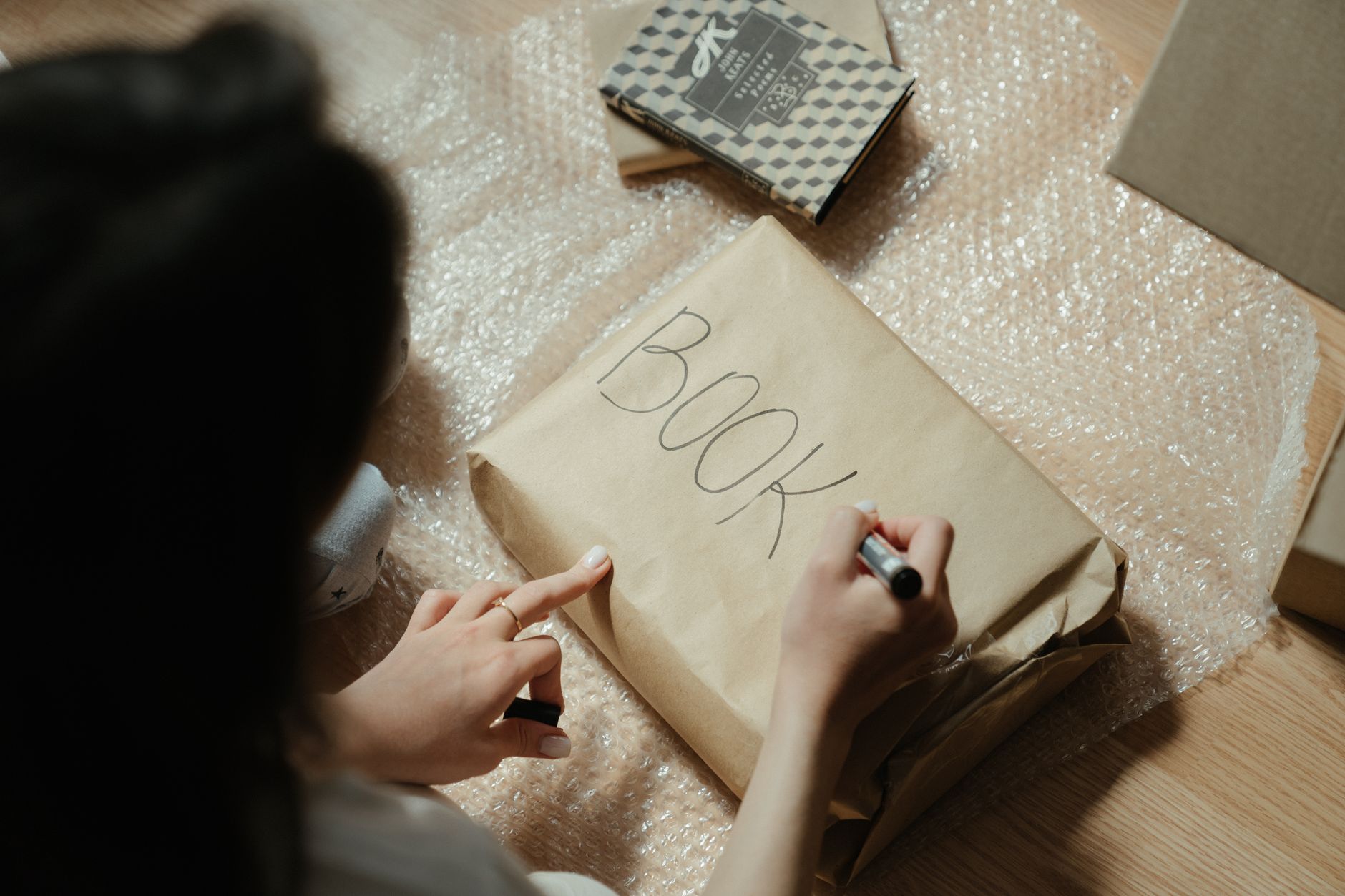
A standard book weighs 300 g and can be replaced with a single click. An antiquarian book is unique. Its 18th-century calf binding is vulnerable to crushing, its spine may split under lateral pressure, and its gilt edges can scratch against the slightest metallic particle. Its price quickly climbs into the thousands of euros: a single incident can turn an annual profit margin into a total loss.
Three key factors separate a successful shipment from a failed one: the chemical quality of materials in contact with the binding, the mechanical structure of the outer packaging, and financial coverage in case of damage. Neglecting any one of these is tantamount to gambling. We examine each in turn, without detours.
Direct contact with the binding is the most critical step. Newsprint, untreated kraft paper, ordinary paper towels: all are acidic, often with a pH below 5, and their acidity can migrate to the leather or old paper within weeks. For a 48-hour transit, the risk is minimal. But for a shipment that sits in customs at JFK for two weeks, brown migration stains begin to appear along the edges.
The standard solution, used in conservation workshops, is acid-free tissue paper compliant with ISO 9706 (paper permanence). In practice: neutral to slightly alkaline pH, alkaline reserve with calcium carbonate, and very low lignin content. These papers are available from conservation suppliers (Stouls, Sansacid, La Compagnie du Kraft), at around €15 to €30 per 50-sheet roll depending on size. One roll lasts for several hundred shipments.
Next comes the cushioning layer: 5 to 10 mm cross-linked polyethylene foam, or single-flute corrugated cardboard sheets placed around the wrapped book. Moisture control is also important. In extreme cold or heat, a desiccant sachet slipped into the crate is not excessive.
Three mandatory layers: ISO 9706 acid-free tissue in contact with the book, foam or corrugated padding as a sandwich core, and a double-wall outer box. Simple test: the book must not shift when the sealed parcel is shaken.
The guiding principle: a box within a box. The book is completely immobilised and never touches the outer walls. Any impact energy is absorbed by the padding before reaching the binding.
The right choice depends on three factors: the book’s value, destination, and required speed. No single carrier is universally best; each has its niche.
| Carrier | Ad valorem insurance ceiling | Ad valorem surcharge (indicative) | Estimated delivery time | Recommended use |
|---|---|---|---|---|
| Colissimo France (La Poste) | up to €1,000 with ad valorem option | a few euros per €100 declared | 2-3 business days | Books up to €800, metropolitan France |
| Chronopost | up to €5,000 declared value (tiers) | a few euros to several tens depending on tier | D+1 France, D+2 Europe | Books from €500 to €5,000, urgent shipments |
| DHL Express | Declared actual value (no standard ceiling for books) | approx. 1% of value, minimum flat fee | 1-3 days, worldwide | International, books over €2,000 |
Three notes on this table. First, Colissimo caps around €1,000: beyond that, the excess is not covered, which rules out this service for most first editions and all incunabula. Second, Chronopost requires a detailed invoice to activate declared value: without title, edition, condition, and price, compensation drops to the minimum flat rate. Finally, DHL mandates reinforced packaging for high values: a reasonable requirement, though their collection service sometimes refuses simple corrugated boxes. Check each carrier’s current rates directly on their websites, as they change annually.
Without declared value insurance, default compensation is minimal: a flat rate per kilo at La Poste, a low contractual ceiling at Chronopost. A lost Vicaire worth €1,200 would reimburse you only a few hundred euros. The carrier pockets the difference.
Ad valorem reverses the logic: you declare the true value, pay a small supplement (typically 1% to a few percent depending on the carrier), and are covered up to the full price. Proof requires three documents: a named invoice with precise book description, dated photos of the item’s condition at dispatch, and a traceable inventory number. For exceptionally rare items, standard bibliographic references (Vicaire, Carteret) may be accepted as supplementary evidence.
Beyond the carriers' liability limits, no standard service covers the transit of valuable items. You must use a specialist insurer for high-value goods (Hiscox, AXA Art, La Sauvegarde) who underwrites the policy directly. Expect premiums ranging from a few tenths of a percent to 1% of the declared value for a one-off shipment. For booksellers dispatching several major pieces annually, an annual "all-risk" policy covering goods in transit is the most cost-effective option. Contact these insurers for a tailored quote—rates vary by destination and shipping frequency.
Exporting to non-EU countries requires navigating a series of formalities. The HS code for printed books is 4901.99. Original editions and incunabula may fall under chapter 9705 (collectors' items) or 9706 (antiquities over 100 years old), with differing tax and customs implications. In case of doubt, request a Binding Tariff Information (RTC) from the General Directorate of Customs.
In France, an export certificate issued by the Ministry of Culture is mandatory for cultural property exceeding certain age and value thresholds set by heritage law. For printed books, manuscripts, and incunabula, the thresholds differ: for example, a book over 100 years old valued at more than €50,000 requires a certificate. The processing time can be up to four months. Without this certificate, the parcel will be held at the border. Check the latest guidelines at culture.gouv.fr.
For imports into France, old books benefit from a reduced VAT rate of 5.5% (Article 278-0 bis of the French Tax Code). In the United States, antiquarian books are generally exempt from customs duties (Harmonized Tariff Schedule codes 9701 to 9706), though the recipient may still owe local state taxes. The customs form (CN23 for postal services, commercial invoice for couriers) must clearly state “Antiquarian book—printed before 1900—for personal collection” along with the value in euros.
For sensitive destinations (Russia, China, United Arab Emirates), allow one to three weeks for customs clearance and opt for a DAP (Delivered at Place) incoterm rather than DDP: this keeps control of formalities in your hands and avoids advancing the recipient’s taxes.
Not all books ship the same way. A Bradel binding with a smooth spine, a Blaeu atlas in-folio, or a restored Hetzel publisher’s binding require specific handling protocols.
For weakened full-leather bindings (dry sheepskin, torn headbands, split hinges), insert a rigid acid-free archival box that conforms to the book’s dimensions before wrapping it in tissue paper. Large-format atlases must always travel flat in custom-made crates, never upright: during transit, the inertia of the paper can deform the gatherings. For an 8 kg atlas, order a wooden crate or triple-wall cardboard box; the cost (€40 to €80) is negligible compared to the book’s value.
Extreme case: books already weakened by damp, foxing, or damage from booklice or silverfish. Before any transport, consult a book conservator to avoid turning a restorable piece into a lost cause. A volume whose binding hangs by a thread cannot withstand a 48-hour journey, no matter how well packed. It is better to postpone shipping, stabilize the book, and then send it.
No, never for items valued over €50. A padded envelope does not absorb lateral shocks from automated sorting and offers no rigidity against crushing. It may be acceptable for a common, low-value book. For any bound, old, or sentimental volume, a rigid double-wall cardboard box is the minimum requirement.
Three steps within 48 hours. Refuse delivery if damage is visible, or note detailed reservations on the delivery slip (“carton crushed, binding to be checked”). Photograph both the packaging and the book before unpacking. Report the damage to the carrier within the contractual period (often three business days), providing dated invoices and photos. Without these three steps, compensation is at risk.
Yes. Under-declaring risks seizure for false declaration, penalties, and invalidates the carrier’s ad valorem coverage. Honest declaration, accompanied by an export certificate when required, is the only safe route. Customs now cross-check online valuations and quickly detect inflated or deflated values.
A few days without issue if the packaging is neutral and hermetically sealed. Beyond two to three weeks (slow customs, holiday periods, distant destinations), humidity and temperature fluctuations can damage bindings. Include a desiccant sachet, choose an express carrier, and avoid shipping during peak summer months or year-end holidays.
Yes, and it is often the best option for those inheriting a library or wishing to part with a single item without managing the logistics. A valuation by a specialist bookseller determines the value, and the professional handles packaging, insurance, and customs formalities. This is what La Librairie Antique has been doing for colleagues and private clients for thirty years.
Before packing a book yourself that you do not recognise, seek an opinion. Free and confidential valuation: we handle logistics, insurance, and formalities if you decide to sell.
Tell us what is not working, we fix things quickly. The page you are on is attached automatically.