0
0,00€
An empty cart
You have no item in your shopping cart


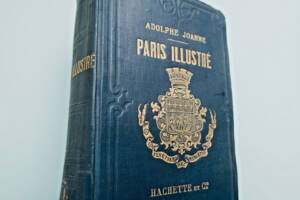
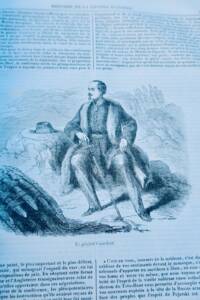
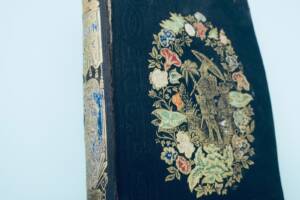
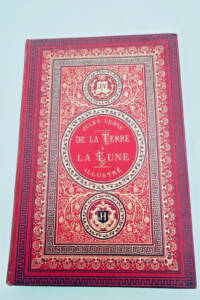
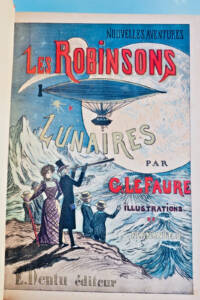
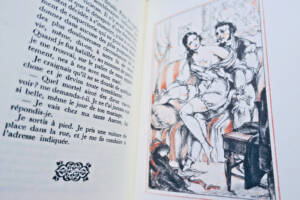
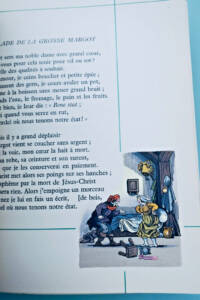
The 19th century is the century of the illustrated book and publisher’s bindings. For the first time, books arrived at the bookseller already bound, with decorated covers designed to entice the buyer. This commercial revolution produced objects of considerable visual richness, now among the most sought-after by collectors.
Until the early 19th century, books were sold in sheets, and buyers had them bound according to their own taste. Two copies of the same title could therefore be dressed very differently. From the 1830s onwards, publishers began routinely issuing books already in publisher’s bindings, with identical printed or stamped decoration for the entire print run.
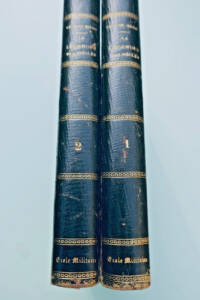
For the collector, this means that on a 19th-century book, the presence of the original publisher’s binding is a major value criterion. A copy rebound in half-binding in the 20th century—even if carefully done—is worth significantly less than the same title in its fresh original publisher’s binding.
For identical titles, the differences in value can be substantial and depend on specific factors.
Three common mistakes often made by novice buyers.
Confusing period binding with publisher’s boards. A fine nineteenth-century half-binding is not a publisher’s boards, and while it may appear more luxurious, it is often less valuable.
Overestimating the date. Many of these books bear no date on the title page. The date may appear at the foot of the spine or can be deduced from the style of the boards and the publisher’s address. The same text may have been reprinted for thirty years.
Neglecting condition under the pretext of rarity. With publisher’s boards, condition is more critical than with almost any other type of book, because the object is bought precisely for its appearance.
By the publisher’s address, which changes with each move, by the style of decoration, and by bookseller catalogues sometimes bound at the end of the volume, which can often be dated to the nearest year.
Rarely, and never by oneself. Visible restoration affects value, and clumsy intervention is irreversible. Seek advice before making any decision.
Most are common, but certain bindings, formats, and illustrators are sought after. This is an area where the gap between the ordinary and the rare is hard to discern without experience: have them examined before dismissing them.
Send us photographs of the front cover, spine, and title page: our valuation service is free and responds within 48 business hours.
Voir tous les ouvrages disponibles sur cartonnage dans le catalogue
Tell us what is not working, we fix things quickly. The page you are on is attached automatically.