0
0€
Your cart is empty
You have no items in your cart


An antique engraving is a print: an image produced from a wood, metal or stone matrix, pulled in multiple copies. Its value depends on the technique, the artist, the quality of the impression, the margins and the condition. Here is how to identify an etching, a lithograph or a woodcut, to distinguish them from a reproduction, and how to preserve them, along with the prints we currently offer.
Original prints, interpretive engravings, collections and illustrated books with engravings: our selection is updated with each new acquisition.
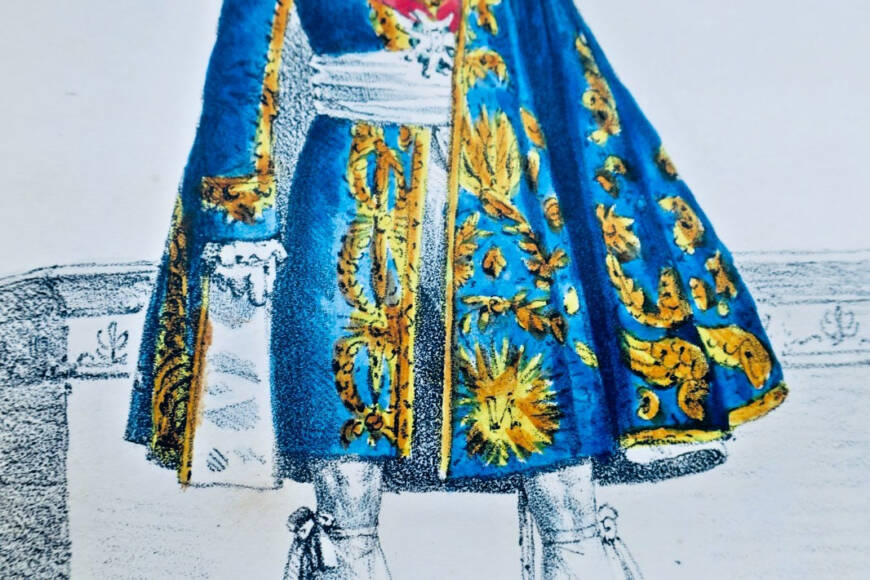
 Costumes civils et militaires 208 lithographs Lecomte/Martinet1 450€ View details ›
 cirque MOUREY Fêtes foraines de Paris. Original lithographs by GRAU SALA750€ View details ›
 Bush Creatures. Illustrated by André Collot660€ View details ›
 Chantilly landscape engraving by Sadoux, 1887600€ View details ›
 Original engravings of horses from the 15th & 17th century440€ View details ›
 Original Etching by MILLET440€ View details ›
 Illustrated edition of a French classic390€ View details ›
 Venice through Jules Gourdault’s etchings350€ View details ›
 Mousquetaires Dumas Les Trois Mousquetaires illustrated by CHOPY in etchings270€ View details ›
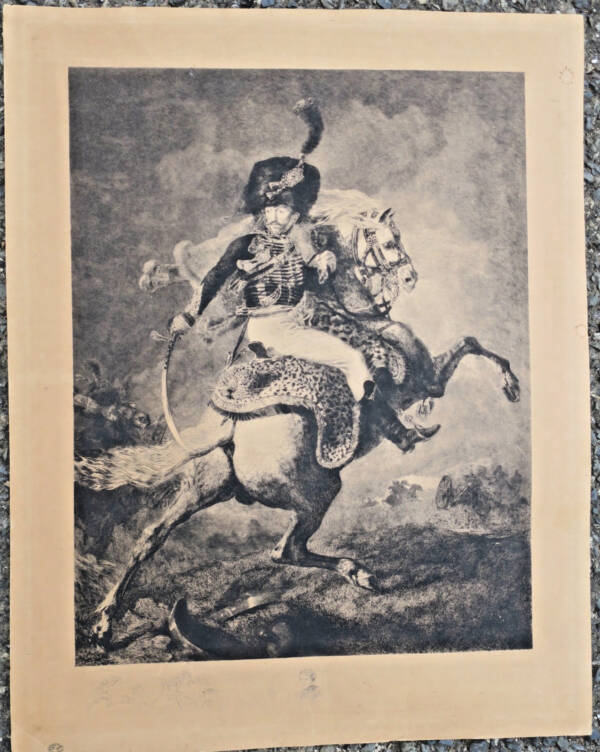 Géricault Officier de chasseurs à cheval... etching with remarks250€ View details ›
 Historic College Overview226€ View details ›
 Collège Henri IV in 1861, aerial view etching226€ View details ›
See all available books for “gravure” ›
Free delivery in mainland FranceSecure payment: card, PayPal, bank transfer, cheque14-day returns
In woodcut, the areas around the design are cut away and only the remaining parts receive ink: this is known as the white-line technique. Plank wood, cut along the grain, is the oldest; end-grain wood, cut across the grain and harder, popularised by the Englishman Thomas Bewick around 1800, allows for the fine detail of Romantic vignettes and illustrations by Gustave Doré, translated by engravers such as Héliodore Pisan. The Épinal imagery, founded by Jean-Charles Pellerin in 1796, hand-coloured its woodcut images using stencils.
In intaglio engraving, ink settles in the incised lines and the plate passes under strong pressure. The burin directly incises the copper; etching uses acid to bite into a design drawn in varnish; drypoint scratches the metal, creating a velvety line that quickly wears; aquatint and mezzotint produce tonal effects. In the 19th century, steel, harder than copper, enabled long print runs for views and illustrated books.
Invented by Aloys Senefelder in Munich from 1796, it relies on the repellence of water and grease: the artist draws with a greasy crayon on a limestone slab. Introduced to Paris in 1802, it became the art of caricaturists and costume collections; chromolithography, in colour, replaced woodcut in popular imagery from the late 1840s.
Below the image, engraved inscriptions name the contributors: pinxit for the painter, delineavit for the draftsman, sculpsit for the engraver, excudit for the publisher. An engraving that reproduces a painting or drawing by another artist is an interpretive engraving; an original print is conceived and engraved by the artist, or under their supervision. Both are collected, at different prices.
The pencil signature and numbering (12/50, or E.A. for artist’s proof) only became common in the late 19th century: an 18th-century engraving signed in pencil should arouse suspicion. Collectors also prized before-the-letter impressions, pulled before the title engraving, and remarques, adorned with a small sketch in the margin.
Then there are restrikes: the Chalcographie du Louvre, founded in 1797, still prints etchings from old copper plates. These are modern impressions and must not be confused with period proofs. By contrast, the plates of Diderot and d’Alembert’s Encyclopédie, assembled in eleven volumes completed in 1772, are genuinely period pieces, even when removed from their original context.
An impression retains its value only with its margins: trimmed to the edge of the image, it loses much of its worth. Next, check for foxing, damp stains, tide lines from a sheet left on the wall, and yellowing caused by an old acidic mat.
For framing, insist on conservation mounting: Japanese paper hinges, neutral board, UV-filtering glass, never lining. Unframed, store sheets flat in acid-free folders. A 19th-century etching often sells for a few dozen to a few hundred euros; fine early proofs by the old masters command far higher prices.
Our stock blends original prints, such as Charles Meryon’s views of Paris, author of the Eaux-fortes sur Paris etched between 1850 and 1854, 19th-century reproductive etchings, lithographed suites of military uniforms and images d’Épinal.
Look for the plate mark, examine the lines under a magnifier and inspect the paper: laid paper from the hand-press era shows its chain lines by transparency. A regular grid of dots indicates a reproduction. A clear photograph of the image, margins and verso is enough for a bookseller to give a preliminary opinion.
Yes. Before the late 19th century, prints were not signed in pencil; the artist’s and engraver’s names appear on the plate itself. Only modern prints are normally hand-signed and numbered.
Not you: no eraser on foxing, no adhesive tape on a tear. A paper conservator can reduce foxing and damp stains; for a common print, good framing is often sufficient.
Yes, if it was engraved: a plate from the Encyclopédie or a steel engraving from a 19th-century book is a period impression. It is generally worth less than a separately issued print, and a complete book should never be disbound.
Looking for a specific title?
Tell us what you are looking for: new books arrive every week and we will let you know as soon as a copy comes in.
Write to usDo you own antiquarian books?
The bookseller appraises them free of charge and may offer to buy them.
Get an appraisalAlert me about new Gravures et estampes anciennes arrivals
New books arrive every day. Leave your email address: you will receive a message as soon as a matching book enters the shop, never more than one a day.
All our authors ›Our themed collections ›Our sections ›Full catalogue ›
Tell us what is not working, we fix things quickly. The page you are on is attached automatically.