0
0€
Your cart is empty
You have no items in your cart


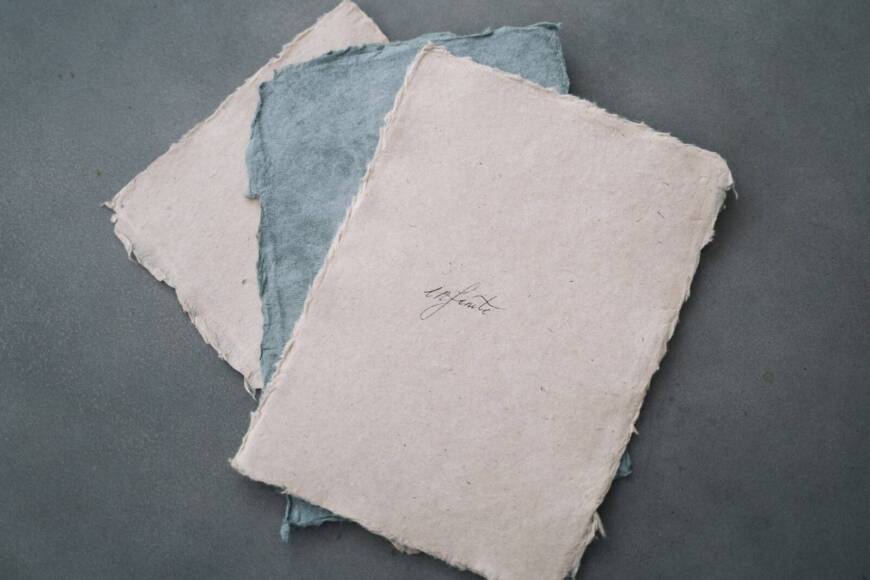
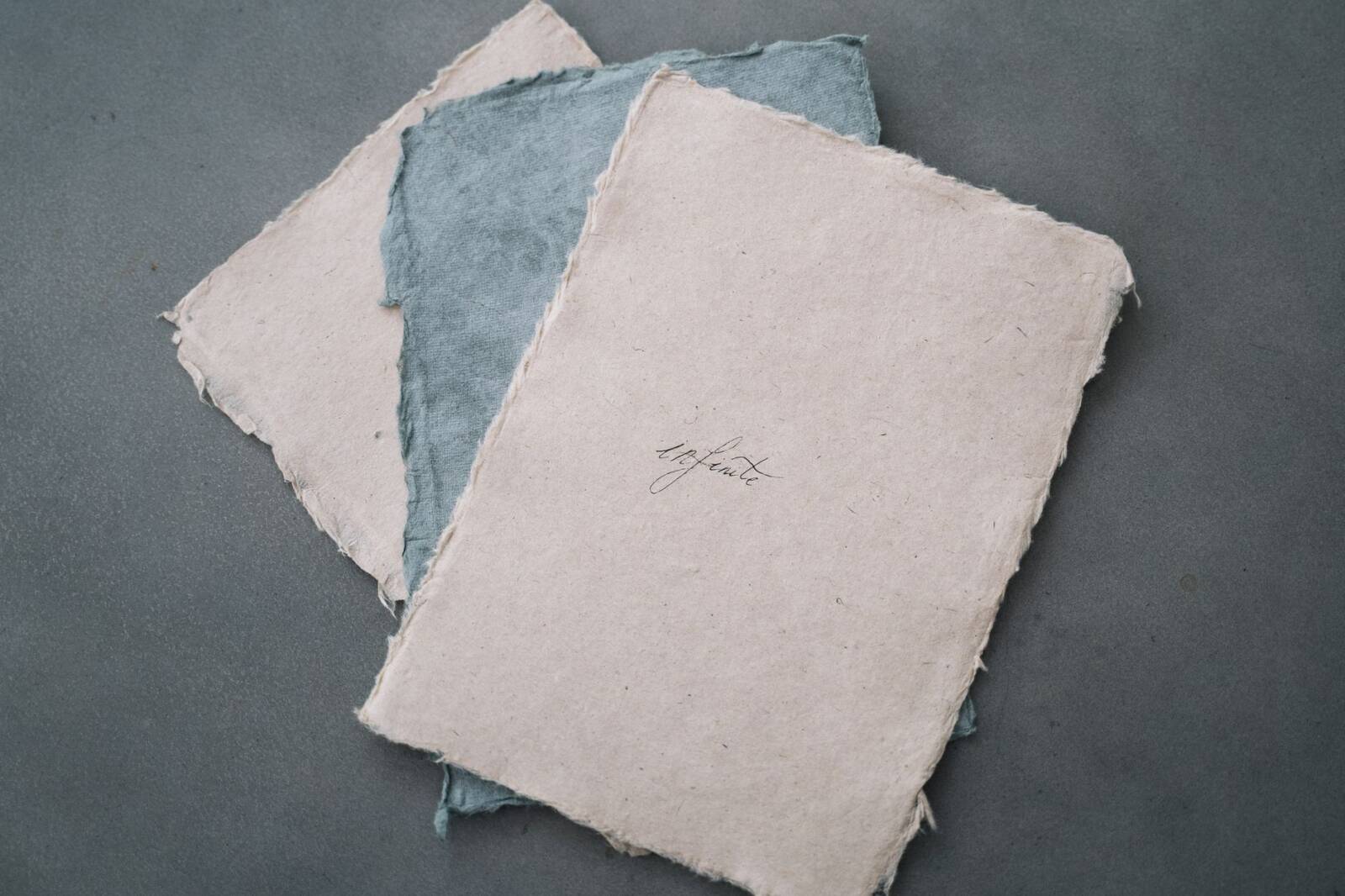
Japan, China, Holland, Arches, Lafuma, Montval, Madagascar, Annam. Behind these names lies the entire grammar of limited editions. Understanding these fine printing papers means learning to read a justification of printing and spotting in seconds what turns a standard book into a collectible piece.

From the 16th century, certain printers reserved a few copies of a print run for more beautiful sheets: vellum, China, Japan. The practice became systematised in the 19th century, when French publishers launched luxury collections and numbered their print runs. The golden rule, passed down by Left Bank booksellers for a century, boils down to one line: choose the largest paper in the smallest print run. On an original edition printed in 5 Japan, 25 Holland and 500 vellum, number 3 on Japan is worth several times number 4 on Holland, itself above the standard vellum.
What gives a sheet its value is the triptych fibre + format + numbering. The justification of printing, printed at the end of the work, precisely indicates which paper you are holding. Without it, no collectible piece — learning to spot a first edition always begins with reading this page.
The historical hierarchy of fine papers, handed down by antiquarian booksellers, generally places in this order: China, Japan, Holland, laid papers, vellums, alfas. Nothing is set in stone — an Imperial Japan from 1925 can surpass an ordinary China depending on the publisher and the number — but this remains the stable reference since Vicaire and Carteret.
| Paper | Fibre | Origin | Typical catalogue mention |
|---|---|---|---|
| China | Bamboo | China | 1 of 5 copies on China, no. 3 |
| Imperial Japan | Kozo (paper mulberry) | Japan | 1 of 12 copies on Imperial Japan |
| Pearl Japan | Layered kozo | Japan / France | 1 of 20 copies on Pearl Japan |
| Holland Van Gelder | Rag, laid | Netherlands | 1 of 50 copies on Holland Van Gelder |
| Arches | Rag, wove | Vosges | 1 of 100 copies on Arches wove |
| Lafuma-Navarre | Rag | Voiron (Isère) | 1 of 200 copies on Lafuma |
| Montval | Rag | Marly-le-Roi / Canson | 1 of 30 copies on Montval |
| Madagascar | Raffia, linen | Madagascar | 1 of 25 copies on Madagascar |
| Annam | Mulberry, bamboo | Indochina (Vietnam) | 1 of 10 copies on Annam |
Paper-making in Japan dates back to the early 7th century, according to the tradition spread by Buddhist monks from Korea and China. Quickly, Japanese craftsmen adopted kozo (paper mulberry), sometimes mixed with gampi or mitsumata. These long fibres give Japan its legendary flexibility: you can pull on it, it will never split straight, it creases but does not break.
Three variants are found in the antiquarian book trade. Imperial Japan, the most prestigious, is thick, matte, slightly ivory—a dense, warm handmade paper. Pearl Japan, satin-finished by coating, displays a silky sheen; it dominated early French limited editions of the 1920s and 1930s. Antique Japan, mentioned on certain 19th-century imprints, refers to sheets imported before industrialisation. Glossy and sturdy, this paper remains restorers’ preferred material for mending tears or reinforcing hinges—a topic covered in our note on professional book restoration.
Chinese paper is made from bamboo fibres, sometimes with added rice straw. Very thin, slightly grey, as soft as silk, it takes ink with a clarity few Western papers can match. The process of cooking and draining bamboo is described in Song Yingxing’s Tiangong kaiwu, a technical encyclopaedia published in 1637 under the Ming dynasty.
In the 19th century, some French publishers printed only 1, 2 or 3 copies per run on China paper, reserved for the author, the publisher or a privileged subscriber. This is the mechanism of absolute rarity: for a sought-after Romantic book, the "China paper" copy can fetch prices at auction several times higher than the standard edition. Do not confuse this with "China lining": in that case, it refers to a thin sheet of China paper applied to a thicker stock, a common technique for 19th-century prints and one you may also encounter in illustrated bibliophily.
Standard hierarchy: China > Japan > Holland > laid > wove > alfa. The decisive criterion remains the print run number: a no. 2/5 on China always outranks a no. 1/100 on wove. Always verify the justification before purchasing.
Anatole France wrote of the Holland paper that it is “the only one that is durable, sturdy, rich, and suitable for deluxe books.” The brand Van Gelder Zonen, founded in 1685 in Apeldoorn, remains the absolute standard, followed by Pannekoek and, on the English side, by Whatman. This laid paper descends partly from techniques brought by French Protestant craftsmen who took refuge in the Netherlands after the revocation of the Edict of Nantes in 1685. Its rag pulp, its laid lines and its chain lines visible in transparency give it an inimitable grain—see our comparison laid vs wove paper for details on structure.
In our catalogue, you will find it under precise descriptions: “Holland Van Gelder,” “pure linen Pannekoek,” “toned Holland.” Original editions from NRF, Mercure de France and Gallimard from the interwar period used it extensively for intermediate runs, generally numbering between 30 and 200 copies—this encompasses the entire bestiary of major French publishing houses.
The Arches wove, produced in the Vosges since 1492 according to the mill’s website, became in the 20th century the standard for modern illustrated books, from Skira to Teriade’s painter books. It combines surface smoothness with strength: ideal for drypoint, etching and lithography.
Lafuma-Navarre has a precise industrial history. In 1901, André Navarre partnered with two paper-making families near Voiron, in Isère: the Lafuma family, whose Paviot mill had been operating since the mid-19th century, and the Berthollets. The company Lafuma-Berthollet-Navarre was born, later becoming Papeteries Navarre. More economical than Arches, Lafuma appears on major 20th-century bibliophile runs, generally numbering between 200 and 1,000 copies. Rives, another historic name, comes from the mills of the Dauphiné; it appears on Vollard and Skira illustrated editions.
Montval originated as an artistic commission. Around 1910, sculptor Aristide Maillol sought the perfect sheet for his wood engravings of Virgil’s Eclogues. His nephew Gaspard Maillol set up a small mill in the hamlet of Montval, near Marly-le-Roi. The First World War scattered the equipment; upon Gaspard’s return, production shifted to the Canson & Montgolfier papermills, which retained the swimmer watermark. You will encounter it on livres d’artistes from the interwar period, often in limited print runs.
The Madagascar and Annam papers are colonial sheets with a short but coveted tradition. The Madagascar, made from raffia, features a distinctive dark vegetable grain. The Annam, from Indochina — now Vietnam — is woven from mulberry and bamboo fibres. Both appeared in French bibliophily between the 1920s and 1960s, generally in very small print runs of 5 to 25 copies, sometimes as the first issue of surrealist editions — a topic covered in our guide to collecting Breton, Aragon and Eluard.
Rag or vegetable-fibre papers remain stable for centuries if they can breathe. ISO 11799 on the preservation of library and archive materials recommends a relative humidity of 30–50 % and a stable temperature, generally between 16 °C and 19 °C. Avoid direct light: ivory Japan paper yellows within months on a sunlit shelf. For practical details, consult our guide humidity, light and the preservation of old books. And if you notice brown spots, diagnose foxing before handling.
A Japon, Chine, or Hollande Van Gelder? Our bookshop offers free expert appraisal of limited editions and original printings on large paper. Request an appraisal or browse our catalogue.
Imperial Japan paper is matte, thick, slightly creamy, with long fibres visible in transparency. Pearlescent Japan paper has a satin sheen due to its surface coating. To the touch, imperial paper is rougher, pearlescent paper smoother—rather like a Bible page compared to a luxury catalogue page.
Almost always, for the same edition, yes. Chine paper is typically printed in 1–5 copies, whereas Hollande is usually 30–200. However, a numbered Hollande Van Gelder (1/50), a presentation copy with author’s inscription, may exceed the value of a Chine (no. 4/5) of a minor work. It all depends on the rarity combined with the quality of the content.
A thin sheet of Chine paper glued onto a thicker verge or vellum support. This technique was mainly used for 19th-century prints: the Chine paper absorbs ink finely, while the vellum provides sturdy backing. In catalogues, carefully distinguish “sur Chine” (entirely Chine paper) from “Chine colle” (a pasted-down sheet).
No. Parchment vellum is calfskin from stillborn calves, very smooth, used as a writing surface until the 17th century. Vellum paper mimics its appearance: no visible chain lines or laid lines, uniform surface. Our comparison laid paper vs. vellum paper explains the difference in detail.
Both increase in value together. A large-paper copy without an inscription sells at the level of the edition; a presentation copy on ordinary paper sells for the recipient. The ideal—and highest premium—is a numbered limited edition with an autograph inscription. See our note on autograph inscriptions and their value.
Tell us what is not working, we fix things quickly. The page you are on is attached automatically.