0
0€
Your cart is empty
You have no items in your cart


The preservation of an old book depends on three measurable parameters that you can assess at home with €30 worth of equipment: relative humidity, light, and temperature. When controlled, these three factors determine whether your red and gold Hetzel will survive another two centuries or join the ranks of warped bindings and foxed pages. Below are the thresholds used by the BnF (Bibliothèque nationale de France) and IFLA, adapted for a private library without climate-controlled display cases or a museum budget.
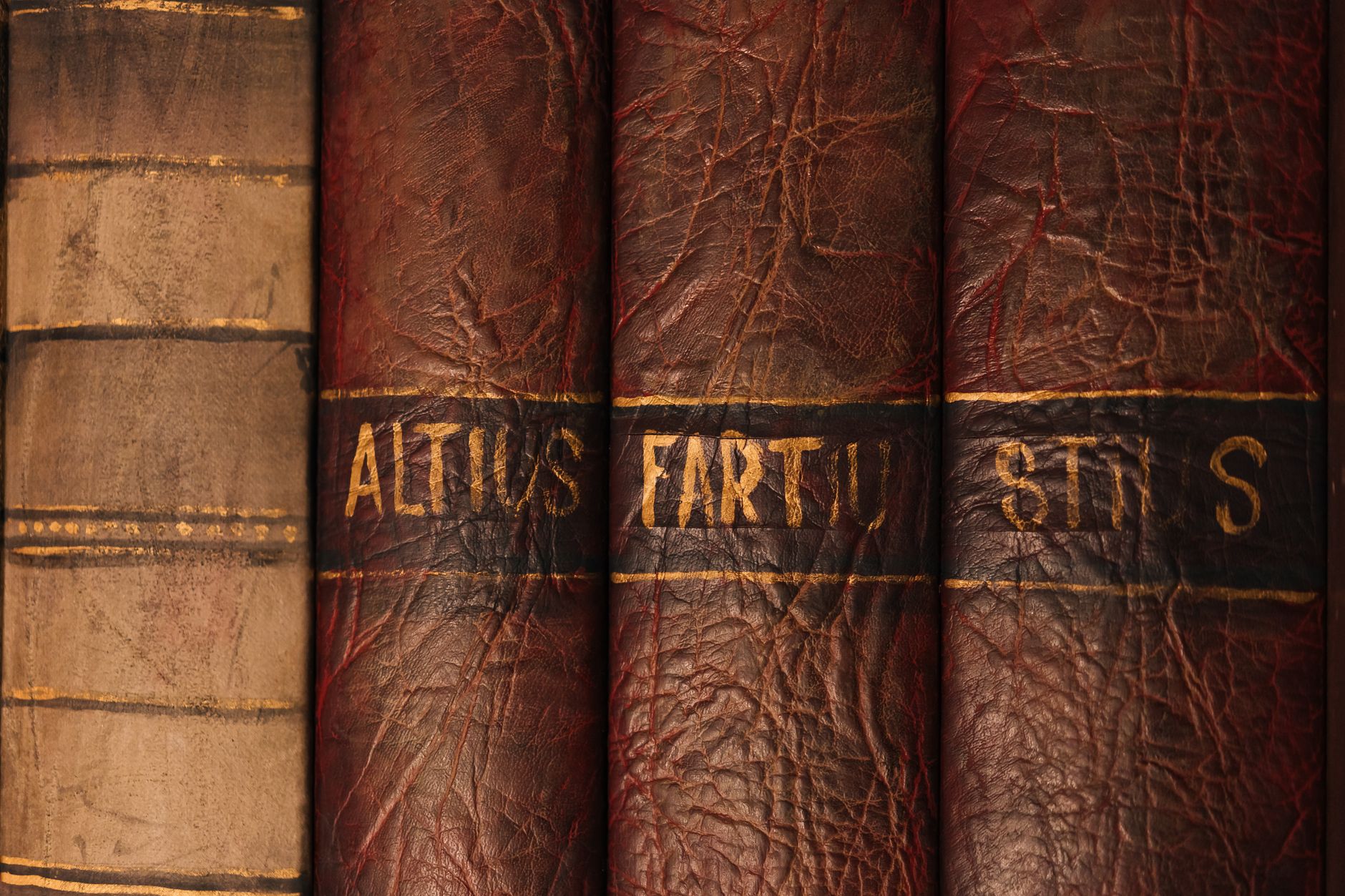
Rag paper, parchment, leather bindings, and animal glues are hygroscopic. They absorb and release moisture in response to ambient air. With each cycle, fibres swell and then contract, joints weaken, and gilt edges crack. Conservators call this mechanical fatigue. Two chemical reactions finish the job: acid hydrolysis breaks down cellulose chains (accelerated by humidity) and oxidation yellows and then browns the paper (accelerated by heat and light).
Sven Arrhenius’s rule, adopted by conservation laboratories: for every 5 °C increase, the rate of chemical degradation roughly doubles. Lowering the temperature in your library from 26 °C to 16 °C increases a book’s life expectancy by a factor of four — without touching the binding. It’s the single most cost-effective step you can take to preserve your volumes.
This is the trickiest parameter because it’s invisible. The BnF recommends 50 % RH ± 5 % for paper, leather, and parchment in its stores. IFLA allows a wider range, 30–50 % RH depending on the material, with a maximum fluctuation of 5 % over 24 hours. For a private library, aiming for 45–55 % RH is a practical compromise year-round.
What happens outside these limits:
A useful rule of thumb: a 1°C variation causes approximately a 3 to 4% change in relative humidity in an enclosed space. Regulating the thermometer is already regulating the hygrometer.
IFLA standards converge around 16 to 18 °C for storage areas. In a lived-in library, aiming for 16 to 20 °C is manageable without turning your living room into a cold storage room. The key is not the absolute value, but stability. A room that swings from 18 °C at night to 26 °C during a summer day causes more damage than a constant 14 °C cellar.
The classic trap in metropolitan France: the boiler kicking in during October heats the living room to 22 °C, warm air absorbs more moisture, RH drops to 30%, and leathers crack. Simple solution: a small humidifier and a thermostat capped at 19 °C in the library room during the heating season.
The BnF sets an exposure limit of around 50 lux for sensitive graphic materials, equivalent to low, indirect light. Beyond this, pigments in illustrations, inks, and paper yellow irreversibly. Field rule: never direct light on a stored book, and a maximum of 50 to 100 lux for reading.
Ultraviolet rays remain the number one enemy. They degrade cellulose, yellow paper within months, and fade Romantic-era bindings like those by Hetzel for Jules Verne. UV comes not only from sunlight but also from fluorescent lights and some cheap LEDs.
Three steps account for 80% of the work:
| Parameter | Target | Tolerance | Source |
|---|---|---|---|
| Relative humidity | 50% | ± 5% | BnF, storage areas |
| RH (acceptable range) | 30–50% | ± 5% / 24 h | IFLA |
| Storage temperature | 18 °C | ± 1 °C | IFLA / BnF |
| Private library | 16–20 °C | Stability priority | Workshop practice |
| Reading illumination | 50 lux | ≤ 100 lux occasional | BnF |
| UV | 0 | Filtration > 99% | IFLA / BnF |
An old book tolerates imperfect but stable conditions better than perfect but unstable ones. If you were to buy only one item for your books, it would be a hygrometer. The second most useful item would be UV-blocking films for windows.
No need to turn a cabinet into a heritage storage space. With €150 to €400, you can cover the essentials:
Over the course of estate appraisals (see our guide to libraries after death and succession), the same pitfalls recur:
The parchment is the most temperamental material. It warps as soon as relative humidity exceeds 55% and shrinks below 40%. For parchment manuscripts, aim for a strict 50% RH and store flat in a conservation box. Leather (morocco, calf, basan) requires a slightly higher RH (50–55%) to remain supple. Dressing with leather balm should be occasional and light: excess grease will stain the boards and darken the leather. Old photographs and albums need a lower RH (30–40%) — incompatible with bound books. Do not store them side by side.
Yes, briefly and outside periods of very high humidity. Five minutes of ventilation twice a week renews the air without destabilising humidity levels. Avoid rainy or thick-fog days, and never direct draughts onto the shelves.
Provided it is regulated at low temperature (water at 28–32 °C at the outlet) and that the lower shelves do not rest directly on the warm floor. Otherwise, chronic dryness of the bottom row and shrinkage of leather bindings may occur.
No. Plastic traps moisture, suffocates leather and encourages mould. Use acid-free tissue paper, a Tyvek envelope or a pH-neutral cardboard box. For occasional shipping, see our guide shipping an antiquarian book.
As little as possible. A light dressing (neutral balm such as microcrystalline wax) every 5 to 10 years is sufficient for sound leather. On dried morocco, it is better to consult a bookbinder — excess grease is very difficult to rectify.
It protects against dust and limits direct light, provided the glass is UV-treated and the cabinet is not airtight. A completely sealed display case creates an unstable microclimate: ensure ventilation or include silica gel inside.
Our firm appraises and acquires antique libraries in France. Request a free appraisal or browse our catalogue of rare books.
Tell us what is not working, we fix things quickly. The page you are on is attached automatically.