0
0€
Your cart is empty
You have no items in your cart


A fine beige dust at the base of the shelf, three pin holes on an 18th-century calf spine, a leaf nibbled like lace: bookworms, silverfish and other pests of antiquarian books work silently, sometimes for years, before their presence is noticed. Here is how to identify them, stop them, and save what can be saved.

The furniture beetle, Anobium punctatum, is the most feared pest in antiquarian libraries. The adult measures 2 to 5 mm, reddish-brown to dark brown, and flies little: it often emerges from a neighbouring book. It is the larvae that do the damage, tunnelling for two to three years through fine galleries inside wooden boards, joints, and sometimes even the paper itself when humidity is high.
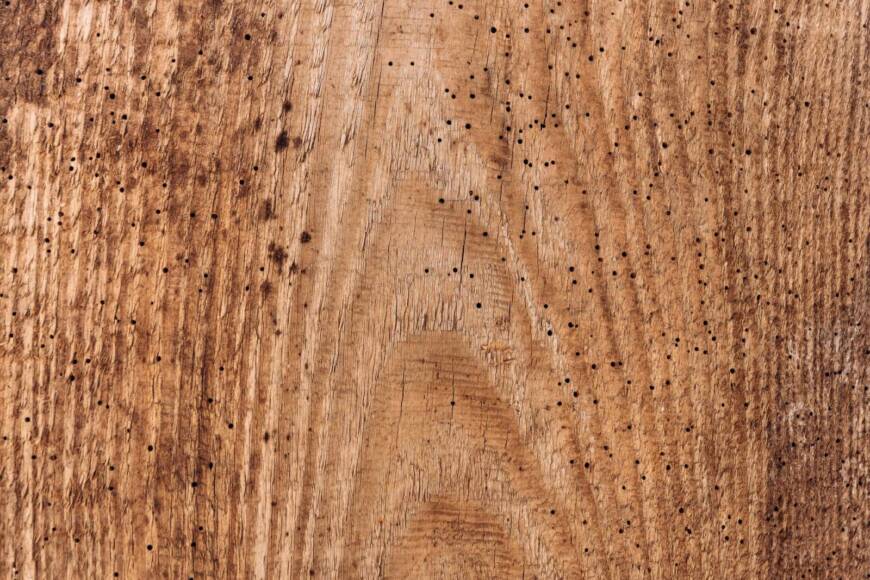
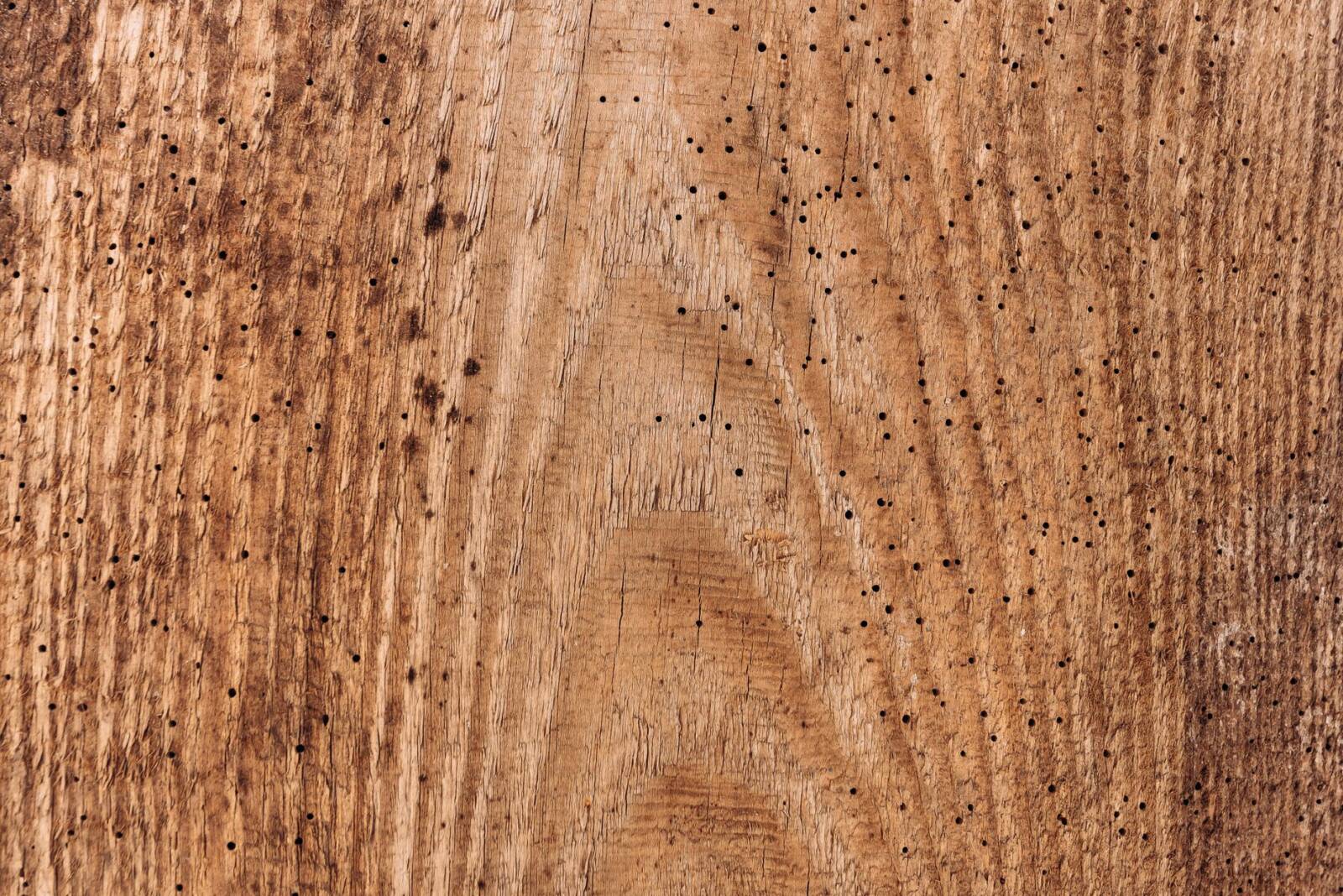
The signs to look for: round exit holes 1 to 2 mm in diameter, very fine wood dust (vermoulure) at the base of the book or at the bottom of the shelf, and, when cut open, winding galleries following the grain of the wood. On bindings with oak or beech boards (typically monastic bindings before 1600), the bookworm can turn a wooden board into a sponge in a few decades. The CICRP (Interregional Centre for Conservation and Restoration of Heritage) classifies it among the priority pests of written heritage.
The silverfish (Lepisma saccharina) is not wood-eating: it feeds on starch. And starch, in a library, is everywhere: binding glue, edge treatments, old endpapers, labels, 19th-century cardboard adhesives. The insect measures 8 to 12 mm, avoids light, and prefers humid areas above 65% relative humidity. It is first and foremost a sign of humidity, long before it becomes a problem in itself.
Damage appears as surface scratches, sometimes as small irregular bites along the edges of pages or on endpapers. According to the Bulletin des bibliothèques de France (2005), the silverfish is among the three most reported insects in French libraries, alongside the bookworm and the carpet beetle. Its presence is never isolated: if you see one silverfish, there is a colony, and the space has a humidity problem that must be addressed before the books.
Three other pests complete the picture, less common but worth knowing:
| Pest | Target | Distinctive sign | Size |
|---|---|---|---|
| Lesser furniture beetle (Anobium) | Wood, damp paper | Round holes 1–2 mm + fine dust | 2–5 mm |
| Silverfish | Starch, glue, endpapers | Surface grazing, erosion | 8–12 mm |
| Carpet beetle | Leather, parchment | Irregular holes + hairy cast skins | 2–3 mm |
| Cockroach | Adhesives, paper | Black droppings, rubbed appearance | 10–15 mm |
| Booklouse | Mould | Presence = fungal issue | 1 mm |
Moulds are not pests but fungi. They colonise paper above 65 % relative humidity, leaving freckle-like stains, halos, or even green or black cottony veils. Unlike insects, they are not killed by cold: the BnF notes that freezing halts vegetative growth but does not destroy spores. For established fungal infestations, vacuum ethylene oxide disinfection remains the gold standard, carried out by the BnF itself or approved contractors. For existing foxing stains, see our article on foxing treatment.
Three conditions favour any infestation: relative humidity above 60 %, darkness, and prolonged stillness. A book that is handled, kept in a ventilated room at 45–55 % humidity and 18–20 °C, will not attract furniture beetles or silverfish. Preventive conservation prevents the vast majority of infestations before they take hold.
For an isolated book, suspected or newly acquired at a flea market, freezing remains the most accessible treatment. The BnF recommends -30 °C for at least 72 hours, and preferably 7 days to comfortably exceed the lethal threshold for insect eggs. A standard household freezer typically reaches -18 to -24 °C: in this case, extend treatment to a minimum of 14 days.
For an entire library, a worm-eaten piece of furniture, or a valuable collection, anoxia is the gold standard treatment in France. The principle is simple: the books are enclosed in a hermetically sealed bubble, the oxygen is replaced with pure nitrogen until the O2 level drops below 0.1%, and the atmosphere is maintained for about three weeks at 20-25°C. Without oxygen, eggs, larvae, and adults die at all stages.
The protocol, documented by regional conservation centres (CRRCOA, CICRP) and the INHA, lasts a full three weeks with continuous monitoring of humidity (50-55%) and temperature. No chemical residues, no alteration of materials, including fragile leathers, illuminations, and gilding. The cost depends on the provider and the volume treated: generally a few tens of euros per linear metre of shelving, with quotes available from a specialist workshop. For a collector’s cabinet of 200 volumes, it is the insurance policy for the collection—and often cheaper than one might think.
As long as the infestation is limited to one or two volumes, domestic freezing is sufficient. But three signs require calling in a restorer or an anoxia workshop: fresh woodworm dust (light powder, not oxidised) found on several books, recent exit holes with clean edges, or the discovery of live adults. In these cases, or for a valuable binding already weakened, it is best to consult our guide on when to entrust a book to a restorer before any treatment.
No. Domestic insecticides leave oily residues that stain paper, attack leather, and migrate into neighbouring pages. Freezing and anoxia are the only methods recommended by the BnF and heritage institutions.
Yes, as a general rule. A cold quarantine (7 to 14 days at -25/-30 °C) before shelving prevents the introduction of woodworms or carpet beetles to your collection. This is the standard protocol followed by most reputable antiquarian booksellers.
To a limited extent. These natural repellents may deter some adult insects but do not kill eggs or larvae. They are no substitute for humidity control (45-55 %) or cold quarantine.
It depends on the extent of the damage. A few discreet galleries on a rare work do not significantly affect its value, especially if the infestation has been stopped and documented. However, a binding reduced to lacework will suffer a severe depreciation.
The larval cycle lasts an average of 2 to 3 years. An unmonitored library can harbour multiple generations over a decade before external damage becomes visible.
We offer free expert evaluations, including for books affected by pests or mould, to determine what can be salvaged.
Request an appraisalSources: BnF, Lettres de la conservation ; BnF, Freezing Protocol ; Bulletin des bibliothèques de France (2005) ; CICRP, Anobium punctatum ; BnF, Preventive Conservation ; CRRCOA, Anoxia Treatment.
Tell us what is not working, we fix things quickly. The page you are on is attached automatically.