0
0€
Your cart is empty
You have no items in your cart




Category / section : Travel and regions
66€
❦One copy only
As with every antiquarian book, this is the only copy we hold. Once sold, it will not be restocked.
Guaranteed authentic
Every book is examined and described individually by us. Professional booksellers since 1993.
In stock
A question about this book? Write to the bookseller ›
Koekelberg. Through time... At the heart of the streets... by Didier Sutter Drukker, in 4to, cardboard binding, 2012, 624 pp., minor wear at the corners of the paper dust jacket Heir to the lordship of Koekelberg established in the middle of the 13th century, briefly united with Berchem-Sainte-Agathe, the municipality of Koekelberg regained its full autonomy in 1841. Long dedicated…
Read full description ↓Koekelberg. Through time... At the heart of the streets...
by Didier Sutter
Drukker, in 4to, cardboard binding, 2012, 624 pp., minor wear at the corners of the paper dust jacket
Heir to the lordship of Koekelberg established in the middle of the 13th century, briefly united with Berchem-Sainte-Agathe, the municipality of Koekelberg regained its full autonomy in 1841. Long dedicated to horticulture, the municipality became urbanised under the pressure of the suburbs throughout the 19th century, growing from 1,900 inhabitants in 1841 to over 10,000 in 1900. The creation from 1880 of the Royal Quarter around Elisabeth Park, the construction of the belt railway and the opening of Léopold II Boulevard, would establish a form of bipolarisation of the municipality, with Old Koekelberg to the east and the Plateau developed by urban planners to the west. Crafts, shops and industries of all kinds would interweave within the urban fabric, coexisting with workers' housing on one side and middle-class residential areas on the other, thereby fostering a social mix that would help shape the sense of belonging among its inhabitants. Now home to 20,000 inhabitants, the municipality of Koekelberg has over time become primarily residential, with tertiary sector jobs only partially offsetting the deindustrialisation that began in the 1960s. After a first part recounting the major stages in the history of the municipality, the reader is invited to explore each of its streets. Each one indeed actively contributes to this collective history, with its own particularities, transformations and events. This "at the heart of the streets" approach facilitates a close connection with the many facets of the municipal heritage.
Very fine copy
Koekelberg. Au fil du temps... Au coeur des rues...
par Didier Sutter
Drukker, in 4°, reliure cartonnée, 2012, 624 pp., petites usures en coins de la jaquette papier
Héritière de la seigneurie des Koekelberg établie au milieu du XIIIe siècle, regroupée durant une brève période avec Berchem-Sainte-Agathe, la commune de Koekelberg recouvrera sa pleine autonomie en 1841.Territoire longtemps dédié à l’horticulture, la commune s’urbanisera sous la poussée des faubourgs tout au long du XIXe siècle, passant de 1900 habitants en 1841 à plus de 10 000 en 1900. La création à partir de 1880 du Quartier Royal autour du Parc Élisabeth, la construction du Chemin de fer de ceinture et le percement du boulevard Léopold II, vont consacrer une forme de bipolarisation de la commune, le Vieux Koekelberg à l’est, le Plateau aménagé par les urbanistes à l’ouest.Artisanat, commerces et industries de toutes sortes vont s’imbriquer dans le tissu urbain, en cohabitation avec les logements ouvriers d’un côté, avec les zones résidentielles des classes moyennes de l’autre, favorisant de fait une mixité sociale qui contribuera à forger le sentiment d’appartenance de ses habitants.Forte aujourd’hui de ses 20 000 habitants, la commune de Koekelberg est devenue au fil du temps avant tout résidentielle, les emplois tertiaires ne compensant que partiellement la désindustrialisation amorcée à partir des années 1960.Après une première partie restituant les grandes étapes de l’histoire de la commune, le lecteur est invité à parcourir chacune de ses rues. Chacune d’elles en effet participe activement à cette histoire d’ensemble, avec ses particularités, ses mutations, ses événements propres. Cette approche “au cœur des rues” facilite un rapport de proximité avec les multiples facettes du patrimoine communal.
Très bel exemplaire
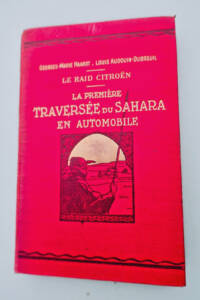 Citroën Haardt & Audouin-Dubreuil The Citroën Raid first crossing of the Sahara33€ View details ›
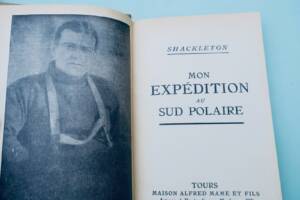 Shackleton My Expedition to the South Polar Regions190€ View details ›
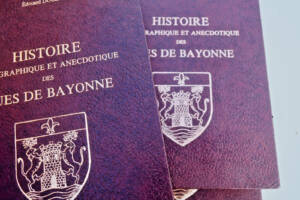 bayonne Topographical and Anecdotal History of the Streets of Bayonne190€ View details ›
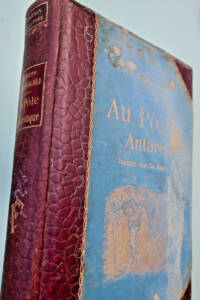 South Pole NORDENSKJÖLD To the Antarctic Pole50€ View details ›
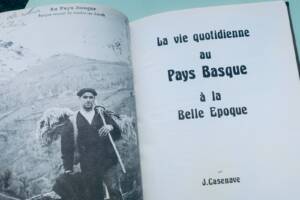 basque Daily Life in the Basque Country in the Belle Époque33€ View details ›
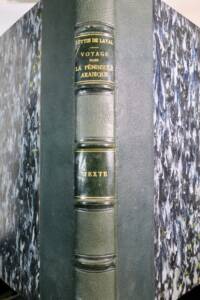 arabia journey in the arabian peninsula, sinai, and egypt 1859326€ View details ›
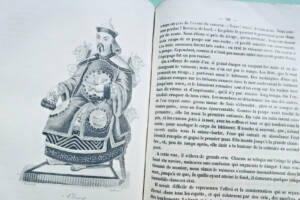 Hattin. Histoire pittoresque des voyages dans les cinq parties du monde 184340€ View details ›
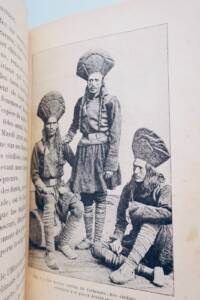 In Hindu lands, impressions of a naval ensign80€ View details ›
Alert me about new arrivals in Travel and regions
New books arrive every day. Leave your email address: you will receive a message as soon as a matching book enters the shop, never more than one a day.
LA LIBRAIRIE ANTIQUE
Independent bookshop since 1993, Paris
Worldwide shipping
Tell us what is not working, we fix things quickly. The page you are on is attached automatically.