0
0€
Your cart is empty
You have no items in your cart


NRF, Mercure de France, Pléiade original Schiffrin: these three names alone encapsulate over half a century of French publishing and consistently drive up auction prices. For the bibliophile, they are not merely brands but schools of publishing, each with its own typography, print runs, and literary ambitions. Here’s how to identify, date, and evaluate them without being misled.
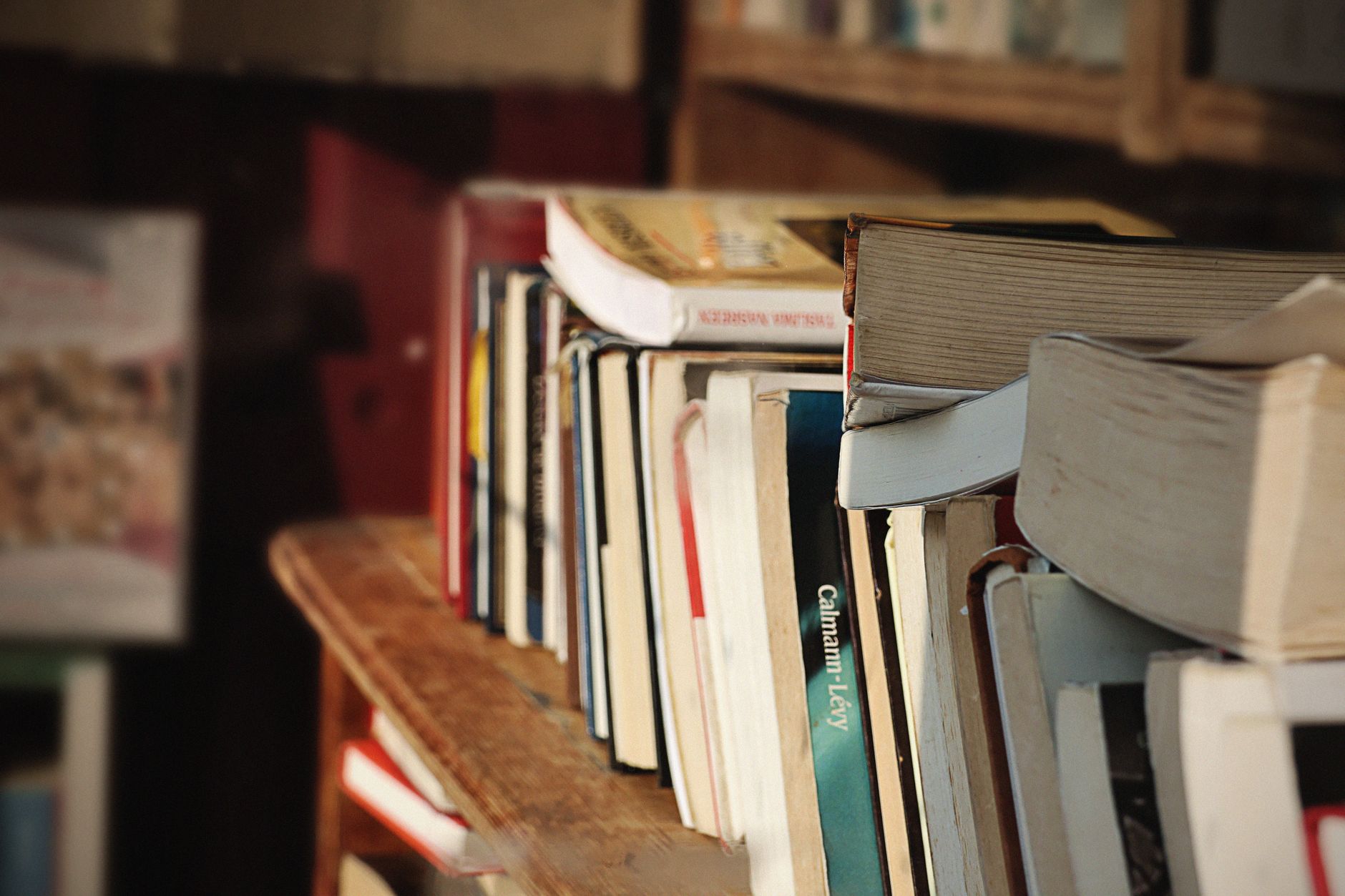
Modern French publishing was forged in a few key centres where writers, patrons, and printers converged. The Mercure de France championed Symbolism and paved the way for modernity; the NRF shaped our idea of contemporary literature; and the Pléiade established the concept of the book as a monument in flexible binding. To these three pillars, two more houses must be added—ones no serious collector can overlook: Pauvert, famed for editorial freedom, and Éditions de Minuit, synonymous with resistance and then the Nouveau Roman. These are the five houses dealers call collectibles: a true first edition in fine condition can transform the value of a library.
Alfred Vallette revived the Mercure de France on 1 January 1890, gathering a small circle of Symbolist writers around him. The review became their headquarters, and Rachilde—Vallette’s wife—hosted the legendary Tuesdays at 1 rue de Condé for decades. The house did not begin issuing books until 1894, but it made an immediate impact: early French translations of Nietzsche, and first works by Gide, Claudel, Colette, and Apollinaire.
Mercure’s output is instantly recognisable: pale straw-yellow wrappers, flexible stitching under cream paper, and the imprint “rue de Condé.” Apollinaire’s Calligrammes, published in April 1918, remains the most sought-after item—a tall, untrimmed copy on large paper can fetch four figures at auction, depending on condition and print run. Colette’s original Mercure editions (1900–1908) are now scarce in fine condition: the paper ages poorly and the wrappers quickly acquire foxing. See our guide to foxing and spotting in old books.
The history is more convoluted than is often said in drawing rooms. On 15 November 1908, a first issue of La Nouvelle Revue française appeared under the direction of Eugène Montfort. The alliance with André Gide’s group soon collapsed, and the true no. 1 was published on 1 February 1909: this is the date historians recognise. The publishing house, properly speaking, was founded in May 1911 by Gaston Gallimard, André Gide and Jean Schlumberger under the name Les Éditions de la Nouvelle Revue Française. The name Librairie Gallimard appeared in 1919.
The famous cream-coloured covers of the Collection Blanche, launched in 1911, rest on three technical choices that define its signature: a high-quality cream paper, a black frame bordered with red rules inspired by the editions of La Phalange, and an NRF monogram designed by Schlumberger. Details evolved in the 1910s and 1920s—titling in roman, redrawn monogram, composition in Didot—which often allows a copy to be dated to within a decade without consulting the colophon.
As for limited editions, the NRF produced numerous numbered large-paper issues: Hollande van Gelder, old Japanese paper, pure-fil Lafuma-Navarre vellum, Arches vellum. A Proust on Japanese, a Gide on Hollande, a Valéry on pure-fil vellum from the 1920s rank among the high points of today’s market. To learn how to read an NRF colophon, our guide recognising a first edition explains the process.
A book bearing only the imprint Éditions de la Nouvelle Revue Française must date from before 1919. From that year onward the imprint reads Librairie Gallimard. A first check when distinguishing an early edition from a later reprint.
The Bibliothèque de la Pléiade was launched on 10 September 1931 at the instigation of Jacques Schiffrin, a young independent publisher from Azerbaijan via Baku and Paris. The first volume was volume I of Baudelaire’s complete works. The concept was novel: flexible full-leather binding with gilt edges, Bible paper, compact format, affordable price. Some ten volumes appeared under the Schiffrin imprint (Baudelaire, Racine, Voltaire, Poe, Laclos, Musset, Stendhal among others) before financial difficulties led Schiffrin to accept help from Gide and Schlumberger. The takeover by Gallimard was finalised in summer 1933: the Pléiade entered the Gallimard stable, with Schiffrin remaining as director of the series.
These Schiffrin volumes from 1931–1933 constitute the true original Pléiade, sought after in their original cream dust-jackets. Their market value differs sharply from the rest of the series. We have devoted a full guide to their identification: the 1931 Schiffrin original Pléiade.
Under Gallimard, the collection gradually adopts its color-coding by century: tobacco leather for the 20th, emerald green for the 19th, blue for the 18th, Venetian red for the 17th, brown for the 16th, purple for the Middle Ages, green for Antiquity, grey for sacred texts, red for anthologies. The collection now comprises over 800 titles. New copies typically range from €60 to €75 depending on thickness, though first printings from the 1930s and certain out-of-print volumes fetch several hundred euros among specialist booksellers.
Jean-Jacques Pauvert (1926–2014) entered history at 21 by publishing the complete works of Sade under his own name, including the author’s address. Seven years of legal battles followed. In 1954, he published Histoire d’O by the mysterious Pauline Réage—pseudonym of Dominique Aury, who was closely connected to the NRF, revealing the links between publishing houses. Pauvert revived Boris Vian, resurrected Raymond Roussel, published Malraux, Aymé, Queneau, Bataille, and accompanied André Breton until the end.
For collectors, Pauvert’s output is grouped into series: the multi-volume paperback Œuvres complètes du Marquis de Sade, limited editions of Histoire d’O, and original surrealist works. See also collecting surrealists to understand his role in the movement’s decline.
Éditions de Minuit was founded in 1941 by Jean Bruller (later Vercors) and Pierre de Lescure during the Occupation. Their first book, Vercors’ Le Silence de la mer, was printed clandestinely in a few hundred copies and dated 20 February 1942—it circulated underground from the autumn onward. A copy of this first clandestine printing, in Fine condition with its original printed wrappers, remains one of the cornerstone pieces of resistance literature.
In 1948, facing severe financial difficulties, Vercors handed over leadership to Jérôme Lindon, who had already been overseeing production for months. Lindon transformed the house: Beckett, Robbe-Grillet, Sarraute, Duras, Claude Simon—all the leading figures of the Nouveau Roman and three future Nobel laureates. Upon his death in 2001, his daughter Irène Lindon took over. For collectors, presentation copies of Beckett’s EO and early Robbe-Grillet titles offer some of the best rarity-to-visibility ratios in the contemporary market.
| Publisher | Founded | Graphic design | Key authors | Rarity indicators |
|---|---|---|---|---|
| Mercure de France | 1890 (journal) / 1894 (publisher) | Straw-yellow wrappers, flexible binding | Apollinaire, Colette, Claudel, early Gide | EO Apollinaire, large-paper copies |
| NRF / Gallimard | 1908 (journal) / 1911 (publisher) | Cream, double red rule, Didot typeface | Gide, Proust, Valéry, Camus, Sartre | Dutch, Japanese, pure-finish vellum numbered copies |
| Pléiade Schiffrin | 10 September 1931 | Gilt flexible leather, bible paper | Baudelaire, Racine, Stendhal, Poe | Pre-1933 Schiffrin volumes |
| Pauvert | 1947 | Typographic restraint, thematic series | Sade, Breton, Réage, Bataille | Sade in wrappers, O at limited print-run |
| Éditions de Minuit | 1941 (clandestine) / 1948 (Lindon) | White cover, blue star, restrained design | Vercors, Beckett, Robbe-Grillet, Duras | Le Silence de la mer 1942, EO Beckett |
For these 20th-century publishers, condition weighs almost as heavily as rarity. A cream-coloured NRF cover with foxing or yellowing can halve the value compared to a fresh copy. A Pléiade Schiffrin lacking its original dust jacket or with cracked leather binding loses significant market value. Some useful guidelines: store away from direct light, in a stable room with 45–55% relative humidity, and away from heat sources. See our guide on preserving antiquarian books.
The browning is the number one enemy of the cream-coloured papers from the 1910s–1930s. A cautious restorer’s intervention may still be considered for important pieces; for the rest, it is better to accept the natural patina than risk an awkward bleaching treatment. See also our guide when to entrust an old book to a restorer.
Check the publisher’s name on the title-page and at the foot of the cover. Before July 1919 it reads solely Éditions de la Nouvelle Revue Française. After that date, Librairie Gallimard appears. Cross-reference with the imprint and the design of the NRF monogram, which was redrawn in 1919.
Schiffrin volumes from 1931–1933 change hands from a few tens to several hundreds of euros depending on the title, condition and the presence of the original dust-jacket. First printings of Baudelaire or Stendhal in intact cream wrappers are the most sought-after. Further details in our guide to the 1931–1933 Pléiade Schiffrin.
The handmade Japanese paper and the Hollande van Gelder are the two most highly regarded, followed by the pure vellum Lafuma-Navarre. Print runs were numbered by hand and limited to a few dozen or a few hundred copies according to title.
The clandestine first printing of February 1942 is one of the key items in the literature of the Resistance, provided the original printed wrappers are present and the volume has not been trimmed. Post-war reprints, far more common, command only a fraction of the price.
Both channels are complementary. The auction room (notably Drouot) is where the rarest pieces circulate, but it demands time and a trained eye. The specialist bookseller offers advice, guarantees and a detailed description. For beginners, a trusted bookseller is the safer option—see our guide buying your first old book.
La Librairie Antique appraises twentieth-century libraries (fine papers, Gallimard first editions, Pléiade Schiffrin, Resistance titles) with a detailed report, reasoned price range and buy-or-consignment proposals.
Tell us what is not working, we fix things quickly. The page you are on is attached automatically.