0
0€
Your cart is empty
You have no items in your cart


Understanding the difference between an antique book, a rare book, and a valuable book is the first thing to clarify when seriously interested in bibliophilia. These three terms are often used interchangeably in flea markets and even in some careless booksellers' listings, even though they refer to three distinct criteria: the printing date, documented rarity, and proven bibliophilic interest. Confusing them risks buying an old, uninteresting volume at the price of a treasure, or selling for twenty euros an item worth a thousand.
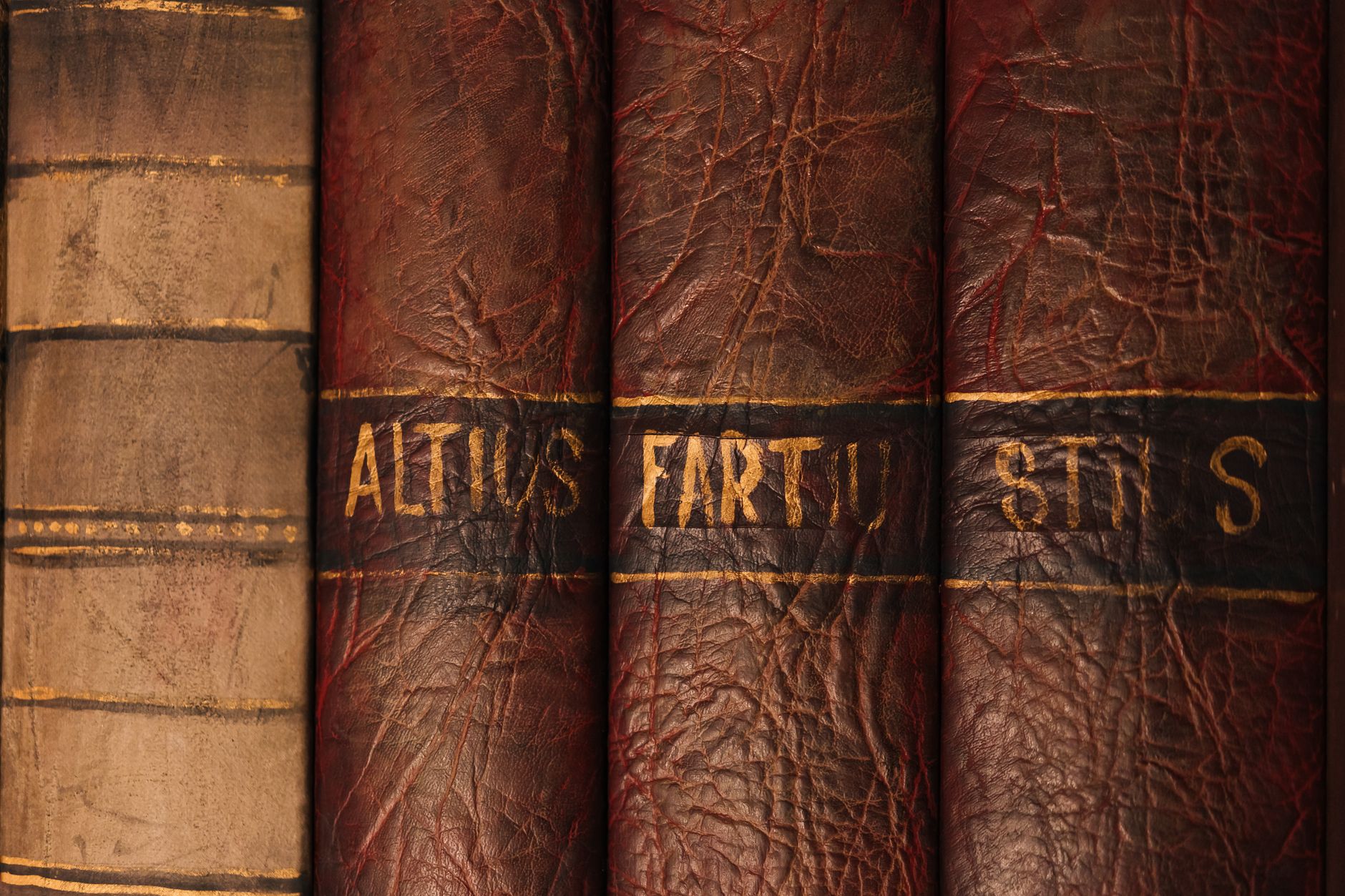
Contrary to a persistent misconception, no French law sets the limit for an antique book at 100 years. The threshold used by bibliographers and the Réserve des livres rares de la BnF is generally around 1830, sometimes extended to 1850 depending on the school. This is not a round number chosen at random. Up until around 1830, workshops continued to use wooden presses, manual lead typesetting, and laid paper made in vats. After that, mechanisation took hold: Stanhope metal presses, continuous mechanical paper production, industrial binding. The physical nature of the book changed fundamentally.
Three other milestones structure the chronology. 1455 marks Gutenberg’s invention of printing in Mainz. 1500 closes the period of incunabula, books printed between 1455 and 31 December 1500 inclusive. 1800 often serves as a practical boundary between books of the Ancien Régime and modern books. To identify the physical clues that date a work (signatures, catchwords, chain lines, watermarks), our article on the anatomy of the antique book provides useful terminology.
A book is rare when few copies survive. The definition is one sentence long, but its application is far more complex. Absolute rarity cannot be declared based on a seller’s word: it must be verified in standard bibliographies (Brunet, Tchemerzine, Vicaire, Carteret for the 19th century) and in collective catalogues such as the CCFr or WorldCat. Without this verification, the word “rare” in a listing is merely a sales pitch, nothing more.
In practice, three degrees are distinguished. Absolute rarity (fewer than five copies located in public libraries) is exceptional and mainly concerns the 16th–17th centuries. Relative rarity corresponds to limited print runs of 50 to 300 copies, typical of 20th-century bibliophilia, especially on fine papers (Japanese, vellum, Dutch). Condition rarity refers to a book that was originally common but whose preservation in an exceptional state becomes rare over time. For modern numbered editions, see our article on recognising a first edition and that on fine papers.
A valuable book is one that bibliophilic tradition considers important, regardless of its age. This is the most qualitative of the three criteria and carries the most weight at public auction. A book becomes valuable through the accumulation of factors: original edition of a foundational text, illustrations by a great artist, signed binding, illustrious provenance, inscribed copy, remarkable condition.
The original edition (OE) remains the paramount criterion: it is the first public appearance of a text. An OE of Proust from 1913 bears no comparison with a 1920 reprint, even though the text is identical word for word. Provenance counts almost as much: a copy bearing an armorial ex-libris or an author’s inscribed dedication to an identified recipient can shift it into another price category. A binding signed by a great 19th-century binder such as Trautz-Bauzonnet, Cuzin or Marius Michel adds a premium that is not insignificant.
| Criterion | Antique book | Rare book | Valuable book |
|---|---|---|---|
| Nature | Chronological | Quantitative | Qualitative |
| Reference threshold | Before 1830 (sometimes 1850) | Low number of copies recorded | Recognised bibliophilic interest |
| Verification | Title page, colophon, physical evidence | CCFr, WorldCat, Brunet, Vicaire | Standard bibliographies, comparable sales |
| Typical example | Venetian edition of Cicero, 1502 | Print run of 75 copies on imperial Japanese paper, 1925 | OE of Hugo with inscription to Sainte-Beuve, Cuzin binding |
| Market position | From a few tens to several thousand euros | Variable, depends on actual demand | High-end segment of the market in general |
The three notions are independent but can overlap. A book may be old without being rare (an 18th-century Bible printed in thousands of copies), rare without being old (a 1960 artist’s book limited to 30 copies), or valuable without being old (a 1947 first edition of Camus). Copies that meet all three criteria are the ones that set auction records.
The method has five steps, and the order matters. Reversing the steps can lead to major valuation errors, ranging from minor to tenfold mistakes.
To start safely, our guide buying your first old book covers the classic pitfalls. To see what the three categories look like in practice, the dealers’ catalogue offers several hundred examples at any time.
The first: confusing old with antiquarian. A volume from 1880 in poor condition, in original wrappers, is not antiquarian in the bibliographic sense. It was industrially printed, issued in thousands, and usually worth only a few euros. The second: assuming a limited print run makes a book valuable. A run of 200 copies of a text lacking literary or artistic merit remains worthless, regardless of paper quality. The third: overestimating an old binding. A 200-year-old calf binding, unsigned and poorly restored, is not a fine-binding in the strict sense, even if it is genuinely old.
In the broad sense, yes. In strict bibliographic terms, the cut-off is usually around 1830. After that, it is simply a 19th-century book, which does not diminish its potential value if it is also rare or valuable.
No. Rarity alone does not create value. There must be demand alongside rarity, meaning bibliophilic or documentary interest. A print run of 50 copies of a forgotten text may remain unsellable for decades.
Compare the title page, the printer’s colophon, and the collation (number of pages, plates) with reference bibliographies (Vicaire, Carteret, Tchemerzine). Our article on identifying first editions details the step-by-step method.
An incunable is a book printed before 1 January 1501. All incunables are ancient and most are rare, but the vast majority of rare books are not incunables.
The most effective approach is to consult a specialist bookseller who has access to bibliographies and comparable sales data. Our free appraisal service is without obligation.
Send us photos: we’ll tell you which of the three categories your book falls into and what it could fetch under current market conditions.
Request an appraisalSources: BnF, Reserve des livres rares, BnF Essentiels, Les incunables, Catalogue collectif de France (CCFr), Bibliophilie on Wikipedia, BiblioMab, Livre ancien, a quelle date ?.
Tell us what is not working, we fix things quickly. The page you are on is attached automatically.