1 197,00€
Subtotal: 1 197,00€








Subtotal: 1 197,00€


Subtotal: 1 197,00€
66,00€
❦One copy only
As with every antiquarian book, this is the only copy we hold. Once sold, it will not be restocked.
Guaranteed authentic
Every book is examined and described individually by us. Professional booksellers since 1995.
In stock
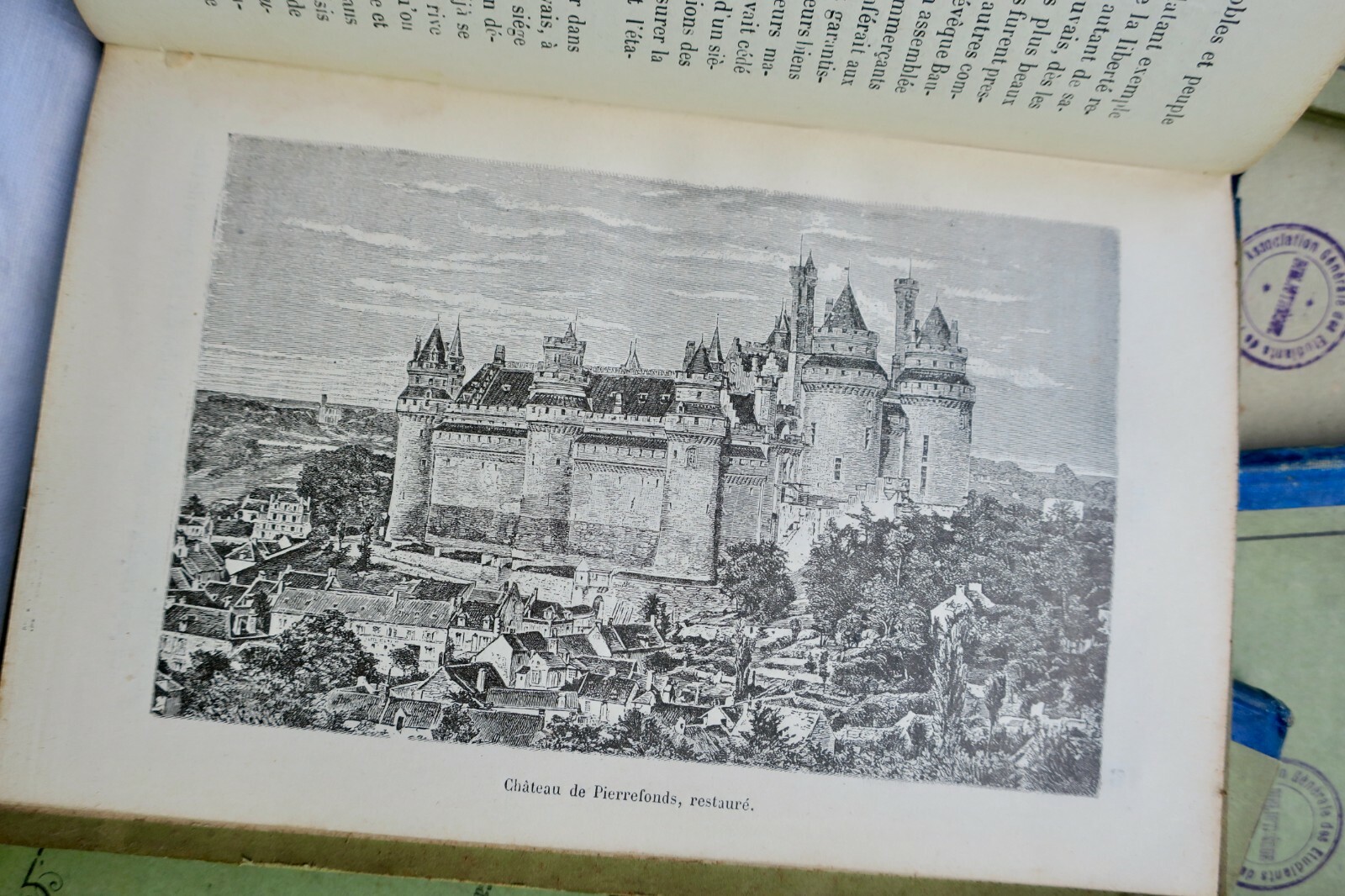
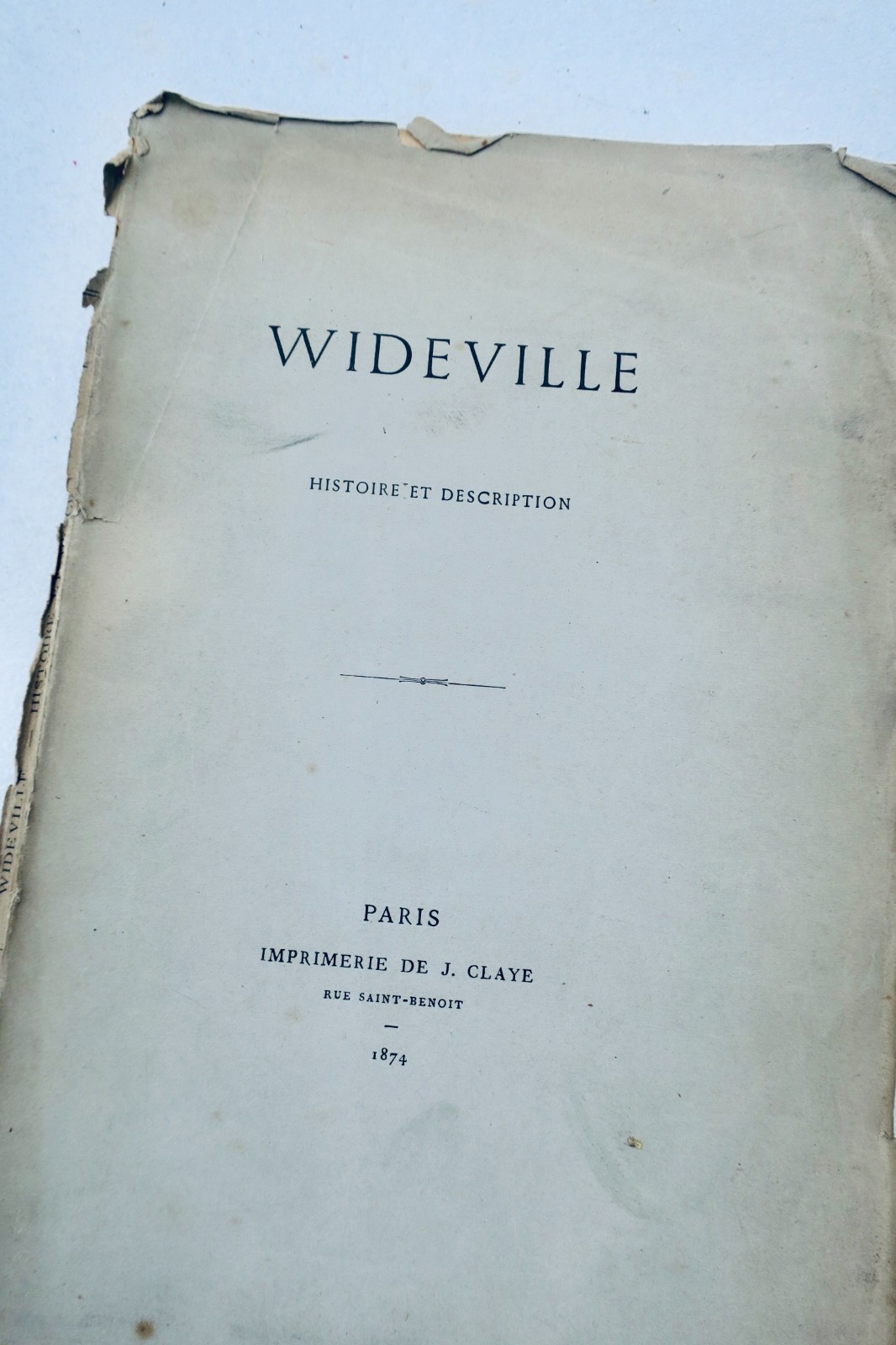
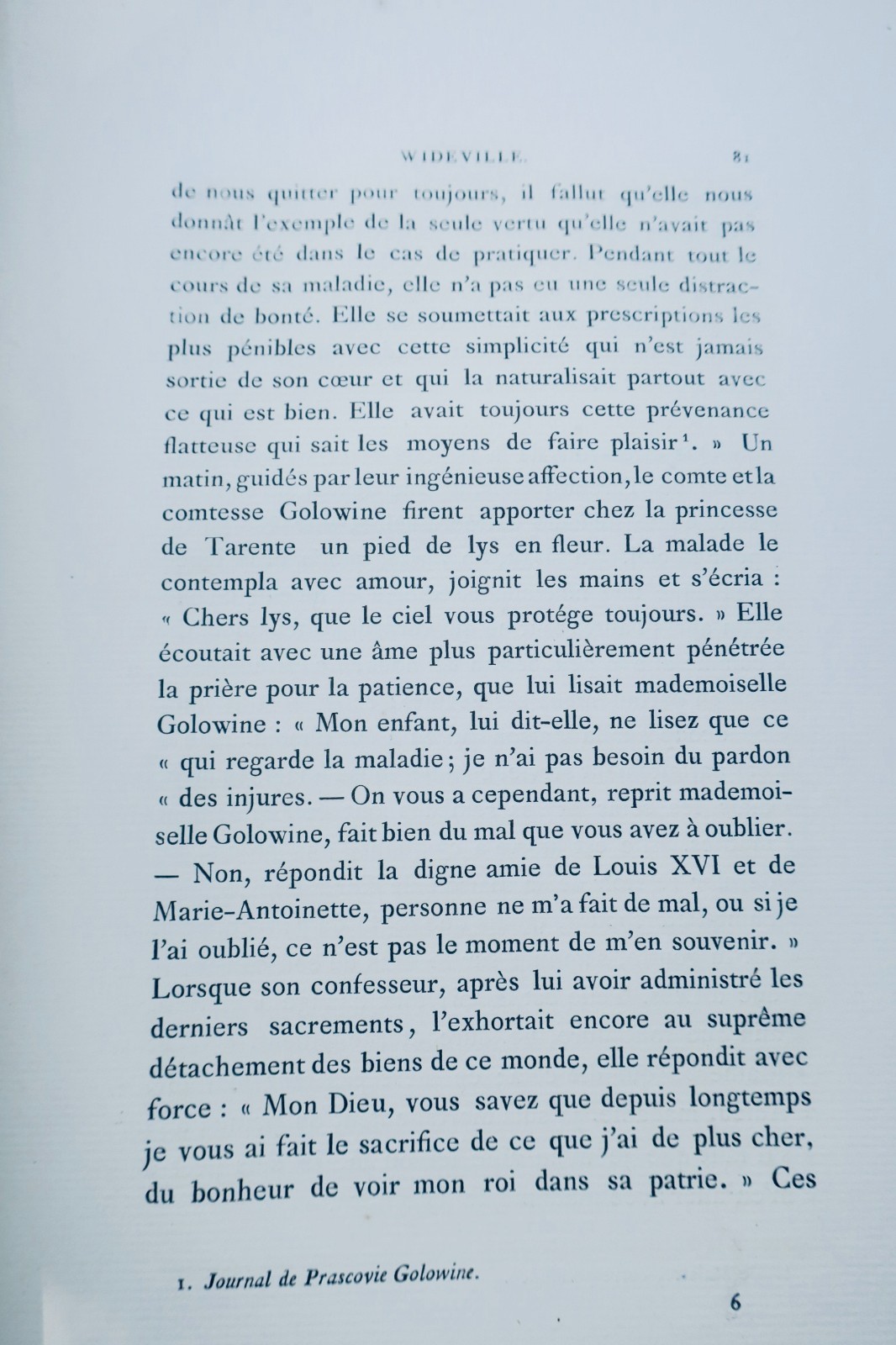
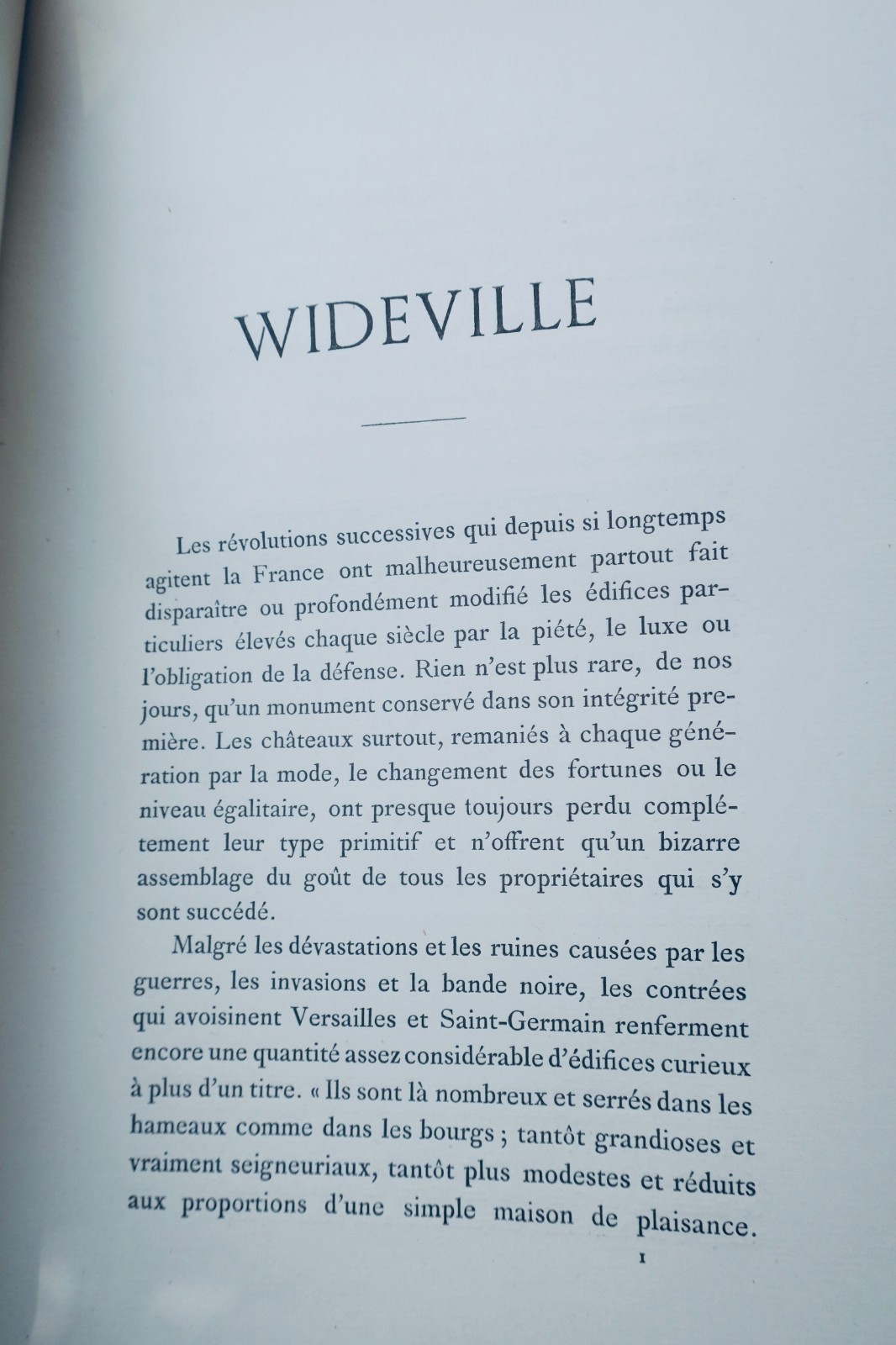
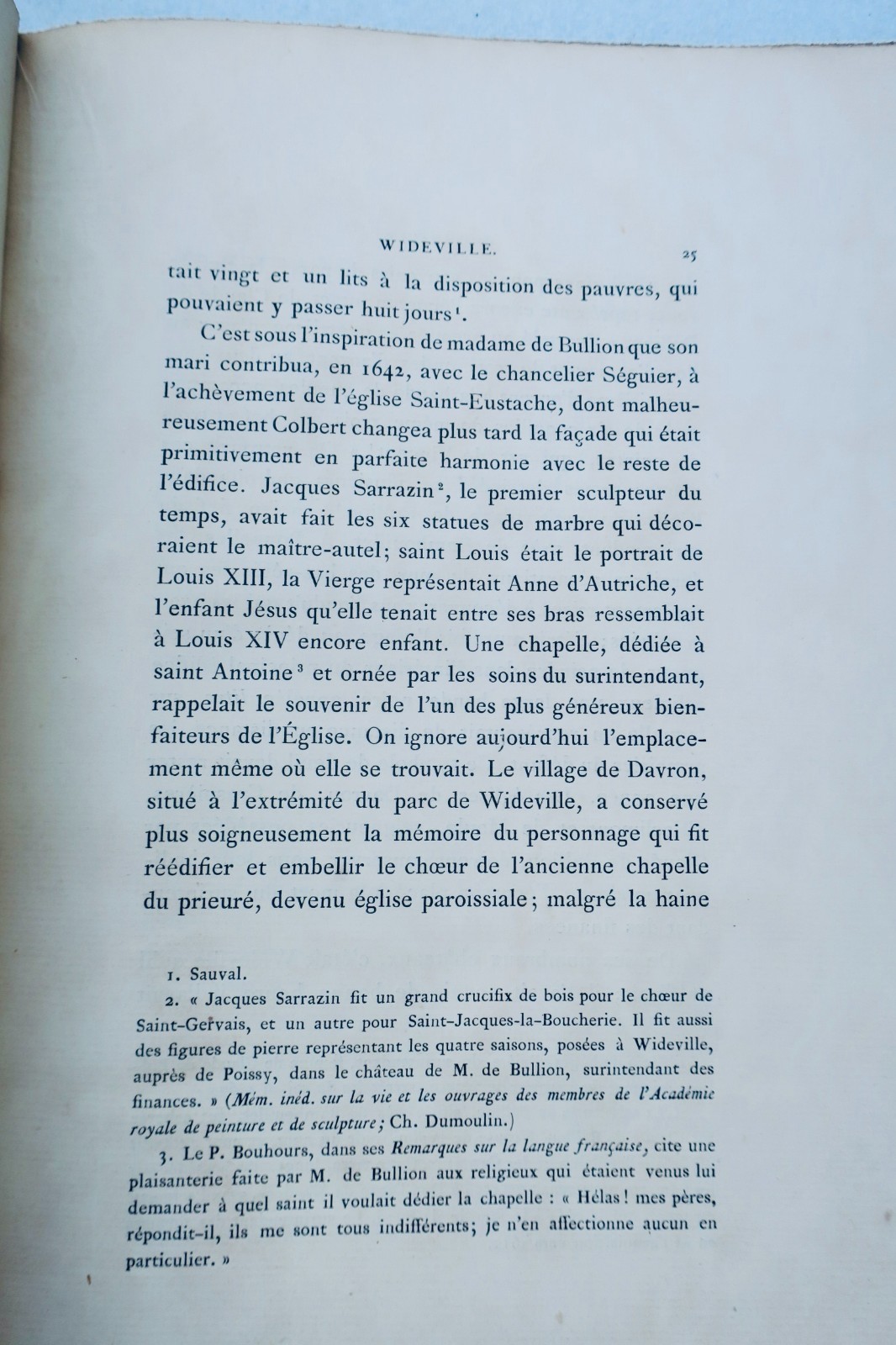
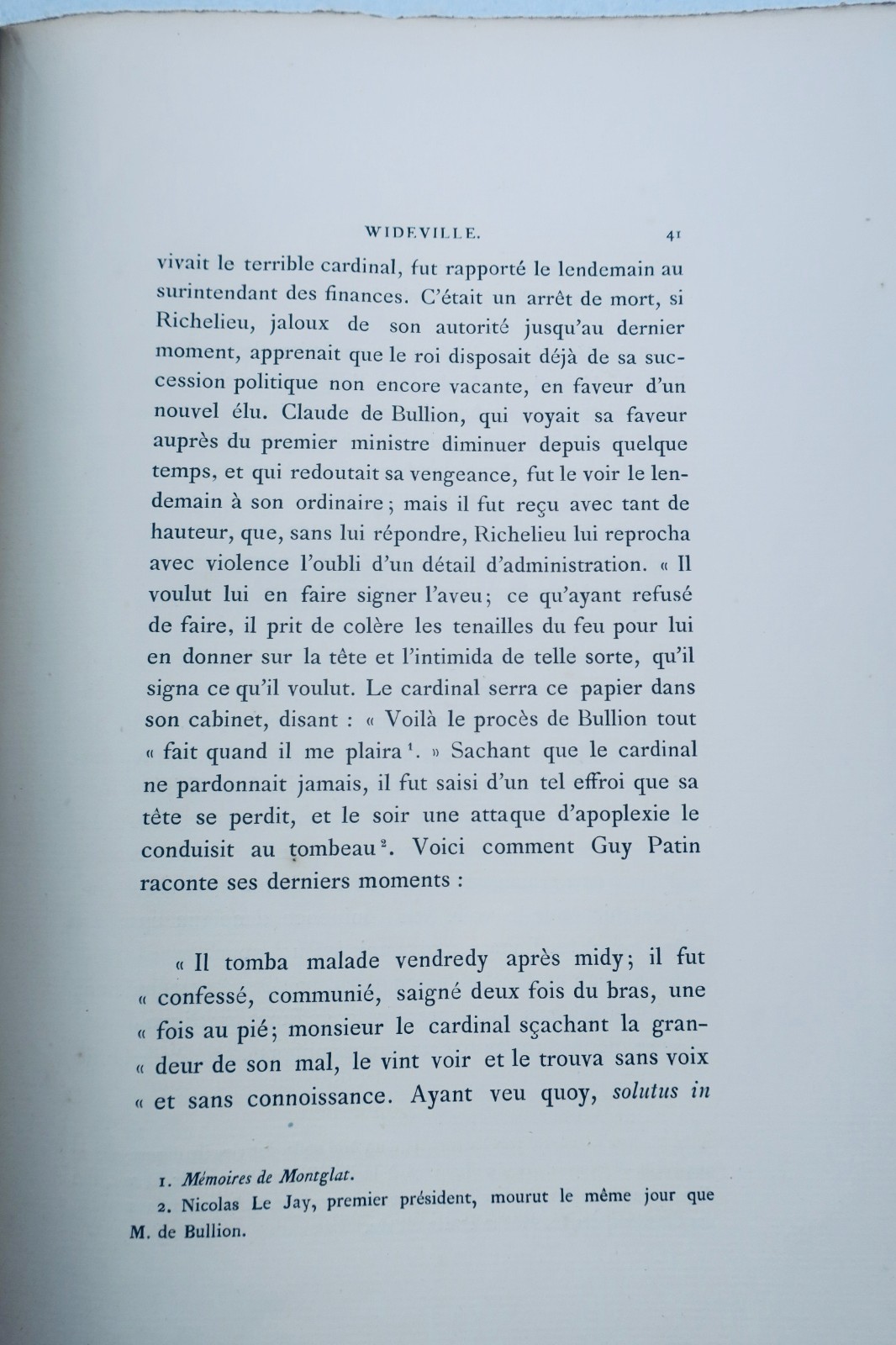
Galard-Magnas, Hector de Wideville, Histoire et description. J. Claye, Paris, 1874. in-4°. Pages: 2 ff., 102 pp., unbound (completely disbound), on laid paper The Château de Wideville is located in France, in the commune of Crespières, in the Yvelines department, in the Île-de-France region, 17 km west of Saint-Germain-en-Laye. The château, in the Louis XIII style, is situated on the…
Read full description ↓Galard-Magnas, Hector de
Wideville, Histoire et description.
J. Claye, Paris, 1874. in-4°. Pages: 2 ff., 102 pp., unbound (completely disbound), on laid paper
The Château de Wideville is located in France, in the commune of Crespières, in the Yvelines department, in the Île-de-France region, 17 km west of Saint-Germain-en-Laye.
The château, in the Louis XIII style, is situated on the border between Crespières and Davron.
Toponymy
The origin of the name Wideville is obscure; its phonetics correspond to those of northern Oïl (conservation of the 'w'). The current conservative spelling is of Picard or Champenois type. In the region, one would expect an initial [g], characteristic of central French (Francien). It may refer to land originally acquired by a companion of William the Conqueror, Hugues de Wideville (also attested as Udeville and Videville in 1366, Guideville in central French). This family settled in England.
History
The Wideville estate belonged, from the second half of the 14th century to the first half of the 16th century, to the Le Picart/Le Picard family (succeeding the de Vitry family, cited as landowners in 1336, and possibly even earlier lords[1]; co-lords existed in parallel: Jean de Chamigny, vice-admiral, and his descendants; also Antoine Turpin d'Ossigny around 1529). It then became, from 1538 onwards, the property of Jean Bertrand, Keeper of the Seals of Henri II, later Archbishop of Sens and Cardinal; followed by Jean Picquet, and then his son Pierre Picquet, Treasurer to the Queen of Navarre (1562–1579).
On 18 February 1579, the estate was sold by Marguerite Guyot des Charmeaux († 1607)—the widow of Pierre Picquet, Treasurer to the Queen of Navarre, who left a heavily indebted estate at her death—to Benoît Milon (1539–1593), first and principal Intendant of Finances to Henri III and later financial manager for the Catholic League. The small manor that preceded the current château is described in this deed of sale. It was Benoît Milon’s widow, Madeleine de Crèvecœur, remarried in 1595 to Nicolas Chevalier, and usufructuary of the estate until her death in 1629, who transmitted it by inheritance to the de Longueil family: as the heiress of the aforementioned Madeleine de Crèvecœur—the daughter of her sister Anne de Crèvecœur and Guillaume Boul(l)enc—Madeleine Boul(l)enc de Crèvecœur, married René de Longueil in 1622[2]. In the deed of sale for the manor, the widow of Pierre Picquet included a clause allowing redemption of the estate, and Benoît Milon stipulated that, in the event of eviction, he would be reimbursed for any expenses incurred for works. This clause in the contract shows that Milon had planned to undertake works. Five building contracts drawn up before a Parisian notary between February 1580 and May 1584 have been discovered.
Benoît Milon was a financier from Blois. He successively held the positions of Controller of the King’s Stables in 1564, Ordinary Treasurer of Wars in 1569, Principal Intendant and Controller of Finances in 1573, and in 1581, he combined this role with a presidency at the Chambre des comptes in Paris. He abruptly lost the king’s confidence in the autumn of 1584 and fled to Germany. He played an active role with the Catholic League, managing its finances from its founding in 1589 until his death in July 1593. An inventory of his estate after his death revealed that he owned several collections by Jacques Androuet du Cerceau.
He had the current château built on the site of the old manor between 1580 and 1584, following the plans of the 'country houses' by Jacques Androuet du Cerceau, as described in his Livre d’Architecture […] pour seigneurs, gentilshommes et autres qui voudront bastir aux champs. The first contract was signed on 10 February 1580 with master mason Denis Fleury for the 'quarrying and masonry work to be carried out anew for building
LA LIBRAIRIE ANTIQUE
Independent bookshop since 1995, Paris
Worldwide shipping · SLAM membership pending[*]
[*] Membership of the Syndicate of Antiquarian and Modern Booksellers in progress.
Tell us what is not working, we fix things quickly. The page you are on is attached automatically.