«Echo des Salons de Paris depuis la Restauration 1814-1815» a été ajouté à votre panier. Poursuivre les achats
“1903 Atlas der Basses-Pyrénées von Adolphe Joanne❦ BASSES-PYRENEES 1903 cartes et gravures JOANNE ADOLPHE GEOGRAPHIE DES” has been added to your cart. Continue shopping
“Stendhals posthumäres Tagebuch (1801–1814)❦ STENDHAL. Oeuvre posthume. – Journal de Stendhal 1888” has been added to your cart. Continue shopping
“Coat of Arms of Notable Families❦ DUBUISSON M. Armorial des principales maisons et familles du Royaume” has been added to your cart. Continue shopping
“Bonchamps' Wife's Memoirs of the Revolution❦ Révolution Bonchamps Mémoires de Madame la Marquise 1827” has been added to your cart. Continue shopping
«Asie HUC Souvenirs d’un voyage dans la Tartarie, le Thibet et la Chine 1853» a été ajouté à votre panier. Poursuivre les achats
«JOUVE Pierre Jean Matière Céleste» a été ajouté à votre panier. Poursuivre les achats
Autobiography of a Florentine Master
Original title :CELLINI (BENVENUTO) Mémoires de Benvenuto Cellini
35,00€
In stock
Top fiabilité eBay depuis 19958 247 avis positifsLivraison soignée + suiviPaiement sécurisé
About this book
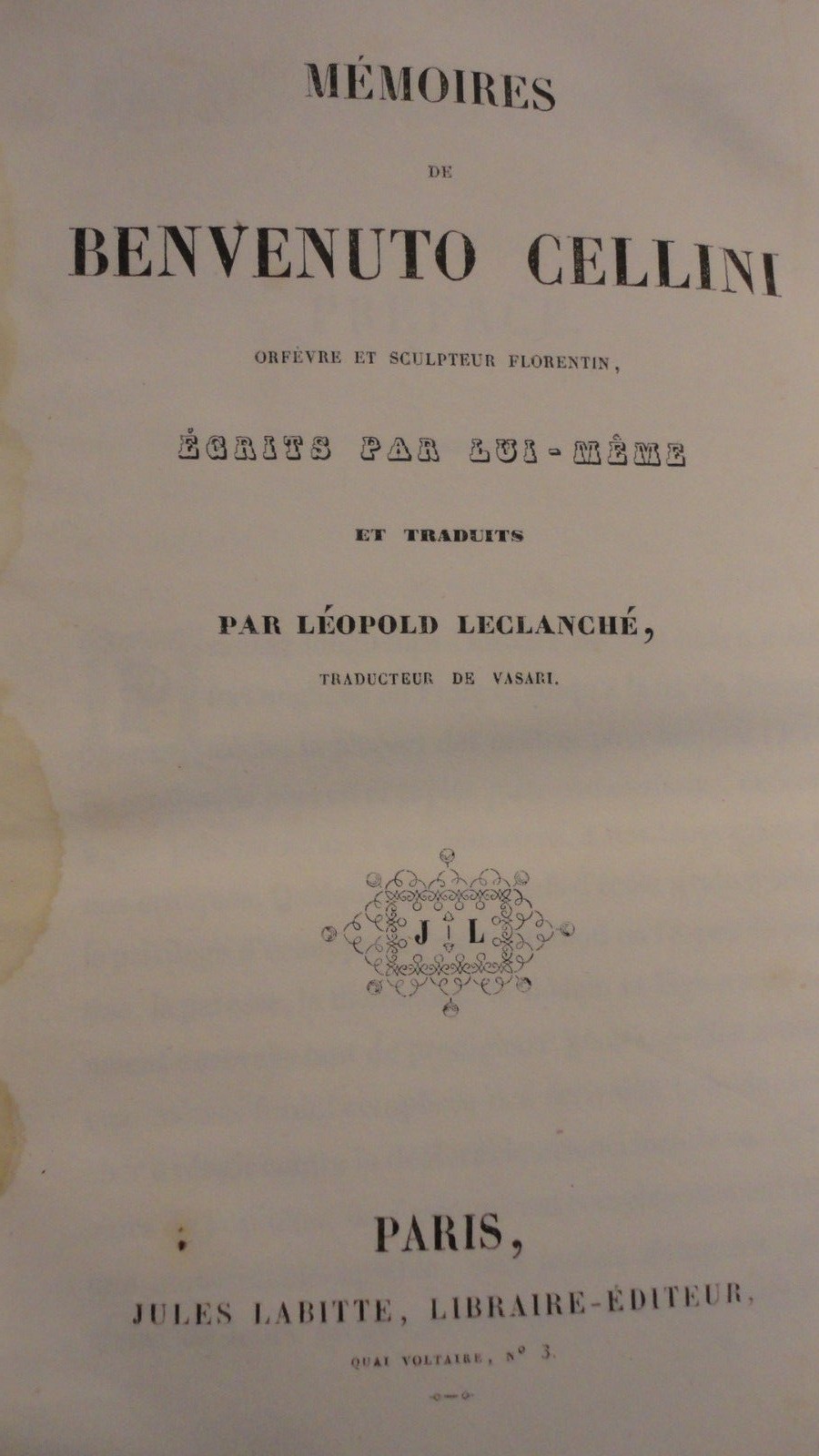
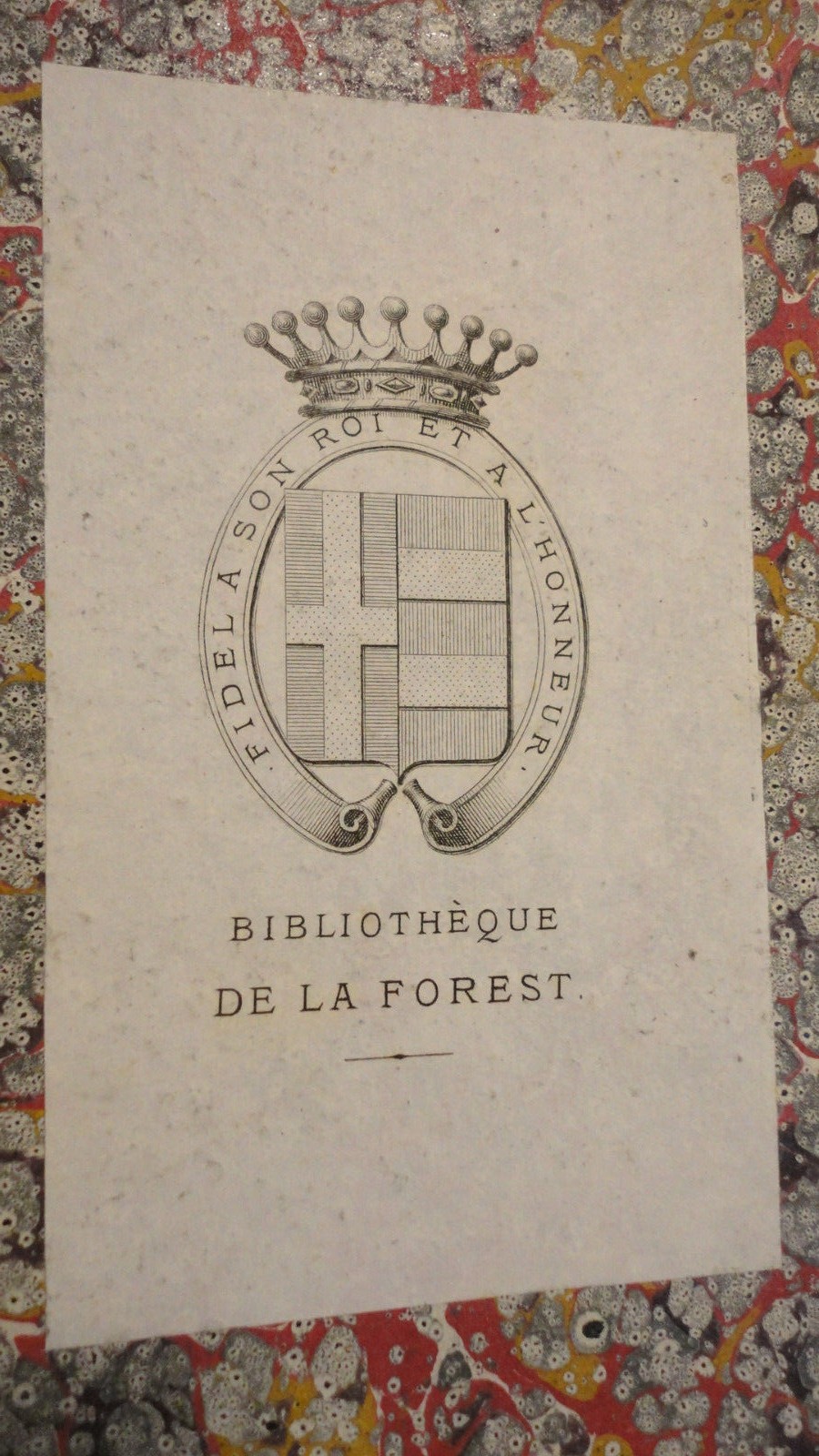
CELLINI (BENVENUTO) - LECLANCHE (LEOPOLD, TRANSL. OF). Memoirs of Benvenuto Cellini, goldsmith and sculptor from Florence, written by himself. Paris, Jules Labitte, circa 1860. 12mo, VII & 492 pp. Hardcover binding, missing spine, damaged covers, some slight browning. Beautiful count's ex-libris. The text is adorned with lovely typographical ornaments. 'The first artist to have left an autobiography, Benvenuto Cellini, a…
CELLINI (BENVENUTO) - LECLANCHE (LEOPOLD, TRANSL. OF). Memoirs of Benvenuto Cellini, goldsmith and sculptor from Florence, written by himself. Paris, Jules Labitte, circa 1860. 12mo, VII & 492 pp. Hardcover binding, missing spine, damaged covers, some slight browning. Beautiful count's ex-libris. The text is adorned with lovely typographical ornaments. 'The first artist to have left an autobiography, Benvenuto Cellini, a Florentine goldsmith appreciated throughout Europe, a virtuoso medallist who became a sculptor late in life, wished to present himself as a genius who surpassed Michelangelo and treated on equal terms with François I, Cosimo de' Medici, Clement VII, or Paul III. The romantic fortune of his text, translated by Goethe and which inspired Berlioz, makes it difficult to appreciate his book as it might have appeared to his contemporaries in the late years of the Renaissance. This biography, peppered with accounts of his travels between Rome and Mantua, Paris and Florence, tales of brawls, murders, diamond powder poisonings, evoking the papal court, artist workshops, and episodes of the escape from the Castel Sant'Angelo, creates a climate likely to awaken romantic imagination.