0
0,00€
Votre panier est vide
Vous n'avez aucun article dans votre panier


VENDU
Authenticité garantie
Chaque ouvrage est examiné et décrit individuellement par nos soins. Libraire professionnel depuis 1995.
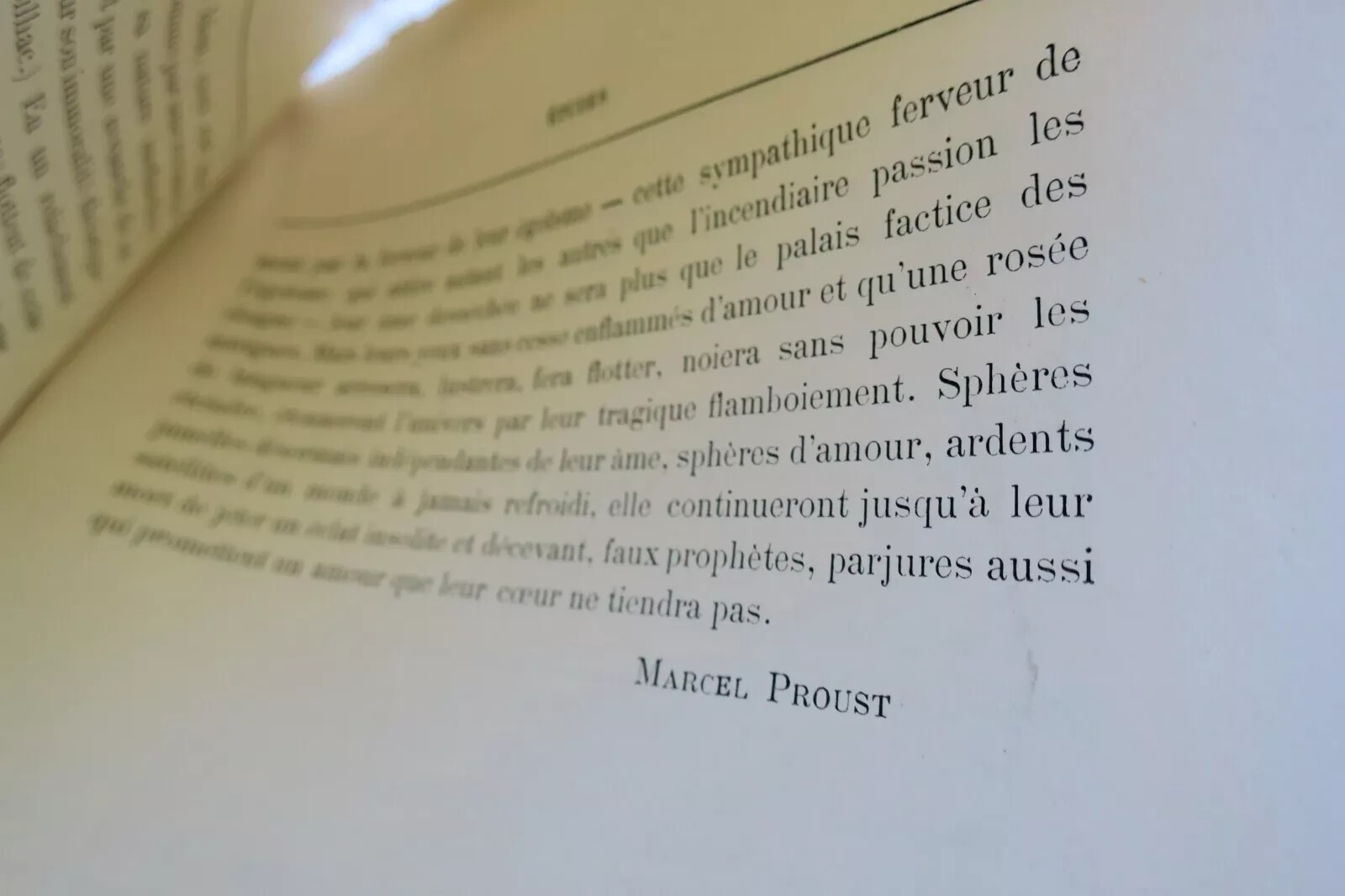
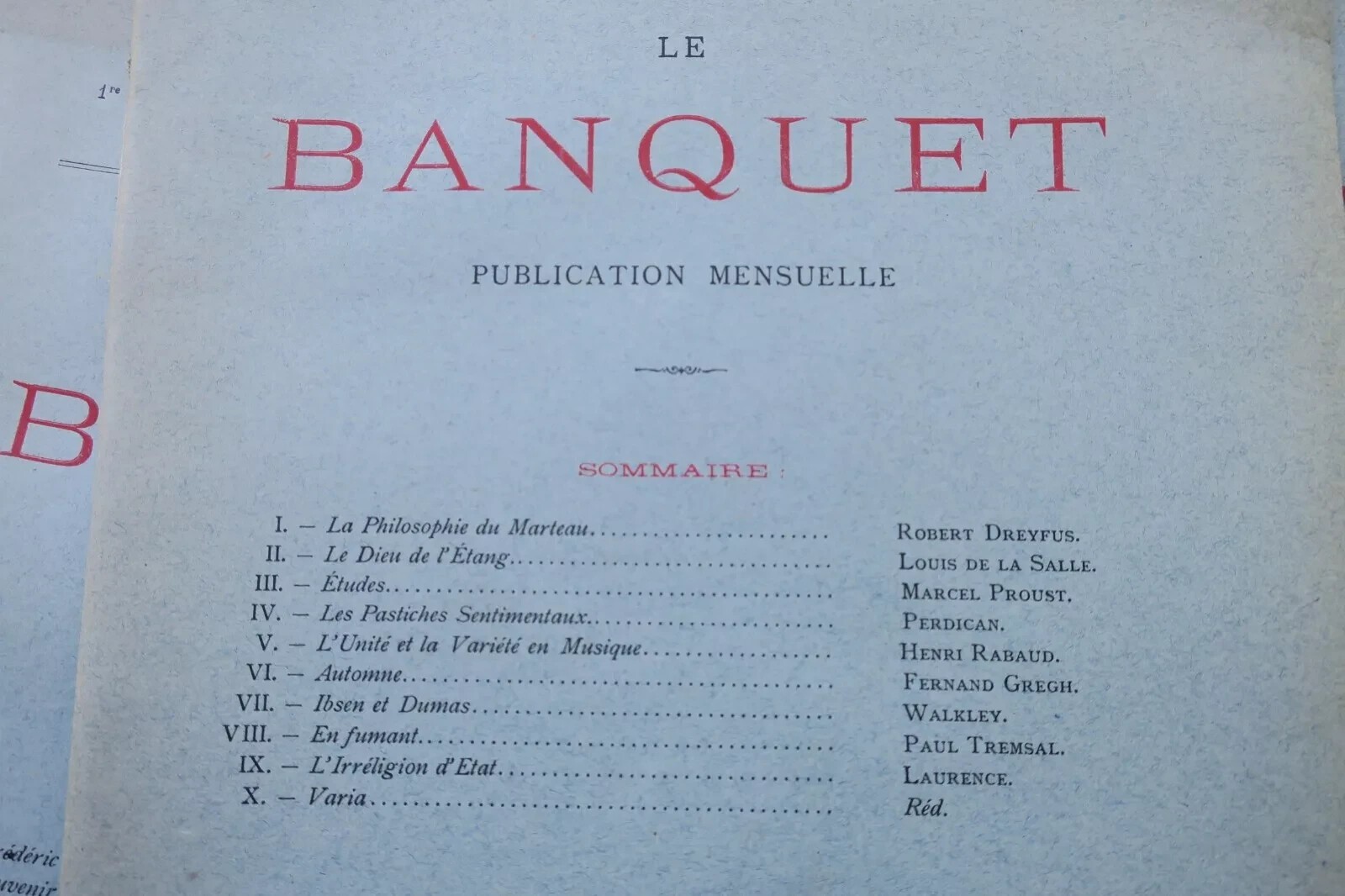
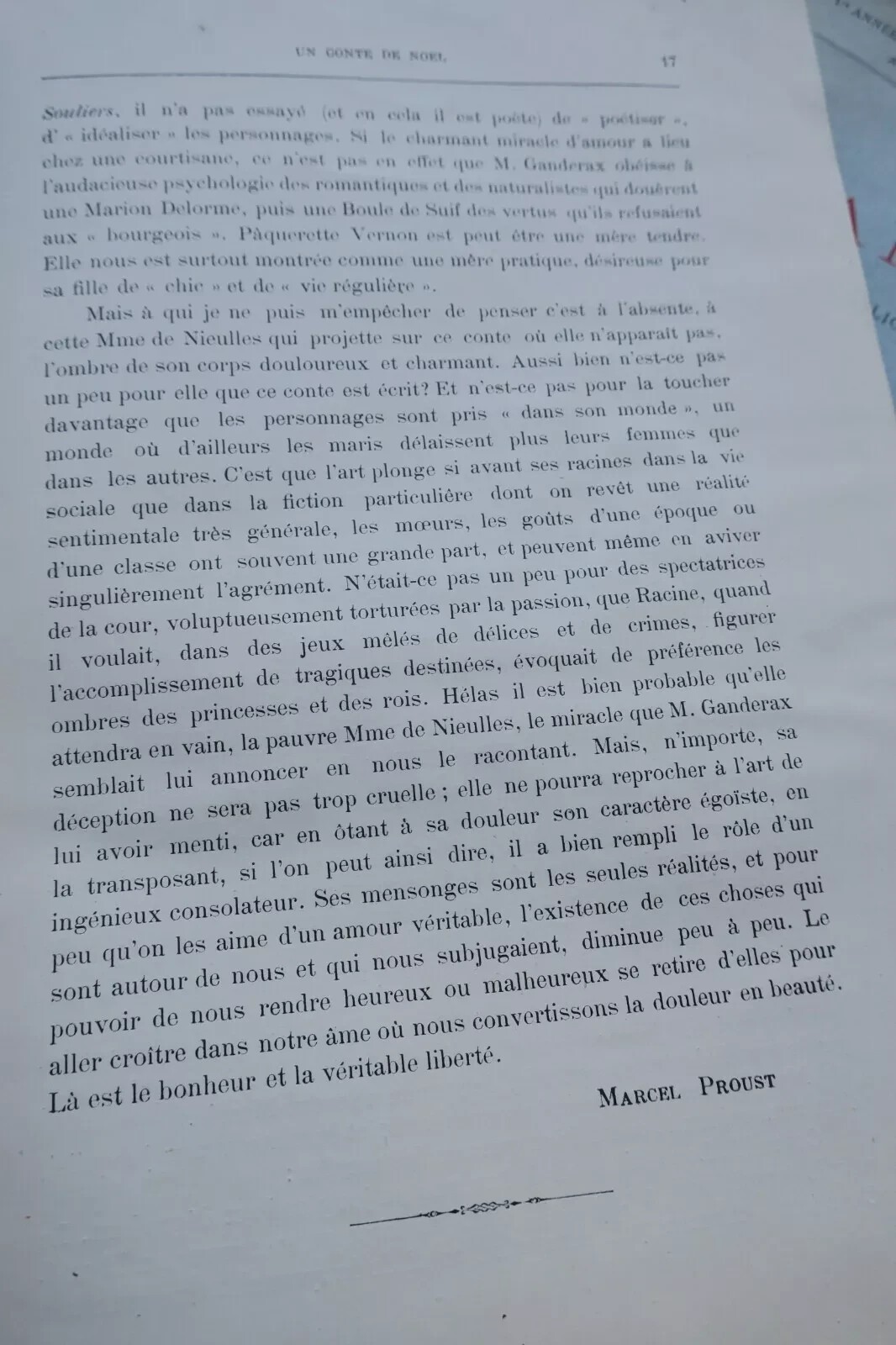
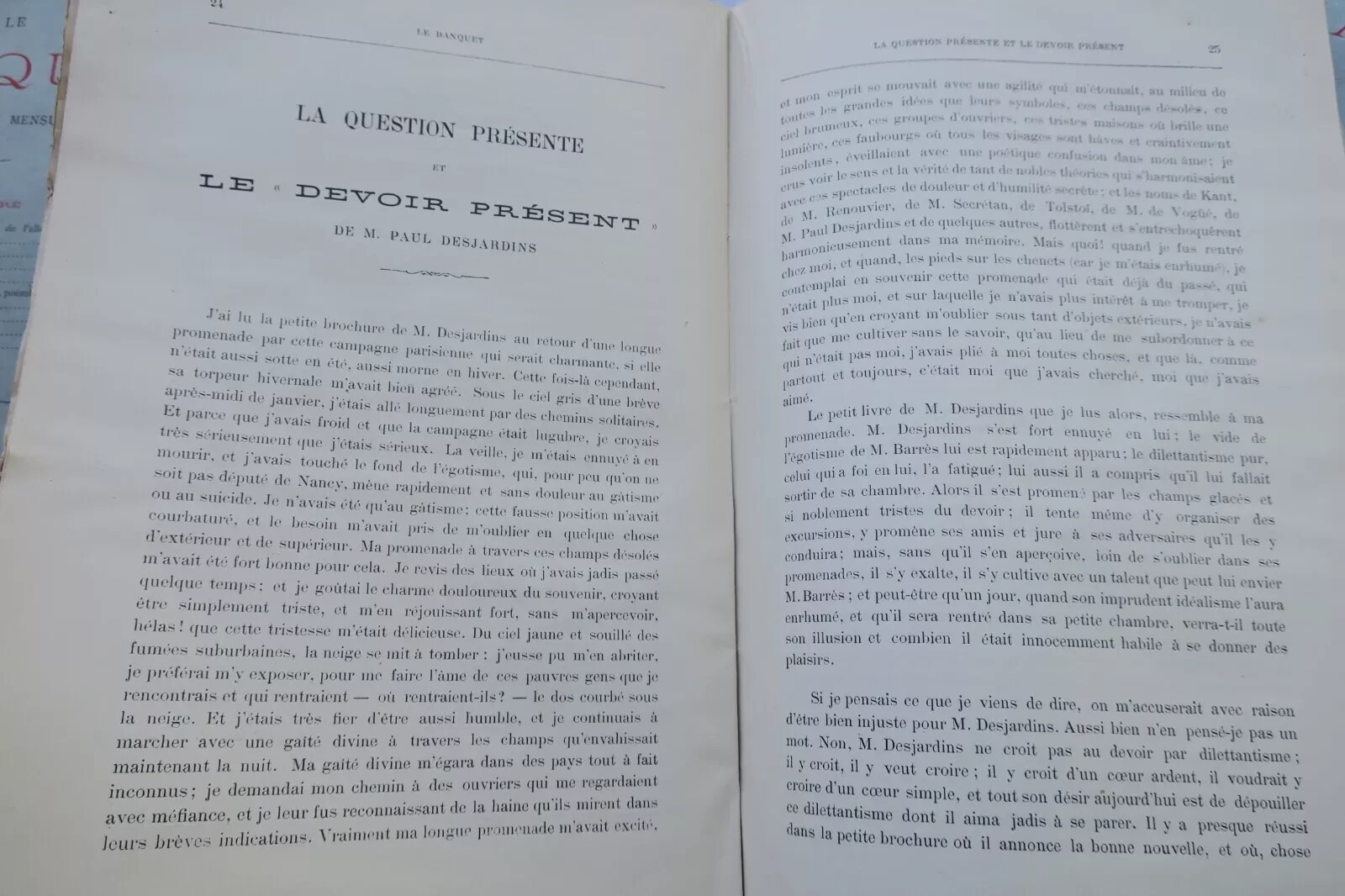
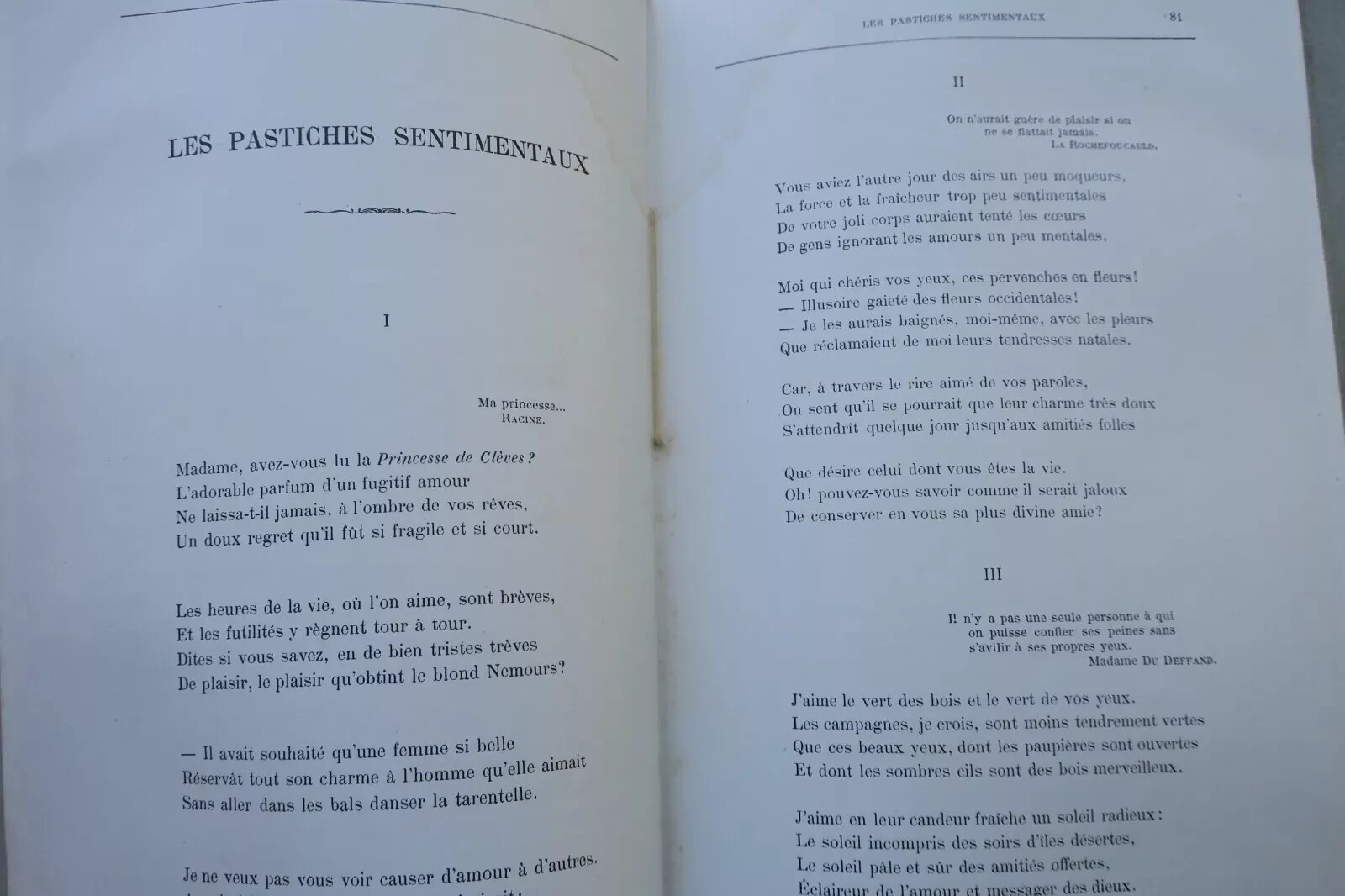
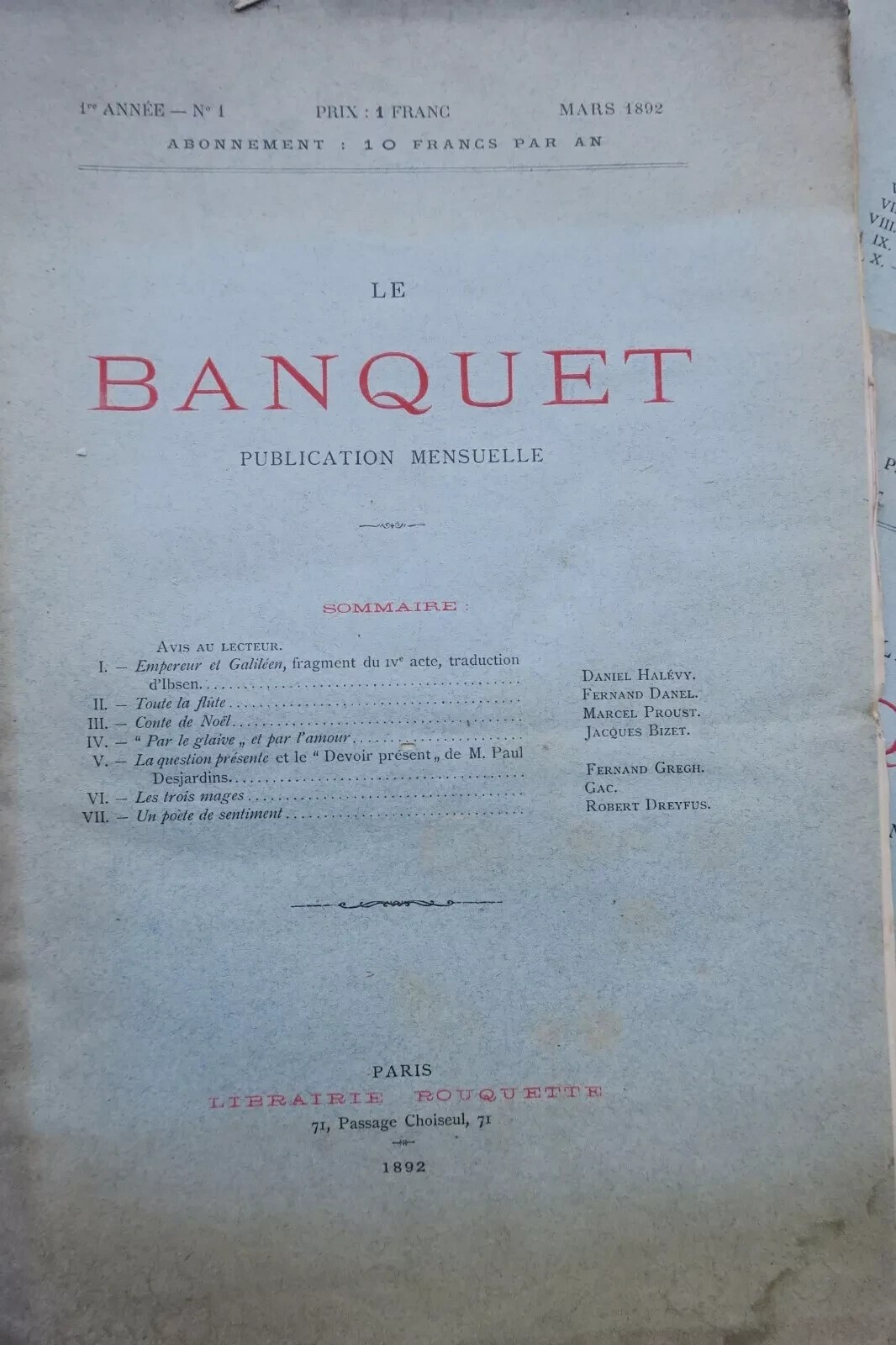
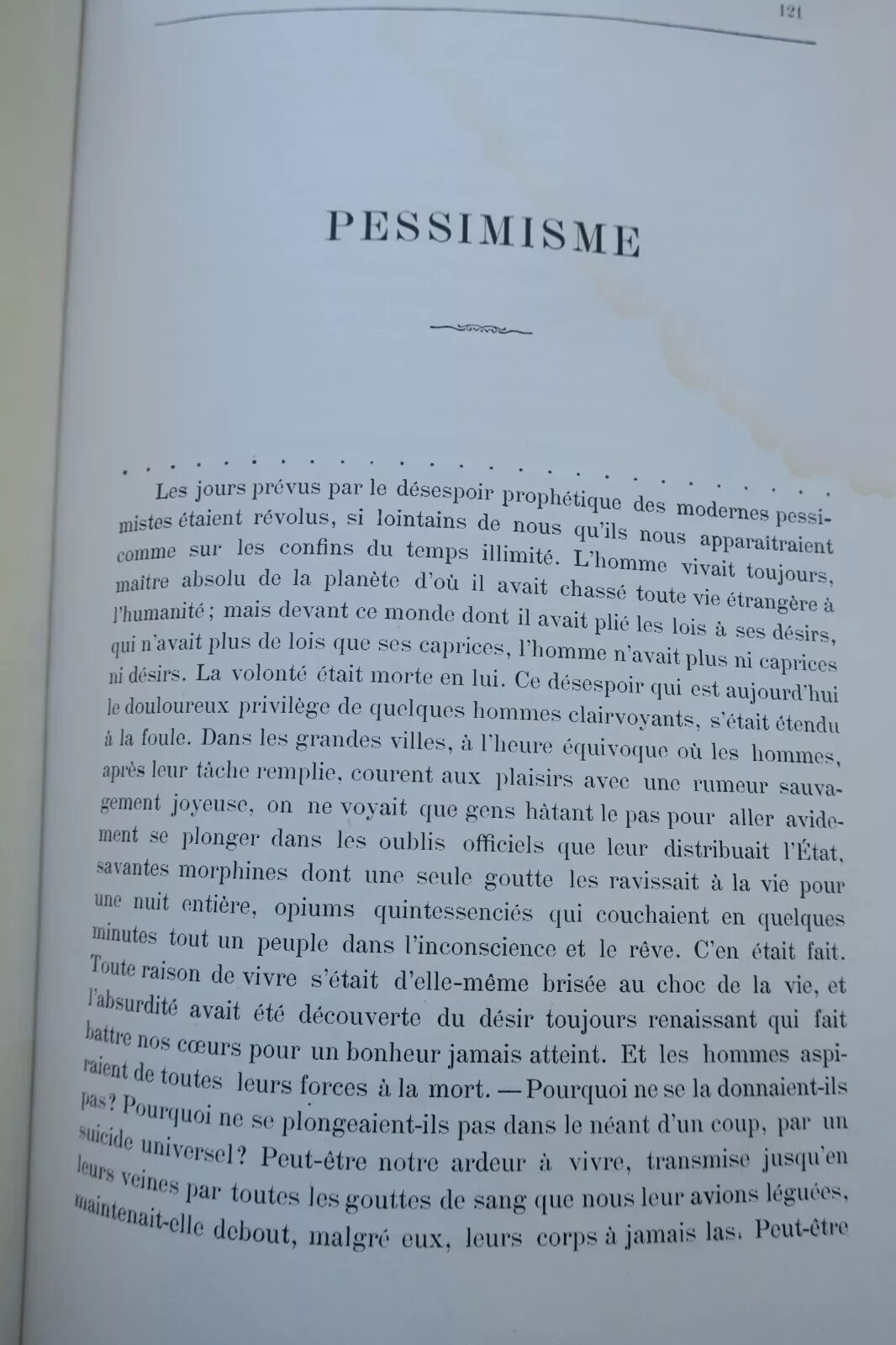
Proust 1892-1893 Unpublished Texts The Banquet The description of this item has been automatically translated. If you have any questions, please feel free to contact us. The Banquet Paris, Librairie Rouquette then Briquet, Mars , May, June, July, November 1892 and February, Mars 1893. 7 fascicles, large in 8° (28 x 18 cm), faded covers, a few pale halos. Missing issue no.…
Lire la description complète ↓Proust 1892-1893 Unpublished Texts The Banquet
The description of this item has been automatically translated. If you have any questions, please feel free to contact us.
The Banquet
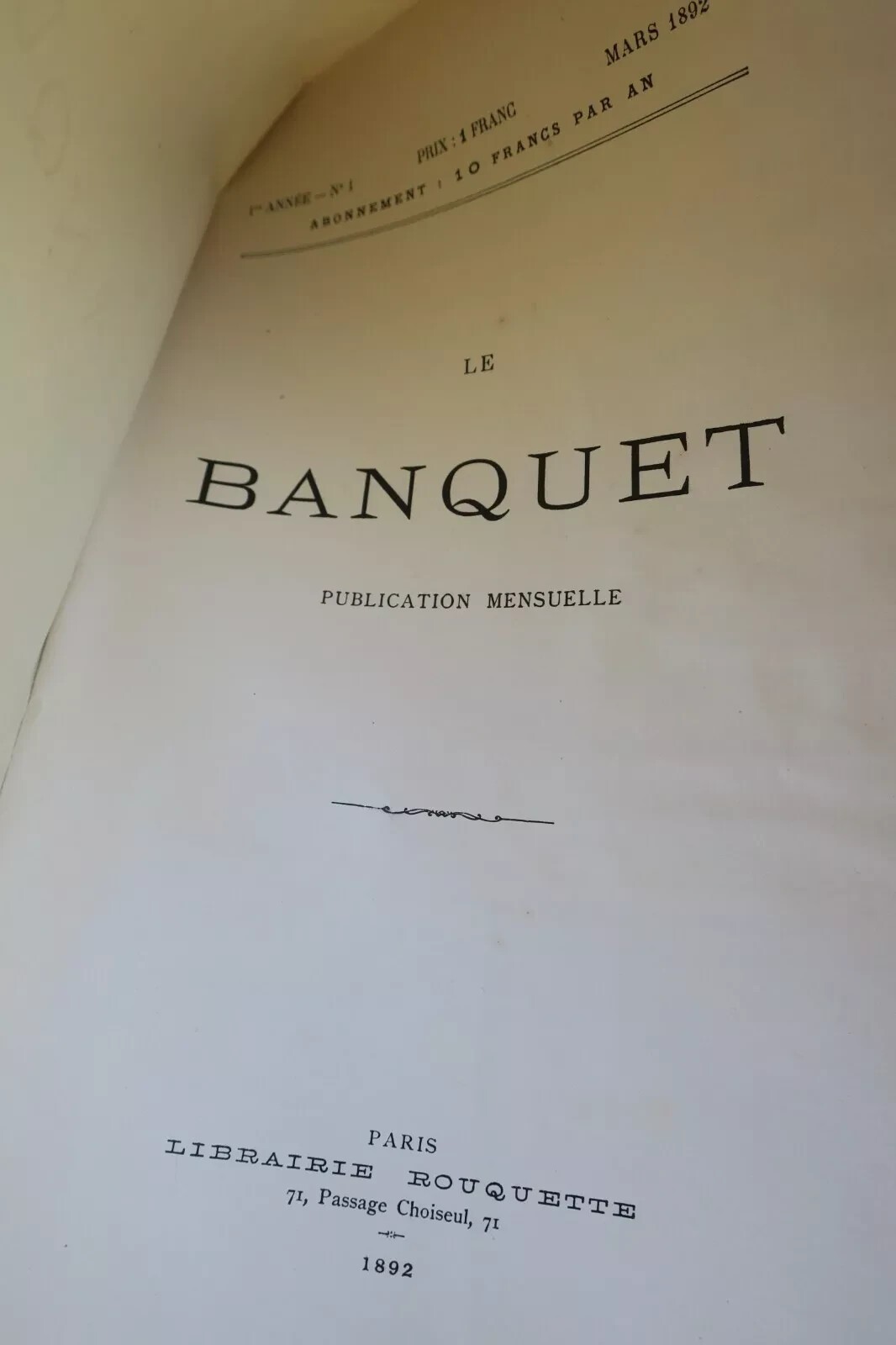
Paris, Librairie Rouquette then Briquet, Mars , May, June, July, November 1892 and February, Mars 1893.
7 fascicles, large in 8° (28 x 18 cm), faded covers, a few pale halos. Missing issue no. 2, from April 1892, already reported as untraceable by Fernand Gregh in 1958 in « My friendship with Marcel Proust, p. 28. ».
The Banquet, whose title is chosen in homage to Plato, was founded in 1892 by Proust and a few disciples from the Condorcet high school, Jacques Bizet, Fernand Gregh (the director of the magazine), Robert Dreyfus, Louis de La Salle, Daniel Halévy, Horace Finaly, who met in the mezzanine of the Rouquette bookstore in the Passage Choiseul. Financed by contributions from its authors, each paying ten francs per month, the magazine is printed in 400 copies for the first issue, 200 for the following ones.
She disappears a year later, after eight issues. Sdoubtless for financial reasons according to Robert Dreyfus: « After the eighth issue, our magazine disappeared without saying why: the cash register was empty, — and then we had played enough… » When the magazine ceased publication, its founders joined the already famous White Review (October 1891 – January 1903) of the Natanson brothers.
The stated aim of Banquet is, as Proust wrote to Robert Dreyfus, to « publish our productions ». It is indeed in The Banquet that Proust published his first texts. His studies, reviews and an essay appear in issues 1 to 3 and 5 to 7. In number 7 appears « Violante or worldliness, tale », Proust’s first real short story, which will be taken up in Pleasures and Days. « The Banquet contains in germ the Research — so different that this germ, as it is natural, may seem from the future tree… There we meet Mme Hayman in the guise of the courtesan Heldemone, Mme Straus in the form of a lady « in whom intelligence was only betrayed by a more subtle grace », Mme de Chevigné in the guise of a bird goddess… » (G. Painter, Marcel Proust, I, p.161).
Details of Proust’s texts: « Studies. Les Maitresses de Fabrice », n° 2, April 1892, p. 41. — “Studies. Cydalise », No. 2, April 1892, p. 42-43. — “Studies. Sketch after Madame *** », no. 3, May 1892, p. 78. — “Studies. La Mer », No. 6, November 1892, p. 170-171. — “Varia: As dreamed by Henri de Régnier”, no. 6, November 1892, p. 171-172. — “Studies II. Portrait of Madame *** », no. 6, November 1892, p. 191. — “Violante or worldliness: tale”, n° 7, February 1893, p. 201-208. — According to the memories of Robert Dreyfus, « L’Irréligion d’Etat » (No. 3, May 1892), signed « Laurence », is also by Proust.
Ref. : J. Deguy, “Study of the review The Banquet », Proustian News Bulletin, no. 4, 1976, p. 29-43. – Wikipedia – The Monthly found, ed. Jérôme Prieur, Les Busclats, 2012
The stated aim of Banquet is, as Proust wrote to Robert Dreyfus, to « publish our productions ». It is indeed in The Banquet that Proust published his first texts. His studies, reviews and an essay appear in issues 1 to 3 and 5 to 7. In number 7 appears « Violante or worldliness, tale », Proust’s first real short story, which will be taken up in Pleasures and Days. « The Banquet contains in germ the Research — so different that this germ, as it is natural, may seem from the future tree… There we meet Mme Hayman in the guise of the courtesan Heldemone, Mme Straus in the form of a lady « in whom intelligence was only betrayed by a more subtle grace », Mme de Chevigné in the guise of a bird goddess… » (G. Painter, Marcel Proust, I, p.161). Details of Proust’s texts: « Studies. Les Maitresses de
LA LIBRAIRIE ANTIQUE
Librairie indépendante depuis 1995, Paris
Expédition mondiale · en cours d'adhésion SLAM[*]
[*] Adhésion au Syndicat de la Librairie Ancienne et Moderne en préparation.
Dites-nous ce qui ne fonctionne pas, nous corrigeons vite. La page où vous vous trouvez est jointe automatiquement.