0,00€


Sold
Description
Paris, The New Paris, 1800
The description of this item has been automatically translated. If you have any questions, please feel free to contact us.
Cit. Mercier
The new Paris
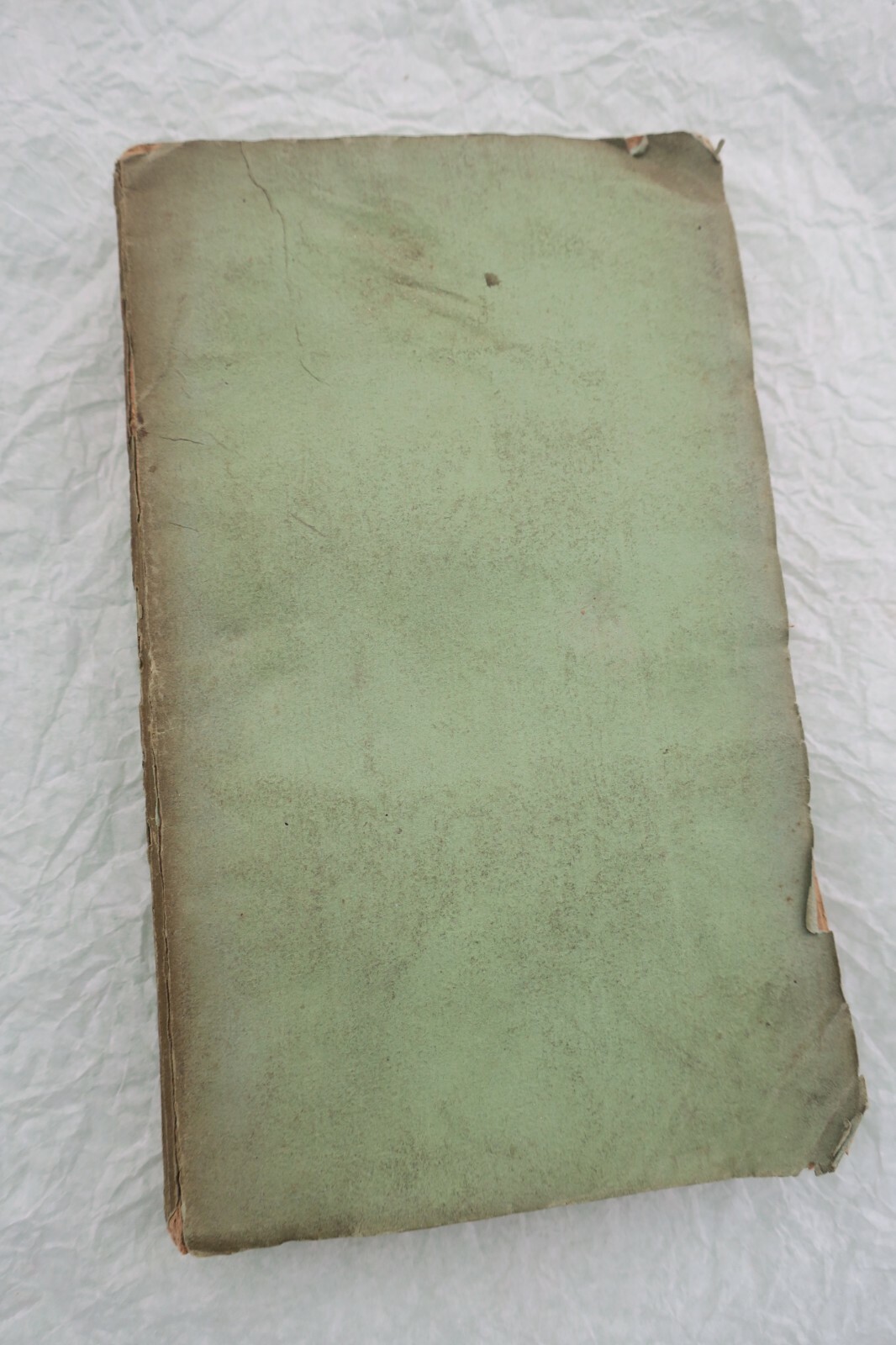
In Brunswick, 1800, among the main booksellers, in 8°, paperback , under cover, 227 pp.
Volume two alone
The New Paris is a work published by Louis-Sébastien Mercier in 1798. Composed of short chapters independent of each other (anecdotes, portraits, reflections, short stories), it evokes Paris during the French Revolution. The six volumes of New Paris constitute a sequel to the twelve volumes of the Paris painting, published by Mercier between 1782 and 1788.
Mercier wrote a lot for newspapers during the Revolution. From 1789 to 1796, his main activity was writing the newspaper he founded: The Patriotic and Literary Annals. In the years that followed, he collaborated with other newspapers. When he prepares the New Paris From 1796, he took up certain articles to make chapters of his work.
In the foreword of New Paris, Mercier notices that the Paris painting, the publication of which he completed in 1788, has become obsolete. Chapter 1 begins with the same observation: “I no longer walk in Paris except on what reminds me of what is no longer.” The Revolution brought about such changes that the Paris painting needs to be redone.
The first edition was published in Paris, by the fuchs booksellers, Charles Pougens and Charles-Frédéric Cramer. The title page does not contain a date. The foreword is dated 10 Frimaire Year VII (November 30, 1798).
In six volumes and 271 chapters, Mercier evokes both events of the Revolution and daily life in Paris. Some chapters are devoted to specific events, such as the preparations for the Fête de la Fédération (chapter 14, “Works on the Champ-de-Mars”) or the “Trial of Louis XVI” (chapter 81). Chapter 2, “Explosion” summarizes the entire history of the Revolution in a few pages. Mercier also focuses on institutions like the “Revolutionary Tribunal” (chapter 46) or people (chapter 36, “Bailly and some other portraits”). He retraces the conflicts in which he took part while he sat on the Convention, returning in particular to the struggle between the Mountaineers and the Girondins, to whom he was close. Chapter 87, dedicated to the fall of the Girondins on May 31, 1793 is titled “The Disastrous Day”. Several passages have an autobiographical character, when Mercier evokes his action at the Convention or his captivity,October 1793 at the fall of Robespierre
Alongside the most political chapters are chapters devoted to news items: chapter 143, “Event at the Plaine de Grenelle”, recounts the explosion of a powder mill on August 31, 1794. Others are interested in living conditions during the Revolution, in the price of foodstuffs for example (chapter 198, “Shopkeepers”), in entertainment (chapter 92, “Winter balls”) or even in printed production. (chapter 140, “Paper consumption”). As in the Paris painting, Mercier takes advantage of his talents as an observer to describe picturesque places, notably the “Palais-Égalité, formerly Palais-Royal” in chapter 91.
The impression of disorder that emerges from the whole is claimed by Mercier. The disorder which characterizes the Revolution becomes the principle of a writing which proceeds “in the random discontinuity of wandering and memory”. The many chapters of New Paris give so many different points of view on a political phenomenon that is impossible to grasp as a whole, as Mercier himself writes: “How will the historian withdraw from this labyrinth? How will he avoid the influence of his own opinion, when the men best trained to see have had difficulty grasping a point of view, and fixing an object in this extreme and continual mobility of optics? »
On the other hand, Mercier defends a very firm political point of view. A convinced Republican, he took the side of Directory against the double threat of royalists and radical revolutionaries (chapter 199, “I am a moderate”). If he is a « committed witness who does not fear contradictions », his ideal of concord and republican unanimity nevertheless clashes with the « revolutionary cacophony » which he reports in the New Paris.
Thanks Wikipedia
In six volumes and 271 chapters, Mercier evokes both events of the Revolution and daily life in Paris. Some chapters are devoted to specific events, such as the preparations for the Fête de la Fédération (chapter 14, “Works on the Champ-de-Mars”) or the “Trial of Louis XVI” (chapter 81). Chapter 2, “Explosion” summarizes the entire history of the Revolution in a few pages. Mercier also focuses on institutions like the “Revolutionary Tribunal” (chapter 46) or people (chapter 36, “Bailly and some other portraits”). He retraces the conflicts in which he took part while he sat on the Convention, returning in particular to the struggle between the Mountaineers and the Girondins, to whom he was close. Chapter 87, dedicated to the fall of the Girondins on May 31, 1793 is titled “The Disastrous Da