0,00€

Description
Charivari 1st Year & 1st Semester of 2nd Year 1832-33 Daumier Gavarni…
The description of this item has been automatically translated. If you have any questions, please feel free to contact us.
THE CHARIVARI Publishing a New Drawing Every Day
Half-leather binding, rubbed edges, 24 x 31 cm., from December 1, 1832 to June 30, 1833, 211 issues.
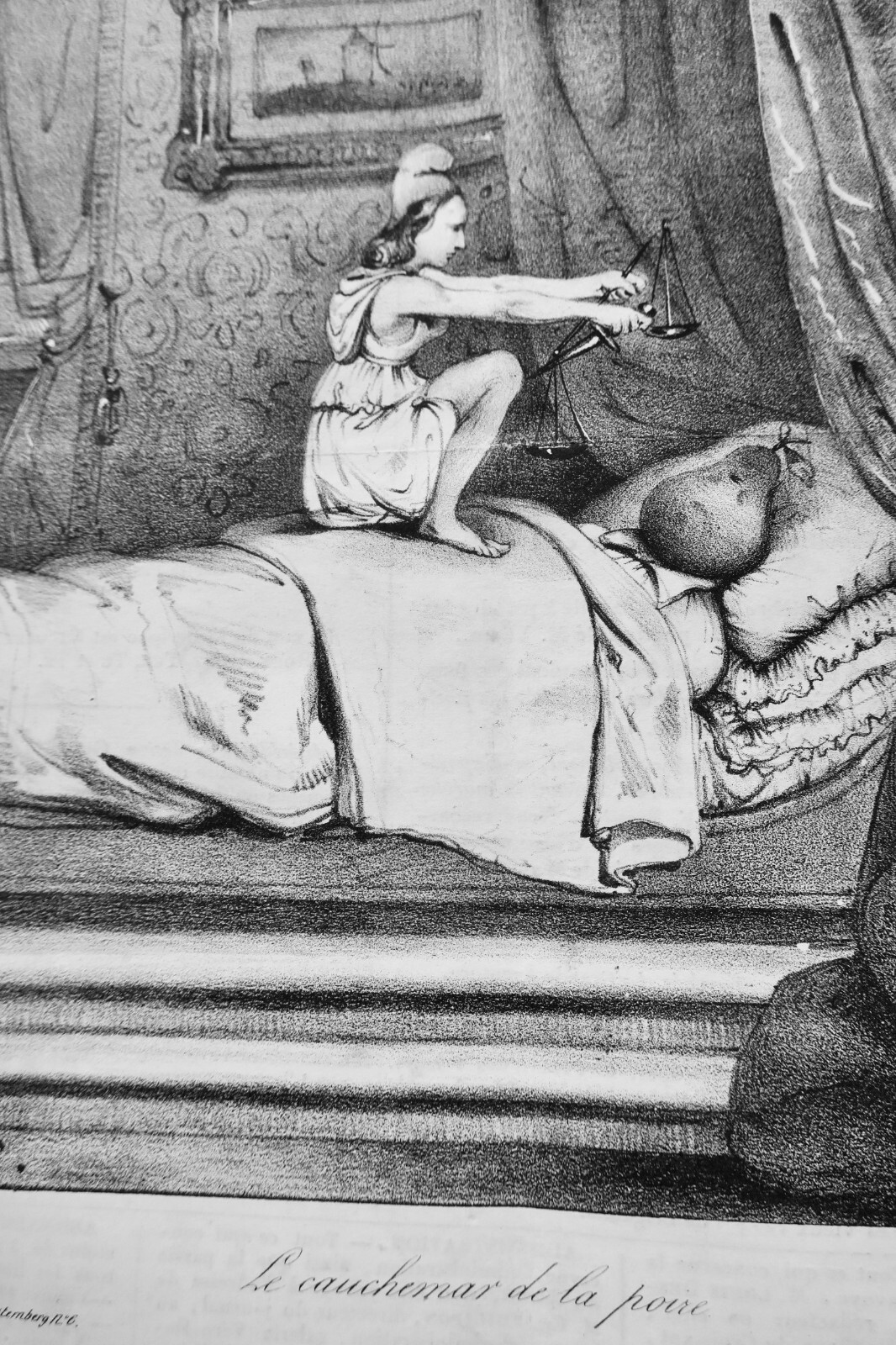
On the first page, a specimen announcing the daily edition of the newspaper, 2 leaves cut in two (but without missing), missing the leaf of the lithograph of n°, 31, 38, 41, 43, 45, 49, 55, 58, 61, 65, 67, 71, 74, 78, 80, 82, 85, 88, 100, 103, 108, 115, 119, 120, 130, 137, 140, 141, 144, 157, 170, 173, 174, 180, 181, 182, 183, 184, 186, 187, 189, 190, 193, 194, 195, 196, 200, 202, 203, 204, 211, 212, some foxing, some cuts in the margins, a partial loss on 2 lithographs, one of which is in color.
Each of the numbers bearing the stamp « Royal stamp », with the folds of the postal items.
The Charivari is a newspaper French and the first illustrated daily satirical of the world, which appeared 1832 has 1937.
Founded on 1er December 1832 by Charles Philipon as a newspaper of republican opposition to the July Monarchy, the satirical newspaper with an entertaining vocation asserted itself during its history at times radical, conservative, republican or even anti-clerical. Its most notable authors were notably Taxile Delord or even Agenor Altaroche and its most notable caricaturists were among others Philipon, Nadar, Gustave Doré, Honore Daumier, Henri Rochefort, Cham And Gavarni.
On the first page, a specimen announcing the daily edition of the newspaper, 2 leaves cut in two (but without missing), missing the leaf of the lithograph of n°, 31, 38, 41, 43, 45, 49, 55, 58, 61, 65, 67, 71, 74, 78, 80, 82, 85, 88, 100, 103, 108, 115, 119, 120, 130, 137, 140, 141, 144, 157, 170, 173, 174, 180, 181, 182, 183, 184, 186, 187, 189, 190, 193, 194, 195, 196, 200, 202, 203, 204, 211, 212, some foxing, some cuts in the margins, a partial loss on 2 lithographs, one of which is in color. by Charles Philipon as a newspaper of republican opposition to the July Monarchy, the satirical newspaper with an entertaining vocation asserted itself during its history at times radical, conservative, republican or even anti-clerical. Its most notable authors were notably Taxile Delord or even