0,00€

Description
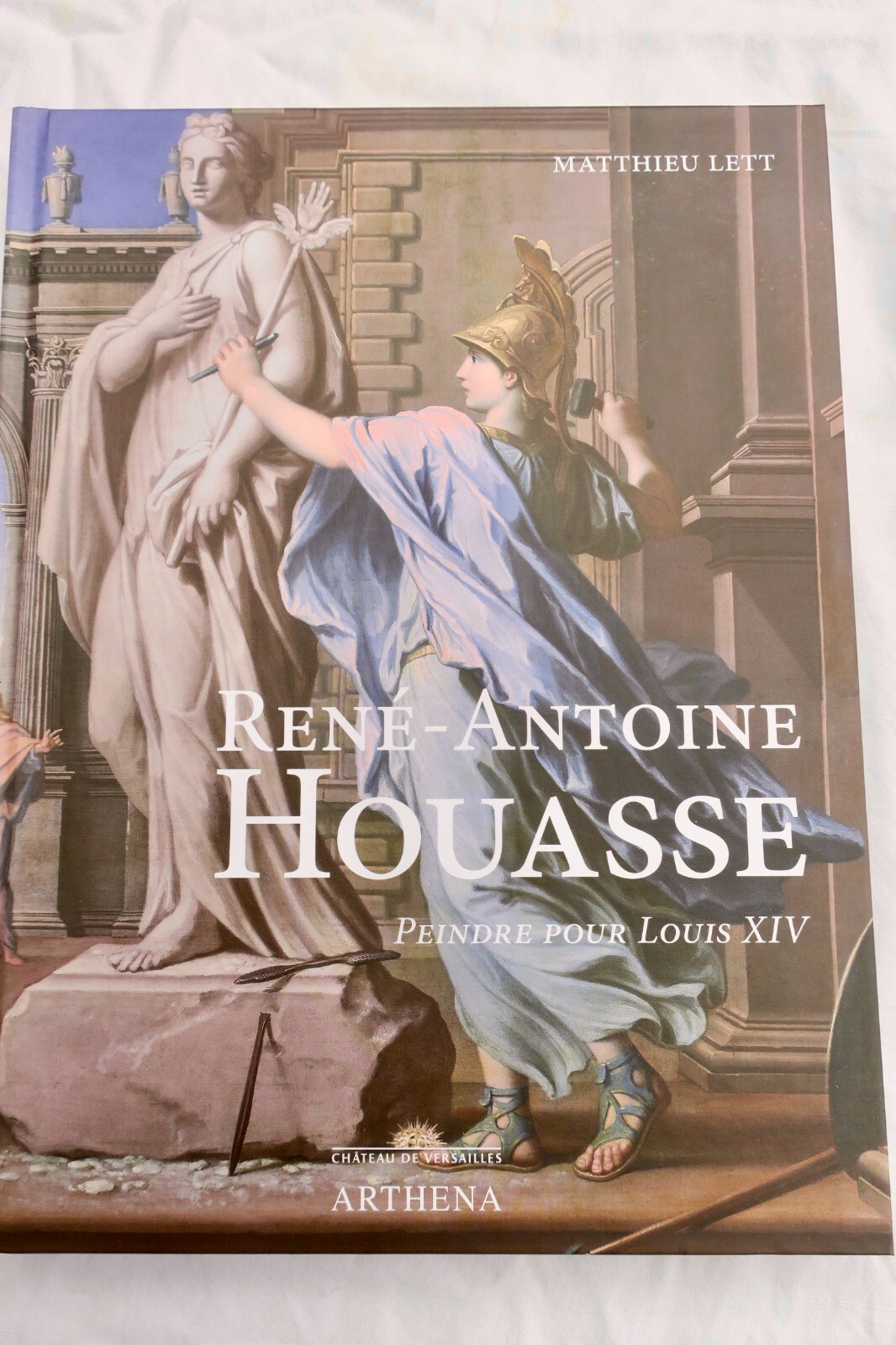
René Antoine Houasse (1645 1710). Painting for Louis XIV
The description of this item has been automatically translated. If you have any questions, please feel free to contact us.
LETT (Matthieu) [Foreword by Béatrice Sarrazin] [Preface by Christian Michel]
RENÉ ANTOINE HOUASSE (1645 1710). Painting for Louis XIV.
Arthena, 2020. Paris 2019. Hardcover publisher’s binding under illustrated dust jacket. Format in-4° (32 x 24 cm). 304 pages with 300 illustrations.
“Painter to the king”, René-Antoine Houasse (1645-1710) certainly is. Spotted, after his apprenticeship with Nicolas de Plattemontagne, by the King’s First Painter Charles Le Brun, he worked on all the major projects of the reign of Louis at the Trianon de Marbre and the Tuileries. He also created numerous tapestry boxes for the Gobelins factory. His exemplary official career, from his reception at the Royal Academy (1672) to his directorship of the French Academy in Rome (1699-1704), should not eclipse his artistic career illustrated by the great decorations of the royal residences including his masterpiece, Iris and Morpheus. The virtuoso and singular palette of this subject from Ovid’s Metamorphoses and its proximity to Girodet’s Endymion or Guérin’s Narcissus painted a century and a half later sparked new public interest in the 1960s for this forgotten painter. Houasse is also the author, based on a drawing by Le Brun, of one of the most famous and widely distributed equestrian portraits of Louis XIV. «
Very nice copy
“Painter to the king”, René-Antoine Houasse (1645-1710) certainly is. Spotted, after his apprenticeship with Nicolas de Plattemontagne, by the King’s First Painter Charles Le Brun, he worked on all the major projects of the reign of Louis at the Trianon de Marbre and the Tuileries. He also created numerous tapestry boxes for the Gobelins factory. His exemplary official career, from his reception at the Royal Academy (1672) to his directorship of the French Academy in Rome (1699-1704), should not eclipse his artistic career illustrated by the great decorations of the royal residences including his masterpiece, Iris and Morpheus. The virtuoso and singular palette of this subject from Ovid’s Metamorphoses and its proximity to Girodet’s Endymion or Guérin’s Narcissus painted a century and a h